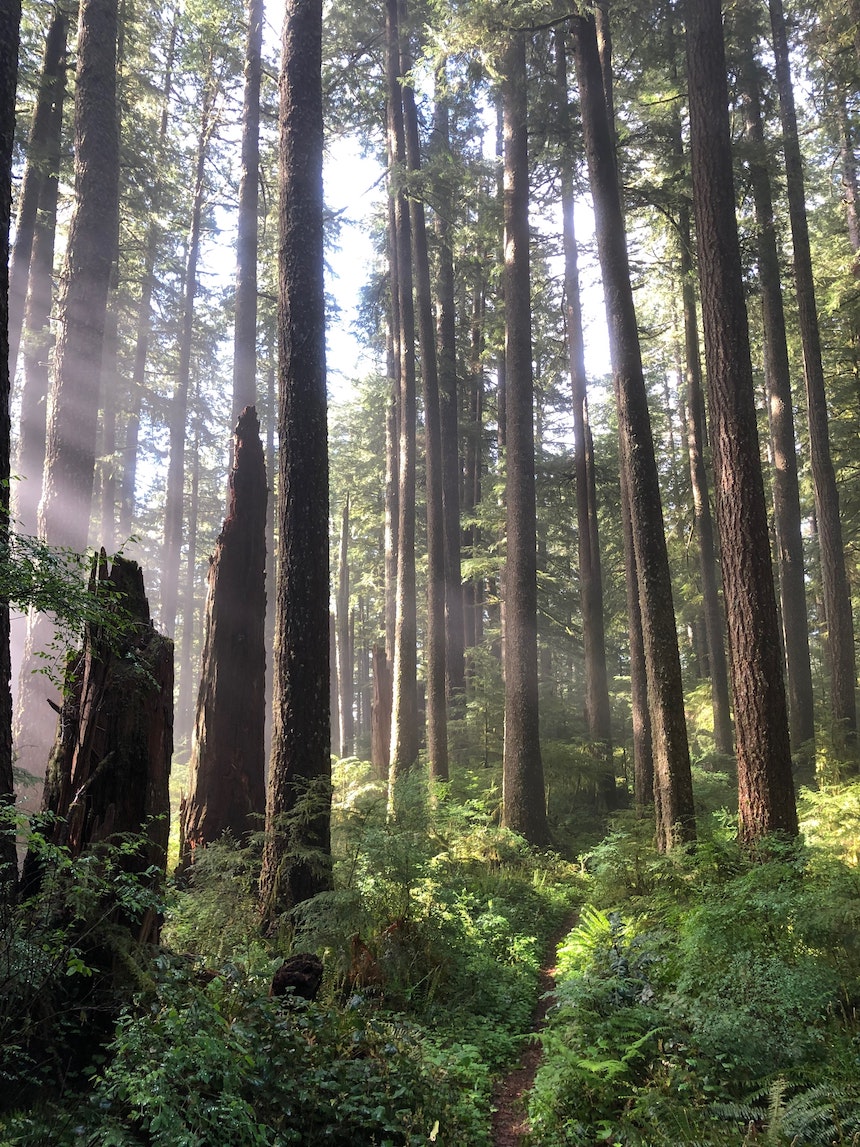
Donica Lake Trip
If It Ain’t Broke, Don’t Fix It

D. E. Larsen, DVM
A group of us younger veterinarians were seated around a table at lunch during the state Veterinary Medical Association meeting when Ed stopped by to visit. Ed was head of the large animal hospital at the new veterinary school that was just getting off the ground at Oregon State University.
After some small talk, Ed asked the group, “I am interested in how many of you guys use or recommend the Pasteurella vaccine in your practice.”
Everyone raised their hand except me.
“Did any of you guys read the article in the last Journal of the AVMA?”
“I read that article the other day,” I said. “I found it very interesting. When I was in school at Colorado State, Dr. Pierson told me to never use that vaccine because it was a terrible vaccine.”
“For those that didn’t read the article,” Ed said. “It is saying that current research shows the vaccine does more harm than good.”
“How is that possible? That vaccine has been used for years,” Scott asked?
“All the research says that the vaccine works by enhancing the white blood cell’s ability to engulf the bacteria,” Ed said. “That allows the bacteria to kill the white blood cell. And the debris from the dead white blood cells causes all the pathology in the dependent lobes of the lungs. They are planning to pull the vaccine.”
“Wow! That is hard to believe,” Scott said.
“Yes, this has been the widest used vaccine in cattle since the late 1940s, maybe the widest used vaccine in the world. For this profession to fail to recognize it as a problem is a major failure. I would be interested in what Dr. Pierson had to say about it, Larsen,” Ed said.
“Dr. Pierson just said it was a terrible vaccine. He did a lot of work in the feedlots in Northern Colorado. I spent a week with him, mostly doing necropsies in several rendering plants in Greeley. He said he would recommend I never use the vaccine. In fact, he recommended I decline to provide services to any herd who used the vaccine.”
“So he was just basing his opinion on his observations,” Ed asked?
“Yes, he was pretty astute. He was also a master with the stethoscope. He could almost draw a picture of the lung field of the steer.”
“Well, this is a good lesson for all of us,” Ed said. “This is why double-blind studies are so important. For almost the entire profession to think they were benefiting cattle by using this vaccine demonstrates that we make ourselves see what we want to see.”
“How are you planning to address the problem at the Veterinary School,” I asked?
“We are definitely going to have to rewrite our vaccination recommendations we hand out to clients. Educationally, it will be a good platform to discuss the placebo effect and how it even affects our ability to really see the results we are getting.”
“Yes, I think that I am losing faith in the way we repair the anterior cruciate tears in the dog,” I said. “I had the opportunity to look at a pair of knees on necropsy. One knee was repaired, and the other was not. On the gross exam, you could tell no difference between the two knees. Talking with the owner, he said that 6 months following the tear of the second ligament, you could not tell any difference in how the dog walked and ran.”
“There are a lot of people working on that problem,” Ed said. “But Larsen, I am interested in how your recommendations differ from everybody else since you don’t use Pasteurella vaccine.”
“I use the viral vaccines, and we practice a closed herd or at least a semi-closed herd approach in the herds that I manage. The only bacterial vaccines I recommend are the Hemophilus and Lepto vaccines. I rarely see a case of pneumonia in my well-vaccinated herds. Unlike some of the backyard outfits that have pneumonia cases every year.”
“Maintaining a close herd is difficult for most producers,” Scott said.
“Sure, but any replacements are carefully selected, and they try to isolate them for a week or two before introducing them into the herd,” I said. “I don’t have any huge herds, and most of the guys do pretty well.”
“So why just do the viral vaccines,” Scott asked.
“Pasteurella is a normal inhabitant of the respiratory tract,” I said. “It is an opportunistic organism. When the respiratory system is compromised by a viral infection, it becomes susceptible to many bacterial invaders. Throw in stress and environmental factors, and you end up with shipping fever.”
“Well, we are all going to have to work from a different perspective for several years,” Ed said. “I understand that a couple of companies are already starting to work on a new vaccine. But with this experience, the FDA will be very cautious on their approval. I would expect it to take five or six years before we have a replacement.”
“What are you going to do then, Larsen,” Scott asked?
“Five or six years is a long time,” I said. “I guess it will depend on the data. But I firmly believe in the old saying, ‘If it ain’t broke, don’t fix it.’ If my herds continue to have no issues with the way they manage their vaccine programs, it will be hard for me to make a change.”
“I can see your point,” Scott said. “I also find it interesting that you had the chance to work with Dr. Pierson for a week doing necropsies. That kind of experience wasn’t available at Washington State.”
“We had a lot of large feedlots around Fort Collins and Greeley,” I said. “I worked in the Monfort’s feedlot in Greeley, on the weekends for a time. They had a hundred thousand head on feed at that lot and another lot the same size South of Greeley. That was also a great experience for me. But, of course, we don’t have anything close to that in Western Oregon.”
“Well, it has been an interesting discussion,” Ed said. “I’m glad I stopped by to chat.”
“So what is the status of the school,” Scott asked.
“We start our first class this fall,” Ed said. “They will graduate in 1983. It will be a little hard on them. They will take their first year and part of the second year here, then they move to Pullman to take the rest of their second year at WSU. They will take all the small animal medicine during their third year before returning here for their fourth year. Difficult, but at least they will end up with a degree.”
“Sounds difficult,” I said. “I was flat broke when I finished school in Colorado. I am not sure I could have handled all the moving expense, let alone the stress.”
Photo by Dylan Gillis on Unsplash
Jack

D. E. Larsen, DVM
Sandy and I were standing in the garage talking when Robert pulled into the driveway with his load of boxes. Robert was our UPS delivery guy and was a regular visitor to our clinic in the garage.
Robert dropped the boxes on the table in the back of the garage and returned waited for a signature.
“Did I hear you two talking about getting a puppy,” Robert asked?
“We are just getting settled into this place, and we figured it was about time for a puppy.”
“I just happen to have a litter of Springer Spaniel pups who are ready to go next week,” Robert said.
“We haven’t even discussed what kind of a puppy we need, but a Springer might fit this place and this family well,” I said.
“They are good pups, all liver and white, and I have both parents. Drop over this weekend if you want to look them over,” Robert said.
“We will do that. The kids will enjoy looking at the litter.”
“I will give you the pick of the litter,” Robert said. “You know you will take home a puppy if you bring the kids.”
The girls were excited when we loaded up to go look at the puppies. It was chaos when they got down on the ground with the pups. Three girls and eight puppies all trying to lick a face.
As Robert predicted, we went home with the best of the pups. He was Jack before we got very far down the road.
Like all puppies, Jack grew rapidly. In the process, he cemented himself as part of the family. It was good to have a puppy grow up with the kids who were also growing up.
Jack was an active dog. He covered the ground on our small acreage daily. Fences were a barrier at first, but as he reached his adult size, he could sail over any fence on the place.
One Spring day, I took the girls down to the creek behind the house to fish. Jack went along. The first fish out of the water was held in the air, wiggling on the end of the line. Jack took no time to grab it. I was right there to catch him and retrieve the fish. The fish looked like it was none the worse for wear.
“You kids don’t tell your mother, or she won’t cook this fish,” I said.
My biggest concern, however, was Salmon Disease in Jack. I monitored him close, and sure enough, seven days later, Jack was sick. He could not have had that fish in his mouth for more than ten seconds, and I could not even see a puncture wound on the fish. That changed my thinking on what kind of exposure was required for a dog to contract Salmon Disease, and that was the first lesson taught by Jack.
When Robert had his next litter, he had a little female who nobody had selected. The pressure was applied, and we ended up adding Jill to the household.
Jill was older when she came to live with us. She and Jack got along well, but like all things female, she led Jack astray. We had virtually no problems with Jack before Jill came along. Now they were straying up the creek further each day. Neighbors were not happy.
We made the decision to find Jill a new home. That was an easy task, and tranquility returned. Jack was immediately back to his old stay-around-the-house dog. Lesson number two.
We had acquired a few bummer lambs to keep the girls busy. Bottle feeding lambs are a chore that kids find fun. That makes it easy to start teaching responsibility and a work ethic.
Ray Michalis had given me a bummer lamb that had an infected knee joint. The chances of saving it were slim, and for Ray, the expense was not justified.
I took the lamb. I drained the joint’s pus and placed a drain in the joint that I could flush a couple of times a day. We had all the lambs in the stall on the far end of our little barn.
It was a busy afternoon at the clinic when Dixie said Sandy was on the phone.
“You need to come home right now and take care of this lamb,” Sandy said in a voice mixed between hysteria and tears.
“What is the matter with the lamb,” I asked?
“The county tax assessor was here this afternoon, and he locked Jack in with the lambs,” Sandy said.
“That doesn’t sound very smart, but that is not the end of the world,” I said.
“Jack chewed the leg off the little lamb that Ray gave you,” Sandy said, though tears now. “You need to come home right now and take care of this lamb. The girls are hysterical.”
“I will be right there,” I said.
I took a dose of euthanasia solution and apologized to the clients as I ran out the door. By the time I got home, the little lamb was actually doing pretty good on three legs, and all the bleeding had stopped. But I went ahead and put it to sleep.
Now I had two problems. How to deal with a dog who probably couldn’t be blamed for his actions but needed to know that it couldn’t happen again. And how to deal with a tax assessor who most likely would take no responsibility and who could hold my assessment over my head.
For the dog, I took the lamb’s severed leg and tied it around Jack’s neck. You would have thought I had beat him with a stick. He was mortified.
For the tax assessor, I called him and complained. Restraining myself from calling him a name or two. As expected, he took no responsibility and flexed the muscle of his position at the end of the conversation.
“So, what are you going to do about it,” he said.
Nothing, of course. I wished I had tied the lamb’s leg around his neck.
When I removed the leg from Jack’s neck after the third day, he was the happiest dog you could imagine. And Jack would not even look at the lambs in the pasture again. Lesson three.
It was a warm Saturday afternoon. Jack had gone for a short run on the hillside across the road from the house. The kids were playing in the front yard. I was working on cleaning and checking the vet box’s inventory on the back of my truck.
Jack came down off the hillside and started across the road. The old man from up the creek was speeding down the road. He always drove way too fast. He and Jack collided in the middle of the road. The force of the impact knocked Jack over 30 feet. He landed in the front yard beside where the kids were playing.
Jack stood up and yelped once. Then Jack fell over. He was dead by the time I got to him.
The kids were wide-eyed, not fully coming to grips with what had happened. Sandy was coming out of the house. I am sure she wanted to slow me down as I headed to the road to talk with the old man behind the wheel.
“Is he dead,” the old man asked?
“He is dead,” I said through clenched teeth. “What the hell do you expect when you knock him thirty feet. You need to slow down, old man. What if that had been one of the kids? I would be dragging you out of the car and beating your ass to a pulp.”
The old man learned to drive a little slower. A hard lesson for Jack to teach, but well taught. Lesson four.
The kids learned the dangers of the road. We never had to caution them about the road after that day. Even Derek, who was just two at the time, absorbed that lesson. Another challenging but valuable lesson from Jack. Lesson five.
And maybe the best lesson of all was Lesson six. The loss of someone close is always distressing. And for kids, their first loss often comes with the loss of a pet. Sometimes traumatic, like in Jack’s case, sometimes from old age, but it prepares them for one of those rigors of life that we all must cope with sooner or later. I think it is one of the best lessons that pets provide for kids.
Jack’s life was short. But one’s life should not be measured by length but rather by the quality and how well it is lived.
Photo by William Buist on Unsplash

