The Lone Toad

D. E. Larsen, DVM

My eighth-grade year was a significant learning year for me. I had moved from the small community of Broadbent at the end of my seventh grade. We moved to a dairy farm on Catching Creek, outside of the big city of Myrtle Point. I went from a class of 8 kids to an actual junior high school with an eighth grade class of probably 50 kids, taught in two classrooms.

At home, I had a creek to hunt in and a large marsh to learn, first hand, about biodiversity and biomass. This marsh dried to scattered pools in the summer months. These pools teemed with life: catfish, bullfrogs, polliwogs, muskrats, dragonfly larva, and more. And I learned them all.

In the classroom, I found teachers who actually thought I needed to do homework. This was utterly foreign to me. I felt that if I could do well on the tests, I had no need to do the daily work. It had worked well for me up to that time, and I could see no reason for it to be different now.

“I want each of you to pick a topic from the list and write a three-page research paper on that topic,” Mrs. Meyers said. “That means you need to go to the library and find information about the topic and write the paper. And you need to list your references at the end of the paper. I expect everyone to have at least 3 references.”

I raised my hand. “Mrs. Meyers, does the list of references count toward the three pages,” I asked?

“David, you can write more than three pages if you want, but if those references fill the third page, that counts.”

That was all I needed to hear. I would do what I had to do, none of those extra pages stuff for me.

Then, this group of girls in the class wanted to meet at the city library to do the research. And so it was agreed. I am not entirely sure who was all involved, but they were city kids.

For me, a trip to the city library was a big ordeal. My mother dropped me off. I would have to start walking the two miles home that night, and Mom would pick me up. She would plan to be in town at 8:00, so how far I had to walk just depended on when we finished.

Us boys were all seated at a large table in the library. We were working hard on our topics. We each had pulled our 3 reference books and were busy getting information down. I was trying to make sure that I listed as much information on the reference books as possible. My reference list filled half of the last page.

We boys talked in hushed tones, understanding that we were in a public library and not disturbing the other patrons. The girls were in and out of the book racks and not seated at their table. They kept coming to our table and talking a bit before rushing back to the rows of books and jabbering there.

It was not long, and the old lady running the library came by and told us we would have to be quiet. We explained that it was the girls who were making all the noise.

It was not long, and the old lady came by again.

“If you boys and girls can’t do your work quietly, I am going to have to ask you to leave,” The old lady said.

I am not sure that the girls had ever been disciplined in their lives. They didn’t change their conduct one bit.

“Okay, I gave you boys and girls two warnings,” the old lady said. “You are not showing any respect for the others here in the library. I am asking you to gather your stuff and leave now.”

Leave now, I thought, I will have to walk all the way home. We gathered our stuff, and the old lady ushered us out the front door.

There we were, standing on the sidewalk, trying to figure out why we boys got kicked out when we were not the ones making the noise. The girls were still giggling about the whole thing. I don’t think I had ever been kicked out of anything in my entire life. And now I was going to have to walk two miles home, in the dark.

Then the unexpected happened.

“What is that,” Rick asked?

Coming down the sidewalk was the largest and the ugliest toad that I had ever seen. It was close to a bullfrog’s size and had nobs like projections protruding from its head and back.

“That is the biggest toad I have ever seen,” I said.

“I have never seen anything like it,” one of the girls said.

I scooped up the toad to get a better look at it. I had seen a few smaller toads before, but nothing near this size. The toad did not seem afraid at all and sort of nestled in my hand. 

“What are you going to do with him,” one of the noisiest girls asked?

“I think we should put him in the book return and give that old lady a thrill tonight,” I said.

I had noticed that she had retrieved several books earlier when she heard the lid on the book return clank.

“When she hears the lid, she will hurry over to get the book and put it away,” I explained. “Then she will have to spend the rest of the evening getting someone to get the toad out of there.”

And so it was agreed. And I opened the book return lid and carefully placed the toad in the bottom of the bin. I did not slam the cover, but I closed it in a loud enough manner that I was confident the old lady would hear it. 

Then we laughed and scattered, each heading home. I started a slow walk. I wasn’t sure what time it was, but it must have been well before 8:00.

When I reached the bridge on the edge of town that crosses the railroad tracks and the river, I stopped and watched the shack belonging to Shy the Panther. He was the town bum. There were a lot of stories about him. He was said to have got his name from his days as a boxer. There was no activity at the shack this night.

I was lucky. Mom showed up before I was across the bridge.

“Did you get done early,” Mom asked?

“We got kicked out of the library because the girls would not keep quiet,” I said.

“Are you sure it was just the girls making the noise?”

“Pretty sure, but that’s okay. I put a toad in the book return for the old lady who kicked us out,”

“David, you didn’t!” 

“Yes, it was the biggest toad I have ever seen. It just came jumping down the sidewalk. I bet it made that old lady jump when she opened the bin on the inside.”

“I bet,” Mom said with a smile on her face.

In the years following, when I needed a  laugh, I conjured up the image of that night. I pictured a hysterical reaction of that old lady when she retrieved the ‘book’ from the book return. Only to find the poor toad. It was probably unfair to the toad, but a very fitting payback to the old lady.

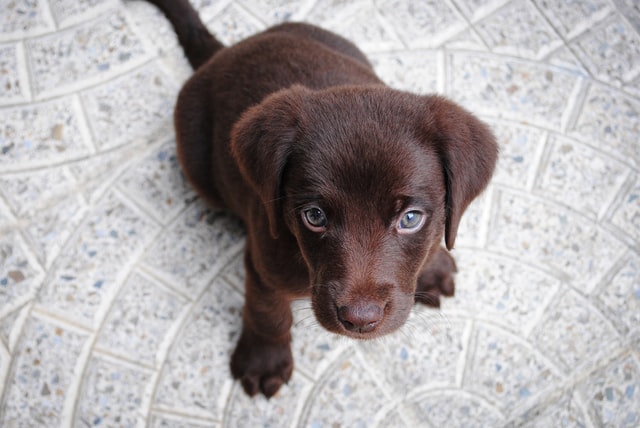
Photo by Lucas van Oort on Unsplash

Christmases in the Army

D. E. Larsen, DVM

“Company D, Private Drake speaking, can I help you,” Bill answered the phone on a snowy Christmas Eve in 1965. Bill and I were pulling CQ duty for Company D, a duty company for troops waiting for school at Fort Devens.

We were a couple of lucky ones; we were permanent CQs. We were given private squad rooms in the old World War Two barracks that were housing an overload of troops in the big build-up of Vietnam forces. We worked in 24 hours shifts, with 48 hours off.

“Yes, I know a couple of guys who would be interested,” Bill said.

“What are you getting us into now,” I asked? I was not expecting an answer, but Bill was always quick to volunteer my services.

“We can meet you at Battalion Headquarters by 8:15. We don’t get relieved until 8:00, but we should be able to make that schedule.”

Bill hung up the phone and looked at me with a big smile on his face.

“We have a Christmas dinner to go to tomorrow,” Bill said. “We have to be in Class A uniform and meet the Battalion CQ at Headquarters by 8:15.”

“Where are we going,” I asked?

“Does it matter? It is going to be better than eating Christmas dinner at Con 4 and sleeping for most of the day.”

At 6:00 in the morning, Bill and I took turns going to the barracks, showering and changing into our Class A uniform. When we were relieved by the next CQ crew, we walked through the snow the half a dozen blocks to Battalion Headquarters.

I imagined that we looked somewhat like Mutt and Jeff. Bill was 6′ 4″ and had a heavy black shadow on his face even though he had shaved a couple of hours before. And I was trying to match his stride, and I had to stretch to measure 5′ 8″.

The Battalion CQ was a Specialist 4, who had been in the Army for several years. He was waiting at the doorstep and fell in with us.

“We meet them at the main gate in 15 minutes,” Stan said.

Bill and I were mismatched on height, but we were both in good shape and trim. Stan was taller than me and quite well rounded.

“The main gate is over a mile,” Bill said as he lengthens his stride. I was used to matching his long stride, Stan sort of looked like a young kid who had to take four steps and then run four steps to keep pace.

By the time we reached the main gate, the snow was probably close to 4 inches deep. Mr. Terhune was waiting across the street in his VW van. He was with a couple of preteen boys. Getting into the warm van was a welcome relief.

We drove to their house in Groton, some 4 miles distant. The Terhune’s had 4 kids. The oldest was their daughter, who was a freshman in high school, and 3 younger boys. We had dinner, which Bill jumped right into the kitchen to help prepare. Then we spent the afternoon talking and drinking more than a little wine. 

Having just pulled 24 hours of duty, a full day of eating, and topped off with ample wine, I was asleep before my head hit the pillow that night. But it was Christmas to remember, and the Terhune’s remained friends and a place to escape to for the entire year we were at Devens.

Christmas in Korea was a different event but just as memorable. I arrived in Korea in the middle of September 1966, and I was well adjusted to the country by Christmas. Stationed South of Seoul, at Camp Humphreys, I spent a lot of my free time at the orphanage that we supported in An Song.

A group of us spent Christmas Eve at the orphanage. Following dinner, the group of elementary kids continued my lessons in Korean. The little girls were very serious about this instruction. They would frown when the boys were hysterical over my pronunciation of even the simplest words.

We did a Santa for the kids with toys purchased by the guys at the 177th. The kids all went to midnight mass, and so it late when they got to bed. 

On Christmas morning, we loaded everyone up and took them to Camp Humphreys for Christmas dinner with the entire company. Before dinner, all the staff and the older kids had the opportunity to take showers in the barracks. That was probably the best present we could give them. Then dinner in mess hall and entertainment in the club. All the kids were well worn out when we loaded them onto the trucks for the trip home.

The next morning the young kids were hanging all over me. It was apparent the kids didn’t want us to go. The staff was still in a state of euphoria from their day at the company compound. But we loaded up in the trucks for the drive back to the company. I opened the window and shouted goodbye, in Korean, to the kids.

“Annyeong,” I said. The boys almost rolled on the ground, but the girls laughed and waved.

 The drive back to base seemed longer than usual as we rolled down a dusty dirt road lined with dry rice paddies. My mind did drift back home with only a twinge of homesickness.

My experience in Germany was different still. I arrived in Germany in the middle of December 1967. Even though I had friends from Fort Devens, I really had no time to settle into an off duty routine before Christmas. My first Christmas in Germany was spent on the base at Rothwesten. Christmas dinner at the mess hall was well done and accompanied by some German carolers. The evening I spent at the NCO club, again filled with entertainment. It was less than ideal, but it was a pretty good day.

Christmas in 1968 found me in Schöningen, a small village on the East German border. I was stationed at Wobeck, a significant border listening post with about 70 of us stationed there. Christmas here was super. The town went all out on their decorations and festivities. There was a Christmas spirit everywhere. 

We had a major Christmas party at the ‘Swing Club’ in the Banhof Hotel. The club was not supposed to make a profit, so it had to give away a lot of booze to make sure the books came out even for the year.  Needless to say, there were a few drunk GIs.

A couple of us were invited to Christmas dinner at Howey and Holley’s house. Wives were a recent addition at Schöningen. Before this time, only men without dependants were stationed there. Holley was the best cook that I had seen since my mother. Howey was very drunk at the end of the party, and we had to help Holley get him into the car.

They lived in Wolsdorf, a little village a few miles out of Schöningen. They had an upstairs apartment in a new house, still finishing its construction. It was built on a hillside, and there were three stories with a high porch to the entry on the middle level. The steps and porch were new and not completely finished. There was no railing on the steps or porch.

When we arrived at 1:00 for dinner, Holley was slow to answer the door. She looked like she had was running on empty.

“Are you okay,” I asked? “You look like you have been cooking all night.

“I feel like it. We had quite a time last night,” Holley said. “And my night was just starting when we left.”

“You know, we can find a place to eat in town,” I said. “You don’t have to wear yourself out to feed us.”

“I should have had you guys help me get Howey home last night,” Holley said. “Let me tell you the story.”

“When we got to the house, it was not too hard for me to get him out of the car. And I sort of kept him against the wall as we struggled up the steps to the porch. We made it up here with no problem. I stood Howey up on the porch, turned around, and unlocked the front door. When I turned back around, he was gone. There he was, ten feet below, spread eagle in the snow and mud.”

“Is he okay,” Schniedewind asked? “That is a long way to fall.”

“He was too drunk to get hurt. But that was just the start of it. I had to get him up out of the snow and mud, back up the stairs, and then up the stairs to the apartment.”

“It looks like you made it,” I said. 

“Yes, I made, but there was a trail of snow and mud all the way. There was mud on the wall coming up the stairs. You know how the Germans are. They would kick us out of here for such a mess. So there I am, in the middle of the night, mopping the porch and washing the wall. It seemed like I no more than finished, and it was time to get the turkey into the oven. It was certainly a Christmas Eve that I won’t forget in a long time.”

About this time, Howey makes his entrance from the bedroom. He was fresh out of the shower but still feeling the effects of the party. We greeted him. Holley didn’t have much to say to him.

The dinner was excellent, as was expected from a cook like Holley. But the tension between the couple put a little chill in the air. Schniedewind and I made a pretty quick exit following dinner.

‘Twas the Night Before Christmas

D. E. Larsen, DVM

My first experience with a sick pig occurred during my senior year in vet school. At Colorado State University, we would only see an occasional pig. If you were not in a midwestern school, your swine medicine instruction came mostly from the book. During one of my weeks on night duty, I accompanied the intern on a farm call to look at this sick sow.

It was the night before Christmas in central Colorado, 10:00 PM and very cold, meaning about -20° F. The wind was blowing hard, and the blowing snow was obscuring the highway’s surface as we headed east out of Fort Collins.

“I hope she’s in a warm barn,” I said as I snuggled down into my parka.

“Don’t bet on it. We wouldn’t even be on this call if it wasn’t for Dr. Voss. He is apparently friends with this family. We have never seen them before.” Young Dr. Sanders explained. Dr. Voss was one of the horse doctors at the teaching hospital and carried a lot of weight, especially with the young interns.

We pulled onto the small farm and were met by two young boys. Their parents were not at home. The boys had found the sow in trouble and called Dr. Voss. The cold was almost unbearable, with the wind blowing like it was.

“Where is she at?” We asked, hoping to be lead to the barn.

“In the back of the pigpen.” The older boy replied, pointing to the low sprawling shed on the north side of the barn.

This pig pen was a fenced area with about a four-foot roof covering it. The entryway was in the middle of the shed, on the roof. 

Hanging his head through the hatch, the young boy pointed to the far corner.

“She’s laying over there,” he said, pointing with a weak flashlight.  

We went back to the truck and loaded our pockets with everything we thought we might need. Hoping we would not have to spend any more time exposed to this weather than necessary.  

Dr. Sanders handed me the flashlight after I jumped into the pigpen. Then he scrambled in after me. The wind still stung our faces as it blew through the wide slats in the fence. We duck walked back toward the corner the boys had pointed out to us. At least all the manure was frozen solid. “This would be just as interesting in the summer,” I thought.

We found the sow right where the boys said she would be. We could see the older boy hanging his head through the hatch, watching our progress. The sow was flat out. She had some mastitis and, obviously, an advanced pregnancy. The chance of helping her in this situation was nil. The possibility of getting her out of here tonight was did not exist.

“What do you think?” Dr. Snyder asked me as we examined the sow on our knees. He was trying to maintain a teaching situation, but we were both freezing.  

“I think we should give her a big dose of penicillin. Tell them to bring her into the hospital in the morning.” I replied in a typical cold student fashion.

“I agree.” Dr. Sanders said. “Let’s do it and get the hell out of here before we freeze.”

We both knew this sow needed more care than a couple of shots, but there was no way we could do anything for her in this situation. This treatment would at least give her a chance of living through the night.

“I wonder how they found her?” I asked as we headed back to the hatch. This would prove to be a question often on my mind in the years to come as I would treat animals in the middle of the night in all sorts of situations and environments.

“You guys did a good job to find her and call Dr. Voss.” Dr. Sanders praised the boys. “If she’s alive in the morning, you have your dad bring her into the hospital.” He instructed.

We jumped into the truck, it was cold, but we were instantly out of the wind.

“Get that heater going,” I said as Dr. Sanders started the truck.

It would take the whole night to warm up. We probably were close to hypothermia that night. I never heard if the sow lived through the night. I doubt very much that she did.

Photo by Ibiza Ibiza Ibiza on Unsplash