Bovine Virus Diarrhea

D. E. Larsen, DVM

When I came back inside after checking on the medications I had in the car.  Sandy was still on the phone. I was hoping it wasn’t the same call.

“This is Carol,” Sandy said. “She has been talking with Stan over at the feed store. She would like you to look at her steer. I have been trying to explain that you don’t have all your supplies yet and that you don’t really want to be taking calls at this time. Can you talk with her?”

I took the phone from Sandy and sat down at our kitchen table with a notepad. We moved to town a few weeks ago and have been house hunting. We were still cramped in this small apartment with four kids and boxes stacked everywhere.

“Hello, Carol, this is Dr. Larsen,” I said into the phone.

“Dr. Larsen, I have a very sick steer,” Carol said. “I was in the feed store talking with Stan and he suggested I give you a call. I understand from your wife that you are quite ready to be looking at animals, but if you can’t look at him, it will take days for me to get someone out of Lebanon or Albany.”

“If you understand that my inventory is not complete, I will come out and look at your steer,” I said. “What is going on with him?”

“He has a terrible diarrhea,” Carol said. “It has been going on for a couple of weeks now. We have tried everything that Stan has recommended, and it just keeps getting worse.”

Sandy handed me her notes, which included Carol’s address and directions to her place, located out on the highway toward Holley.

“It will take me a little time to straighten up the car, but I will be out there in an hour or so,” I said.

“Thank you, Doctor,” Carol said. “I will be waiting for you out at the barn with the steer. You will see me when you turn into the driveway.”

I hung up the phone and looked at Sandy. 

“It sounds like I will have a lot of education to do here,” I said. “People are the same everywhere. The steer has been sick for weeks, but when it looks like he might die, it becomes an emergency.”

True to her word, I could see Carol standing out by the barn when I pulled into the driveway. The only problem was in her definition of a barn. I would call this building a shed. And that is a stretch.

I stepped out of the car and introduced myself. 
“I have the steer tied in the barn,” Carol said. “I thought he was going to  die when I looked at him this morning, but he looks better this afternoon.”

“I will look him over and then we can talk about what we need to do for diagnosis and treatment,” I said. “Can you tell me what you have treated him with from the feed store?”

“We gave him a worm pill,” Carol said. “That didn’t seem to do much.”

“Do you know what it was called?” I asked.

“No, I don’t think we knew,” Carol said.

“Was it yellow or white?” I asked.

“It was white,” Carol said. “Then, when that didn’t help, we gave him some scour pills. They were yellow. Terra something, I think. We gave him two of those twice a day for five days. That didn’t help either. Then, this weekend, he wasn’t eating well, and my father-in-law looked at him and gave him an oily rag to give him his cud back.”

I looked at Carol and stifled a laugh. I couldn’t believe her last comment.

“Doctor Larsen, don’t laugh at me, I am doing the best I can,” Carol said.

“I’m sorry, Carol,” I said. “It’s just your last comment. I have a book of livestock diseases that belonged to my great-grandfather. It was published in the 1870s, and it states that the practice of giving an oily rag to give a cow her cud back is probably an old wives’ tale, and the practice should be discontinued. I am just amused that it is still being done.”

“Well, my husband’s father is a very opinionated old man,” Carol said. “It doesn’t surprise me that he is living back in the 1870s.”

“Looking at this steer, his tail is soaked with manure, so he has had some watery diarrhea. The stool in his colon has some form to it, so maybe he is on the mend,” I said. “I will draw a blood sample and submit it to the lab, along with a stool sample. Since those results will take a few days, I will go ahead and treat him today.”

“What do you think he has, Doctor?” Carol asked.

“I think he probably has BVD,” I said. “That is bovine viral diarrhea. It could be something else, which is why we need to do the lab work. If this is BVD, he will probably get well or not, regardless of what I do for him. If this is an acute infection, it typically resolves within two to three weeks. We are almost at that time now. So, if I give him a shot today, and he is well in a couple of days, it doesn’t have anything to do with the shot.”

“What if he doesn’t get better?” Carol asked.

“If this is BVD, there are several things that can happen,” I said. “He can recover in two or three weeks, he can die almost at any time along the way, or, maybe worse of all, he can become persistently infected. Those animals that are persistently infected serve as a source of infection for the rest of the herd and other animals.”

“Well, at this time, there are no other animals,” Carol said.

“Just remember this guy,” I said. “Before you bring other cattle onto this place, just make sure they are vaccinated. If you are interested, I can send you a copy of my recommendations for routine herd vaccinations and preventative treatments.”

“Yes, that would be nice,” Carol said.

I treated the steer with antibiotics, which probably did little good, sent in samples to the lab, and left electrolytes for his water.

The lab samples came back positive for BVD. 

Luckily, the steer steadily improved and was back to normal the following week. Carol became a good client and a huge supporter, despite my laugh. I am not sure she ever believed that it wasn’t me who saved her steer.

Photo Credit: Tahir Osman on Pexels.

Cancer Eye

I always enjoyed my trips to Alice’s ranch. Not so much for the veterinary work, but the people-watching was the fun part. They were quite a pair. It was a lovely spring day to be working outside.

“I called you out here to check an eye on one of our cows,” Alice said as I stepped out of the truck. “I think it is nothing to worry about, but Daddy here thinks it needs to be checked. This is one of our best cows. She gives us one of the top calves in the herd every year.”

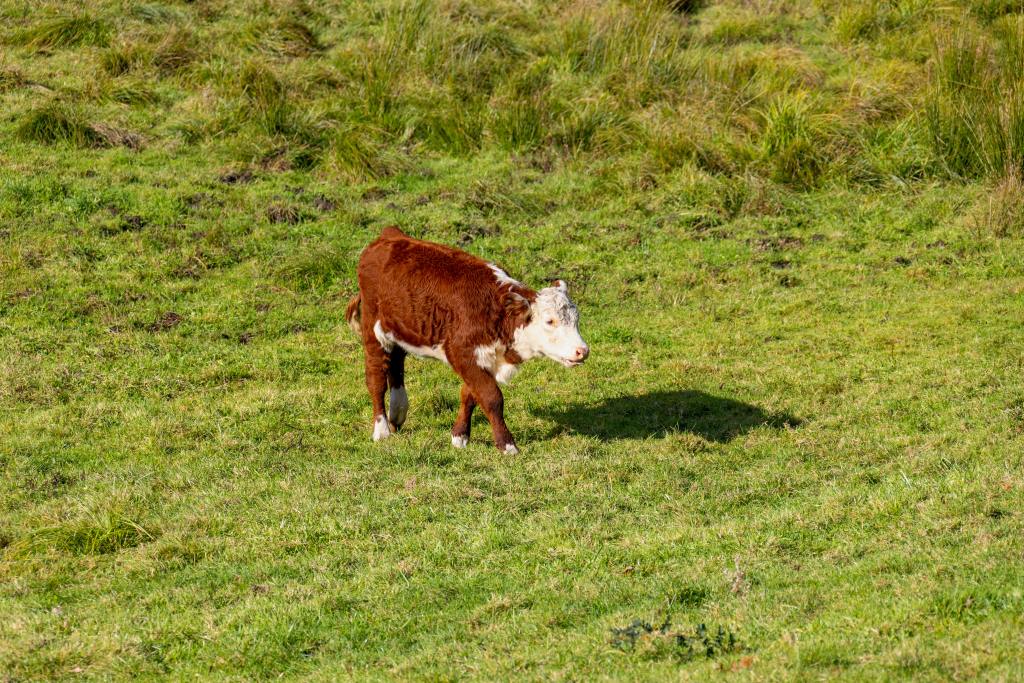
I could see they had the cow in the crowding alley. She looked like a nice Hereford cow of 5 or 6 years of age. The right side of her face was wet and dirty from the eye-watering and running down the side of her face.

I grabbed my bucket and filled it with warm water.

“Let’s go get a look at the old girl,” I said.

“She’s not an old cow,” Robert said.

“Don’t make a big deal out of his comment, Bobby,” Alice said. “He was just using a figure of speech. Lucy is going to be fine.”

Alice was a real battle axe. She was both taller and heavier than Robert. And she dominated every conversation. Those were the only words I expected to hear from Robert today.

We moved Lucy into the chute and put a rope halter on her to secure her head to the left side of the chute so I could get a good view of the right eye.

Looking at the eye, there was cauliflower-like growth on the surface of the third eyelid. I leaned against Lucy’s head and neck to help immobilize it. Then, using a forceps, I grasped the third eyelid and pulled it away from the surface of the eye so I could make sure we were looking at an isolated lesion.

“What do you think, Doc,” Robert asked.

The question surprised me, coming from Robert. I am not sure he has ever asked me a question.

“I think this is most likely a cancer eye,” I said, “We don’t see many cases here in the Willamette Valley, but in Colorado, it was very common. The good thing is that this lesion is currently isolated to the third eyelid. We can remove her third eyelid and probably be done with the problem.”

“That’s good,” Robert said. “Why don’t we do that right now?”

“Now, just a minute, Bobby,” Alice said. “I thought we agreed that we weren’t going to rush into any surgery or anything expensive.”

“Alice, this is a cancer,” I said. “It is going to continue to grow. If it spreads beyond the third eyelid, we will have to remove the eye. That will be a lot more expensive. And if we wait too long, this cancer will spread beyond the eye, and then you may not even be able to salvage this cow.”

“This is our best cow,” Alice said. “We are sure not going to be talking about salvaging her.”
“That’s right,” I said. “That is why the best course of action right now is to remove this third eyelid. Lucy can get along well without the third eyelid. The procedure is simple. Just some local anesthesia, remove the third eyelid with scissors, and place a few sutures. Along with some fly control, that’s all there is to it.”

“How can you be sure that this is a cancer?” Alice asked.

“I am going on experience,” I said. “I have seen many of these cases. Once we remove the third eyelid, we can send it to the lab and get a final diagnosis. Even if it turns out to be a simple wart, removing the thing now is the best course of action.”

“Well, I talked with Tom, up on Turbyne, you know, he used to pull calves before you came, and he said that he thought it sounded like pinkeye,” Alice said. “If it is pinkeye, we should be able to cure it with some powder or something.”

“I can assure you, Alice, this is not pinkeye,” I said. “There is an old saying in veterinary medicine about cancer surgery. It goes something like cut early, cut wide, and cut deep. Oftentimes, our best chance of curing cancer in an animal is with surgery. I think we should remove this third eyelid now. We can worry about the diagnosis after we have this lesion off of her eye.”

“I think we should we should remove it now, also,” said Robert from behind the chute.

“You just keep your thoughts to yourself, Bobby,” Alice said, “I am making the decisions around here. And I think we are going to watch this for a little while.”

“Okay, but I think that is a big mistake,” I said. “I see people watch things, and they always wait too long. But let me give Lucy a shot in the eye and clean up her face a bit.”

“No, you have done what we called you for,” Alice said. “We have some medicine for the eye. I will call you if it gets worse.”


It was late October when Alice called again.

“Doc, I think you better get another look at Lucy’s eye,” Alice said. “I don’t think this pinkeye medicine is doing what it is supposed to do.”

“I can get out there tomorrow afternoon,” I said.

“I don’t know, Doc,” Alice said. “I think it is sort of an emergency,”

“Alice, it has been almost six months since I looked at that cancer eye,” I said. “A few more hours isn’t going to change things much.”

“I will have her in the chute in the morning,” Alice said. “Can you get her taken care of first thing?”

“Okay, I will move my schedule around and be out to your place at eight in the morning,” I said. “How is this eye looking?”

 “It’s looking pretty bad, Doc,” Alice said. “I don’t think I can see the eye anymore.”

“Her only chance will be to remove the eye at this point,” I said. “And her prognosis will be guarded. Are you going to be up to that?”

“Yes, Robert and I talked it over,” Alice said. “We want to do what we can. She should be calving next spring, so we don’t want to lose her now.”


As promised, Alice had Lucy waiting in the chute when I pulled into the barnyard. I could see Robert and Alice coming from the house when I glanced into my rearview mirror.

Lucy’s eye looked terrible. Cancer tissue was bulging from the eye socket. That tissue had pushed the globe back in the socket, and you could not even see that an eye existed.

“I’m sorry we kept you waiting, Doc,” Alice said. “We were just finishing up with our breakfast. What do you think now?”

“I think we should have removed that third eyelid last spring,” I said. “You remember, I said people tend to wait too long. Looking at this eye, this has been too long. Let me check and make sure she is pregnant. We should be able to buy her enough time to raise a calf, then you should try to salvage her.”

“Why do you say salvage?” Alice asked.

“At this point, this cancer has gone elsewhere,” I said. “If you send her to slaughter, they will accept her as a suspect. They automatically condemn the head. Then, if the inspector finds any cancer beyond the head, they will tank the entire carcass. You will end up paying a slaughter fee and not getting anything in return.”

“What if we just make hamburger out of her with a mobile slaughter outfit?” Alice asked.

“That’s your choice,” I said. “I guess it depends on how hungry you are. It won’t kill you, but I wouldn’t recommend it.”

Why do you want to check her pregnancy?” Alice asked.

“If she is not pregnant, it probably isn’t worth removing this eye,” I said. “I would recommend just sending her to salvage.

“She always has a calf,” Alice said. “But if you think it is necessary, go ahead and check her.”

I pulled on an OB sleeve and ran my left arm into her rectum. I easily retracted her uterus into her pelvis. That was a sure sign she was not pregnant. She should be four or five months along at this point. I carefully examined the full length of her uterus. Not pregnant.

“She is not pregnant,” I said as pull my arm out and removed the sleeve.

“How could that be?” Alice said. “She is always one of the first to calve.”

“This eye has been pretty stressful,” I said. “Without a pregnancy, you have to get two years of survival to get another calf. That makes holding her over a poor decision. Add to that the surgery expense and the only viable option is to salvage her now.”

“I’m not sure about your math, Doc,” Alice said. “I just hate to think of losing our best cow.”

“That’s okay, Doc,” Robert popped up from behind the chute. “We are not going to put her through surgery and a possible cancer death just because Alice couldn’t believe you in the first place. I will call Mohawk and have them pick her up in the morning.”

“How dare you overrule my decisions!” Alice screamed at Robert as she wheeled around and headed for the house.

“She will be okay, Doc,” Robert said. “She is just upset that she didn’t listen to you in the first case.

Lucy went to Mohawk Slaughterhouse the following morning. The cancer had progressed to the point that it was found in the lymph nodes in the neck and in the chest. Her carcass was discarded by the rendering company. 

Robert stood a little taller after finally standing up to Alice. I am not sure that Alice fully recovered from the events.

Photo Credit: Photo by Lukas Kosc on Pexels.

The Induction Physical

D. E. Larsen, DVM

It was one of those bright spring days in Western Oregon. I left my chemistry class a few minutes early. Southwestern Community College was housed in old military buildings at the North Bend airport in 1965.

If I hurried, I could get to Myrtle Point and punch the time clock at the Safeway cheese factory thirty-seven minutes after two. That way, I would get paid from two-thirty.

Traffic through Coos Bay always seemed to slow me down a bit, but when I hit the edge of town, I pushed on the accelerator of my Corvair and made up some of that lost time. 

Everything was going well, and I was on track to make my time when I approached the two-lane section of the highway. Then I noticed the state cop with his lights flashing coming up behind me. Where was he hidden?

I stopped and pulled to the side of the road, and the state policeman put on his hat and got out of his car. I got out of the car and retrieved my driver’s license from my wallet.

“Do you have oversized tires on this car?” the state cop asked.

“No, everything is standard,” I replied.

“Do you know what the speed limit is on this highway?” the policeman asked.

“Yes, I know it is fifty-five miles per hour,” I said. “And I know I was going a little fast. However, I attend school at SWOCC, and I work at the cheese factory in Myrtle Point. After class, if I leave a couple of minutes early and hurry, I can punch the time clock to get paid from two-thirty. That extra fifteen minutes each day adds up to over an extra hour every week. When I am paying for school, that means a lot.”

I could tell from his expression that he thought I was telling a big story, so I continued.

“You can see my work clothes and lunch bucket in the back seat,” I said, pointing out my neatly folded white pants and T-shirt nestled in the rear seat beside a large gray lunch bucket. “My school books are back there, too.”

The cop looked in the back seat and then sized me up again.

“Okay, you convinced me,” he said. “But an extra hour each week doesn’t mean much if you’re in a wreck. So, you need to slow things down. Maybe leave class a couple of minutes early.”

“You are probably right,” I said. “I knew I was pushing it today.”

“I patrol this section of the highway often,” the state policeman said. “And I have a good memory. I am going to let you off this time. But if there is another time, you will get a ticket.”

“Thank you, sir,” I said as I got back into the car. Looking at my watch, I saw the half-hour was gone, but I could still catch the forty-five-minute mark if I hurried. But I pulled back onto the highway slowly and watched the cop make a U-turn and head back toward Coos Bay. When I rounded the first corner, I pushed on the gas pedal again.

I parked in front of the cheese factory and rushed in to clock in right on the number two fifty-two. Then, I stopped at the office to talk with Art Henry, the manager. 

“Mister Henry, I was wondering if I would be able to work full time this spring if I dropped out of school?” I asked.

“Sure, Dave, we will be busy enough to give you full-time status,” Art said. “But why are you going to drop out of school?”

“It’s only for the spring,” I said. “I just got my acceptance letter for Oregon State for next fall. I want to make sure I have enough money for the full year.’

“Okay, that sounds good,” Art said.

So it was set. I would drop out of school and work full-time for the spring and summer. That would provide enough money for the next two years if I worked the following summer as well.

When the Winter Quarter ended, I dropped out of school. 

My plan was well thought out, except for the draft deferment that went along with college enrollment. The military was in the process of building up their numbers for the Vietnam conflict. A few weeks after I dropped out of school, I got my greetings letter from the draft board.


There were about eighteen of us standing in front of the Coos Bay Post Office, waiting for the Greyhound Bus to take us to Portland for our induction physical. We stood there, a bunch of strangers, each lost in their own thoughts.

As the bus rounded the corner, the draft board member came out the post office doors, almost as if it were a timed event. The lead lady, whom I assumed to be the chairman of the board, was carrying a stack of folders. 

She marched right up to me and extended the stack of folders.

“Here, Mr. Larsen,” she said as she thrust the folders into my chest. “These are everyone’s records. All the meal tickets and hotel reservations are in these folders. The YMCA is right across the street from the bus station. You are to eat all your meals at the YMCA. And after your physicals tomorrow, you catch the evening bus back to Coos Bay. You will get back here around ten tomorrow night. You’re  are in charge.”

I took the folders, and a bit overwhelmed, I gasped, “Who elected me to be in charge?”

The lady looked me in the eye, and with a stern voice, she said, “You are the oldest one here, Mr. Larsen. And you know what the means!”

One of the men behind the lady stepped up and helped me get the folders into a large bag. “This will help you keep track of everything,” he said.

With that settled, we boarded a half-full bus bound for Portland. It was nearly a five-hour trip.

I placed the folder bag above my seat, along with my overnight bag. Jim was right behind me and threw his bag into the same compartment. I squeezed into the window seat, and Jim settled into the aisle seat beside me.

We introduced ourselves. It was the first words exchanged in the group. We were all in the back of the bus, and you could begin to hear a little chatter from our ranks.

Jim was from Powers and a year younger than me. I was twenty years and a few months old. 

“They have been drafting everyone,” Jim said. “How did you manage to hold out so long?”

“I was in college,” I said. “I dropped out spring term to work. I guess that wasn’t such a good idea.”

“Yeah, this Vietnam thing is getting big,” Jim said. “I need to figure out how to flunk this physical. The thing I hear, however, is that they are taking everybody.”

“I’m thinking that I will enlist,” I said. “That way, you at least have some control over what happens to you.”

The bus crossed the bridge heading north out of North Bend. I settled in my seat, hoping for a bit of sleep on the trip to Portland. I knew the road well until Tillamook; after that, it would be new to me. 

There was a constant chatter now coming from our group. Jim seemed a little restless and obviously had no intention to sleep.

There was no stopping until we got to Taft. The Greyhound station was in a house just over Schooner Creek as you entered Taft (now Lincoln City). 

“I have a fake i/d,” Jim said. “Let’s take some orders, and I will buy some booze. The liquor store is just up the street.”

Jim didn’t look eighteen, but the clerk at the liquor store was only worried about the date on the card. We distributed the bottles and the change as best we could. Most of these individuals had little experience drinking whiskey directly from the bottle. 

As the bus continued north, the idle chatter gave way to a dull roar. When the bus got to McMinnville for a stop, the driver caught my arm at the door.

“You need to settle those guys down, or I’m going to put you all off this bus,” the driver said. “You will have to figure out how you are going to get the rest of the way to Portland.”

I was learning that this leadership role wasn’t going to be as much fun as I thought. I made my way to the back of the bus when everyone got back on.

“You guys are going to have to quiet things down, or the drive is going to kick us all off the bus,” I said. There were a few moans, but everyone straightened up, and we made it to Portland.
Getting everyone off the bus was another story. One guy was passed out. Two of his buddies carried him off the bus and across the street with his arms around their shoulders and his feet dragging on the ground. We laid him on the floor in front of the check-in desk.

I gathered all the materials from the folders and got everyone registered. 

“Now, I need everyone to sign the register,” the clerk said.

One by one, everyone signed in. The clerk looked at the guy on the floor.

“He has to sign also,” the clerk said.

Once again, his buddies hoisted him up, put a pen in his hand, and made some sort of a signature. That satisfied the clerk. Then we hauled him upstairs to the rooms and laid him down in the shower. It was a good thing because he vomited shortly after hitting the floor this time.


Morning came, and I overslept along with several others. But we survived; everyone got their breakfast ticket, and we hurried down the street to the induction center.

The morning was filled with testing. The test seemed easy to me, and I finished all the tests early. It was not a pleasant environment, with street noise and exhaust odors from the busy streets just outside the window.

Then, we all got the experience of a mass military physical exam. Strip naked and stand in a large circle around the room. Teams of doctors would start around the circle. One group listened to your heart and lungs, one after the other, down the line. The next group studied your head, ears, nose, and throat. Then came the hernia checks; turn your head and cough, and again. One group looked at feet and knees. Then, for the last item, everyone turns around, bends over, and spreads their cheeks. That seemed to last forever. 

Then, it was hearing tests and any rechecks for individuals with items identified in the mass gathering.
After that, it was to get a bite to eat and kill some time until the evening bus. 

The ride home was quiet. Almost everyone slept most of the way. I have every little memory of the trip home.

The good thing was, my car was intact and waiting. In those days, there was little concern about vandalism or theft involving cars parked on the street or in lots for a day or two. 

I drove home, rested, and slept well that night. Now, you only had to wait for the results in the mail to find out what your classification would be. 

Mine, like many others, was 1A, ready for service.

Photo Credit: Malcolm Hill on Pexels.