A Perfect Delivery

D. E. Larsen, DVM

I glanced out in the waiting area and could see Emma waiting to talk with me. Emma was an attractive young girl with light brown shoulder-length hair that she wore in a ponytail. I think she was still in high school, probably a junior or senior.

Emma had a young mare, Lilly, due to foal most any time now. Emma was doing everything in her power to provide the perfect setting for the delivery. In doing so, she has been talking my leg off. She had been talking with me a couple of times a week for the last month. Most of the time, that was okay, I did a lot of work for her father.

When I stepped out to the front counter, she bounced up.

“My father says I have been bothering you too much and not paying you a fair fee,” she said. “So I want you to make a farm call and check out the birthing facility I have set up. I have moved a bed into the barn, and I will be sleeping there until Lilly foals.”

“You tell your father I am always willing to provide whatever instruction I am capable of to our clients and their families,” I said.

“I know that, and so does he. We just thought maybe you should check over what I have set up, just to make sure I am not missing something. I want this to be perfect.”

“That sounds fine. You can schedule a time with Sandy. It is probably a good thing, we have covered a lot of topics over the last month or so.”

“I have a checklist from those discussions and from reading in Horse and Rider magazines.”

“You know, Emma, a lot of mares will be reluctant to foal if they are being watched,” I said.

“But she is so ready, all the signs are there,” Emma said. “She is leaking milk, and her privates are really swollen and flabby. And her due date is tomorrow. I am taking off school tomorrow, and Thursday, and Friday if she hasn’t foaled by then.”

“They have their own clock, and don’t be surprised if you don’t go to the house for dinner or something and come back to a foal standing in the stall,” I said. “But, you schedule a time, and I can get out there this afternoon and see what you have set up.”

The Pedersen farm was anything but neat. The barn was a large old barn, once painted red, that set a hundred yards behind the house. With all the work on the farm, Mr. Pedersen didn’t have a lot of extra time to worry about mowing the lawn. Emma was the oldest of 5 girls, and I don’t think any of them helped around the barn much unless it was with Emma’s horse.

I drove past the house and parked the truck by the barn. Emma came out of a small attached shed on the house side of the barn. Her younger sister was by her side, Sara was 7 years old, and she was often around when we were working with the cows. Both girls were all smiles, and you could tell that the pending birth was going to be an exciting event for them.

I was literally blown away when Emma and Sara led me into the shed with the horse stall. It was immaculate. There was not a cobweb in the tallest rafter. She had a well-made cot in the corner with a desk and bookcase nearby. Then she had a small refrigerator on a shelf for medication and supplies.

Lilly was in a sizable stall that was bedded entirely with straw. There was a pitchfork by the stall gate and not a trace of soiled straw in the stall.

“Do you think the straw is clean enough?” Emma asked. “I have worried about that, but I don’t know what else there is that I could use.”

“The straw is fine,” I said. “It is far better than most foals get.”

“Emma thinks that it is going to be born tonight,” Sara said. “I want to bring a sleeping bag out here, but Mom won’t let me.”

“Your mother is probably right,” I said, “it is a school night. When mares have their babies, it is usually a pretty fast event. You would probably sleep right through it.”

“I just worry about all the little things,” Emma said. “The magazines talk about all sorts of problems. Things like navel infections I can feel confident that I have under control by dipping the navel with iodine. They talk about foals suffocating in their membranes. Stuff like that where you have to there to help, or you lose a foal.

“You have things just about as perfect as they can be, Emma,” I said. “Those stories like the foal suffocating in the membranes are just stories. Most of those foals were probably stillbirths. Things happen fast when mares foal and most of the foals are not going to allow any membranes to hang around on their heads. Horses have been doing this a long time before people got involved in the process. Being here to watch is okay, but you don’t want to do anything unless there is a problem. And then you should call me first if you can.”

“Okay, I will relax a little,” Emma said. “At least you have made me feel a little less concerned. It is just that I want everything to be perfect with this delivery.”

“And Emma, don’t worry if she doesn’t foal tonight,” I said. “Mares will often hold off their labor if there is too much observation. The big horse ranches usually monitor their mares in labor with remote cameras.”

“Okay, but you know I am going to call you if anything looks unusual.”

With that, I returned to the office, and Emma sort of faded into the background for a time. Wednesday came and went with no call.

By Friday afternoon, I had just about forgotten about Emma and her mare. Then the phone rang.

Sandy answered the phone and quickly handed it to me. There was a very frantic Emma on the other end of the line.

“Dr. Larsen, you have to come quick!” she said. 

Then the phone was silent for a moment before little Sara picked it up.

“Lilly had her baby out in the shit pile,” Sara said. “Emma is pretty upset. Can you come?”

“You tell Emma that I am on my way and that things are going to be alright,” I said.

The entire family was out in the barnyard when I arrived. The mare and the foal were both up and looked like they were doing okay. Emma had a halter and a lead rope on Lilly.

“It is all my fault,” Emma said with tears streaming down her face. “I was cleaning the stall and left the gate ajar. Lilly ran past me and out the gate. She picked the dirtiest place in the barnyard, right on the pile of straw and manure from the last 2 weeks of stall cleaning. She laid down and popped that foal out before I could do anything.”

Lilly was stepping sideways with her hind feet, bothered by the membranes still hanging out of her. About that time, the membranes came out with one big flop, and she stepped away.

I picked up the membranes and spread them out on the ground to show Emma how to check that the entire afterbirth came out.

“In cows, we don’t worry too much about retained membranes these days. As long as the cow is doing okay. But in the horse it is an entirely different story and it is important to check that both off these ends are intact. Otherwise, we need to go in and get the retained pieces.”

“Now, let’s clean this little gal up and take care of her naval and her E-Se injection,” I said. “Then, we can take care of Lilly.”

By the time we were done, and we had Lilly and the foal back in their stall, Emma had calmed down a little. 

“What should I watch for now?” Emma asked.

“You should watch for a normal baby,” I said. “Don’t worry unless there is something to worry about. You have a long way to go in this life, Emma, if this little hiccup today is the worst you have to deal with, you will be a lucky young lady.”

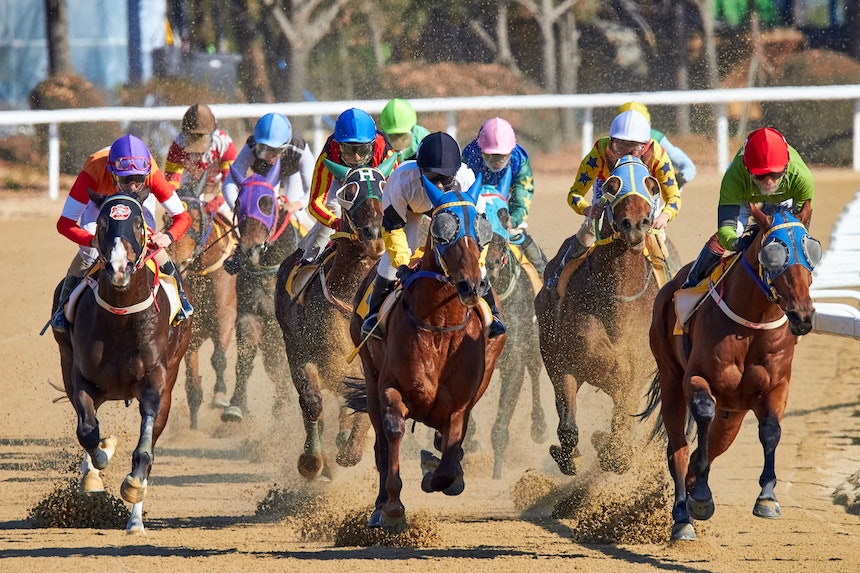
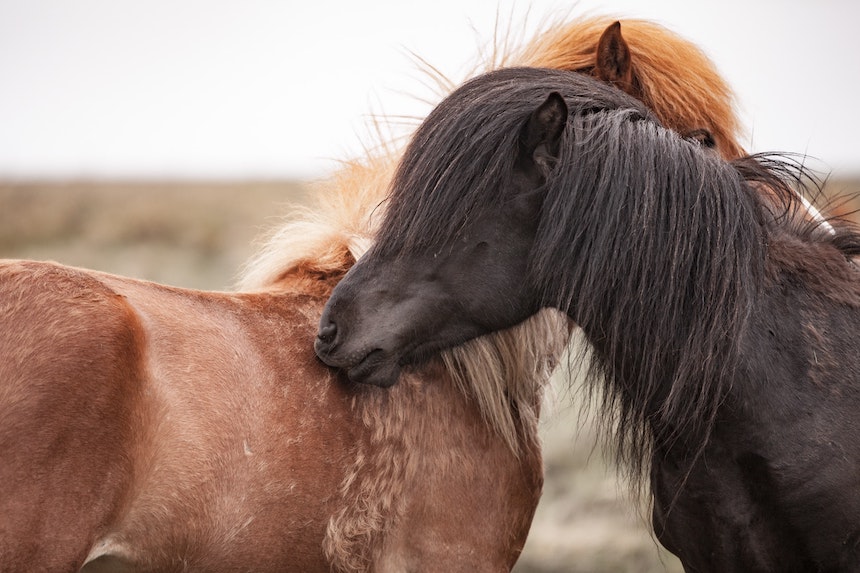
Photo by Helder Sato of Pexels

Samson the Goose

D. E. Larsen, DVM

It was almost comical to watch Tom struggle to get through the front door with both arms wrapped around a large white goose who had no intention of coming inside. The goose was squawking, and in trying to bite an ear, it had knocked his hat off. Finally, Mary rushed over and held the door open as Tom half fell through it into the waiting room.

“That was a struggle,” Tom said, almost out of breath.

“It is a little too early for Thanksgiving,” I said. “What’s up with the goose.”

“This is Samson, I ran over him with the tractor a few minutes ago,” Tom said. “His one leg is broken or something. He can’t stand on it.”

“Tom, I don’t do birds,” I said. “Maybe I can find some place to send him.”

“Now listen,” Tom said, “you are good enough for my cows, you are going to damn well be good enough for my goose. Samson makes me more money than any of my cows. He’s the top breeder in the area. The money from his stud fees sends the old lady and me to Reno every year.”

“Sounds like I better get a look at that leg,” I said. “Let’s get Samson in on the exam table.”

The exam table was an excellent thought unless you are a barnyard goose. Samson had no intention of being put on a table, much less holding still for an exam on a messed up leg.

“Tom, we are going to have to sedate Samson to get an exam,” I said. “It might take 20 minutes or so. Do you want to wait?”

“Doc, I have a bunch of heifers waiting for their morning feeding,” Tom said. “I want you to fix the leg. You give it your best shot. I have every confidence in you. If it turns out that it can’t be fixed, will so be it. I don’t want a bunch of phone calls. I will be back in the morning after my chores.”

Tom left us with Samson who could not stand, did not want to be here, and had no thought about being cooperative. 

“How do you want to handle this?” Mary asked. “You are supposed to be out to Elliot’s right after lunch. They will have their heifer calves caught for vaccinations.”

“You need to give them a call and let them know we have an emergency, and I may be late,” I said. “I don’t want to sedate Samson more than once. We will give him an injection, do the exam, probably will need to get an x-ray, and then go right to surgery, if that is required. That probably means we work through the lunch hour so I can get out to Elliot’s.

My experience working on birds was almost non-existent. We got an estimate of Samson’s weight by Mary holding him and standing on the scale, then subtracting her weight. I gave him a good dose of ketamine for anesthesia. It only took a few minutes, and we could lay him down on the exam table.

I was surprised that Samson was relatively free from any other injury except the left leg. The leg was a mess. It didn’t feel like any fractures were present, but the knee was totally ruined. There was a definite rupture of the anterior cruciate ligament and also the lateral collateral ligament. We took an x-ray to make sure there were no fractures.

With Samson still under anesthesia, we started plucking feathers and prepared the leg for surgery. I incised over the lateral stifle (or knee). It looked more like a turkey drumstick at Thanksgiving than anything I had looked at before. I carefully dissected to where I could reflect the knee cap to the inside of the leg and expose the knee joint.

It looked better than I was expecting. The lateral collateral ligament was torn, and that fact allowed me to examine the joint a little easier. I spread the joint open, the cartilages were intact, and the anterior cruciate was completely torn.

 “How do you repair this in a goose?” I said to myself.

Samson would put far less stress on this knee than a dog, so a repair should have a better prognosis. I decided to use a modified Paatsama procedure. I looked for a good strip of fascia to use to replace the cruciate ligament and found a suitable piece of lateral fascia that would work. I could leave one end attached near the knee. I drilled a hole with an IM pin through the lateral condyle of the femur, exiting at the location of the cruciate ligament and continued it through the tibia to come out on the medial side of the tibia tuberosity. I thread the strip of fascia through this hole and placed anchoring sutures on each end of the strip of the fascia. I was a little surprised at how stable the joint felt when I was done.

I repaired the lateral collateral ligament with stainless steel sutures. Then I returned the knee cap to normal position and closed the joint. I used Dexon sutures for all the closures and a subcuticular suture for the skin closure.

We placed Samson in a kennel for recovery. I was surprised when I returned from my farm call. Samson was up standing on the repaired leg like nothing happened. I glanced at the clock. With any luck, I could get Tom in here to take the goose home this evening.

“Tom, can you pick up Samson this afternoon,” I said into the phone when Tom answered.

“Is he okay?” Tom asked.

“We did surgery and repaired the leg,” I said. “He is fully recovered and walking well. He will probably be better off in his barn than here tonight.”

“I will be right there,” Tom said.

“I told you that you guys were good enough for my goose.” Tom beamed as he scooped up Samson and headed for the door. “Remember that when you fill out the bill.”

When the breeding season came, Samson was in shape and functional as ever. He paid for another trip to Reno for Tom and his wife.  

Samson had learned to avoid the tractor, and I had learned that I would be stuck working on farm birds for the rest of my life.

Photo by Eric Muhr on Unsplash

Donica Lake Trip

D. E. Larsen, DVM

It was early summer in 1978. We had lived in Sweet Home for a couple of years, and I was becoming involved in the community. There was a lot of debate taking place between the timber industry and environmental groups. The environmental groups had proposed a Middle Santiam Wilderness area. I felt that I needed to check it out.

Our family was young at the time, and Sandy was a good sport but not really an outdoor girl. We had 4 kids: Brenda, 11, Amy, 7, Dee, almost 6, and Derek, just 2.

We planned a 3-day backpacking trip into Donica Lake in the southern edges of the proposed wilderness area.

The trip involved a 3-mile hike, and the first 500 yards were tough, as we would have to traverse an ancient landslide that was still slowly moving. The plan involved packs for all the kids, one pound per year. My pack would be 45 pounds, Sandy would carry 20 pounds, Brenda would be limited to 11 pounds, Amy would have a 7-pound pack and Dee 6 pounds. Derek was given a pack, but it only contained a couple of clothing items.  

Amy’s and Dee’s packs included their sleeping bags and clothing items, and that was about all. Brenda’s was similar but also contained the tent poles to our large 6 person wilderness tent. Sandy’s pack included a lot of the food items, the rain fly for the tent, sleeping bag, and clothes. We were pretty strict with the weight of these packs. My pack contained everything else we would need over 3 days and the main portions of the tent. My pack tipped the scale at close to 50 pounds. I had carried more in the army.

Finally, the day arrived, and we were off. Leaving the highway at Mountain House about 20 miles east of Sweet Home, we traveled up Upper Soda Fork to the divide between the South Fork and Middle Fork of the Santiam River. We stopped at the massive old-growth tree that stood along the creek a couple of miles from the highway and then continued to the top of the hill. The road down the other side to the Middle Santiam River was steep and winding.

We parked the car, loaded up, and headed for the slide. This was more of an obstacle than I had been led to believe. On my first trip across the slide, I took all the kid’s packs and had Brenda follow my footsteps. She had no problems. Setting all the packs down, I returned for the others. With Derek on my shoulders and the younger girls on each hand, we managed to get everyone across. Sandy was having a few second thoughts about now.  

A young man was camping by himself at Pyramid Creek. We stopped and talked with him for a time. He was interested in going to Donica Lake and asked if he could travel with us. I figured he seemed nice enough, but then so did Ted Bundy. I just thought it would be better to have him with us, rather than wondering where he was behind us.

We started off up the last remnants of a logging road. We were clustered in small groups as we started up the hill. Sandy and the kids led the way, followed by the young man and then me bringing up the rear. I was glad that I had decided to carry my revolver. Probably would not need it, but it just made me feel more in control of the situation. 

It was easy going now with the road to the river and bridges across the river and Pyramid Creek. I noticed an excellent campsite along the river just before the bridge. The trail involved a logging road for the first mile and then a large clearcut that was all located within the proposed wilderness. There was a hill in this first mile, but it would be an easy hike from the top of the hill. Derek was the first to shed his pack, but Amy and Dee were not long after him when they realized Dad could carry more.

After the clearcut, we entered a prime old-growth forest. The shade was welcome, and the trail was level. Soon we reached a stream, and we missed the turn in the path where it crossed the creek on a massive old cedar windfall. The young man decided he had gone far enough and headed back to his camp. It didn’t take long to correct our error, and just over a little rise from the stream, we came to Donica Lake.

The lake was not very impressive, maybe 3 acres in size, but entirely surrounded by giant old-growth Douglas Fir trees. These trees were all 4 to 6 feet in diameter. On the eastern end of the lake, a small stream entered through a grove of massive red cedar trees. I had never seen such a grove of old-growth cedar trees. There was a nice sand bar here, and this is where we made camp.  

Everyone was tired from the hike, so we busied ourselves getting the tent set up and the sleeping bags laid out so the kids could relax. A gas backpacking stove made dinner easy to fix. The kids wanted a fire, but we convinced them that we would do that tomorrow. Early to bed tonight.

About 3:00 in the morning, Derek started vomiting. He was still vomiting when morning came. Sandy and I decided that we had better get back closer to civilization. If we got on the trail after breakfast, it would still be afternoon by the time we got back to Sweet Home. So I packed up while Sandy fixed breakfast. Derek was not up to eating. We loaded up, I took the two younger girls’ packs on my pack and put Derek on my shoulders. I told Sandy I would walk at a brisk pace and wait for her and girls every half mile or so.

By the third stop, Derek was digging through the pockets on my pack for anything edible. Nuts, Trail mix, and jerky were all disappearing. He was apparently well. We decided to continue on to the river and set up camp if Derek continued to improve. By the time we made it to the river, Derek had consumed everything available from the pockets on my pack. I was tuckered out after 3 miles with over 80 pounds on my back. The campsite on the river looked pretty good. There was no sign of the young man who had been camped at Pyramid Creek.

As it turned out, this was probably a much better place to camp. The kids had fun, and we were able to get each of them hooked up with a fish. There is nothing like fresh trout cooked over an open fire. The next two days were relaxing and comfortable. Now the only thing that we had to worry about was getting back across that slide.

Photo by David Baker on Unsplash.