Notes on My Mother, from the Archives

D. E. Larsen, DVM

My mother was born on August 14, 1913, as Dolores Lorrene Davenport. She was born on the family farm on Catching Creek, out of Myrtle Point, Oregon. 

The fifth child in a family of ten, she learned how to work at an early age. But by today’s standards, her childhood was idyllic. There was hard work, shared by many hands, and many lessons learned that served her for a lifetime.

There was no electricity on Catching Creek until the late 1930s, and the family had a three-hole outhouse. My mother never lived in a house with indoor plumbing until 1950. They installed an indoor bathroom in their house at Broadbent that summer. She was thirty-seven years old.

She went to elementary school at Twin Oaks School. At this one-room school, her family accounted for a large portion of the attendance. Then she went on to high school in Myrtle Point.

She met my father in high school, and they were married a couple of years later. Graduating in 1932 in the depth of the depression, Mom worked at several jobs until she married Frank Larsen in September of 1934. Dad attended OSU that fall and winter before running out of money. They hitchhiked from Corvallis to Myrtle Point. Mom was pregnant with my sister by then. Some 13 months after my sister was born, my oldest brother came along.

Dad went to work in the woods, and they lived in logging camps in Coos County for a time. One shack they lived in, they purchased for forty dollars. It had a dirt floor, no water, no plumbing, no electricity. They couldn’t sell it when they were leaving, so they just left it.

In those years, one car was luxury, two cars were unheard of for most people. Once, when they lived out of Allegany on the Coos River, my sister was whittling on a door frame, dropped the knife, and it stuck in her eye. Dad was at work with the car. Mom had no phone, no car, no close neighbors, and my oldest brother was too young to run for help. Mom held my sister on her lap with a washcloth over the knife until Dad got home from work. They took my sister to the doctor then. The injury looked far worse than it was, but imagine the stress of that situation.

My second brother was born in 1941, and I followed in 1945. Shortly after I was born, we moved from the Coos River back to Catching Creek. And then, they purchased a small ranch above Broadbent in December of 1949. 

Things like a telephone and electricity were commonplace by the late 1940s. And most houses had running water by then, gravity fed from a spring on the hill in our case, both on Catching Creek and at Broadbent. The telephone hung on the wall, and you cranked the handle to contact the operator who would connect you to who you were calling. Party lines only, and that meant 10 or 12 parties on the line. Don’t plan on making a call on Saturday morning, and don’t think anything you say is private.

To make a go of it on the ranch, Dad continued to work in the woods as a Donkey Puncher. Mom milked the cows in the morning with the boys’ help, and then she did her housework. Dad would be off work in the afternoon, and he did the evening milking. Mom and the kids did all the other chores. The included changing irrigation all summer long.

A full dinner just seemed to happen, every night. Everybody was at the dinner table, and that was what you had to eat for the night. If you didn’t like something for dinner, that was fine, but there was nothing else to eat until breakfast.

With the labor of a bunch of uncles, the folks installed a bathroom in the house at Broadbent in the summer of 1950. No more late-night trips to the outhouse and no more weekly baths in the washtub. Mom was 37 years old at the time.

In 1950, my brother cut his hand badly. We had no car, and an ambulance did not exist. Mom was able to call a neighbor, and she had a car. She drove Mom and my two brothers to the doctor. Larry was in the back seat tending to Gary’s lacerated hand.

That laceration required several surgeries, most of them in Portland. Mom and Gary would catch the Greyhound Bus at two in the morning in Myrtle Point, change buses in Coos Bay and arrive in Portland about 10:00 in the morning. They would do the doctor visit, eat lunch, and maybe go to a movie before catching the afternoon bus back to Coos Bay. Dad would pick them up when they arrived at about midnight. I have never heard how they got around in Portland, from the bus to the doctor and back. I could not imagine them using a taxi.

I have no memory of eating at a restaurant as a family. A couple of times, I remember eating at a restaurant when we were traveling and visiting, but those events were rare. When my sister got married, we went to LA.  We went to a Chinese restaurant with an aunt and uncle. Even when we traveled long distances, we would eat a packed lunch in a park somewhere.

In 1958, we moved from Broadbent back to Catching Creek, where the folks leased the Lundy Place, and Dad quit the woods and milked cows only. Mom did not have to milk cows there, but she kept plenty busy with a massive garden, canning, and housekeeping. 

There was silo filling twice a year and hay hauling once or twice a year. Lunches for the crew of uncles and friends and maybe a hired hand or two were something akin to a holiday dinner. The women worked as a crew in the kitchen, similar to the crew in the fields.

I was the last to leave home, college in 1963 to 1965, where I was home and gone from time to time. Then I joined the Army in 1965. In 1967, the folks sold the dairy cows and moved back to Broadbent and ran beef cows. Dad worked at the feed store for a time, and then he tended greens at the golf course. Mom went to work at Meyers Department store in town. 

They fully retired in 1978. Dad had contracted brown lung disease from the silo and got to the point that he could no go to the barn. Mom had to do all the feeding, so they decided to sell the cows.

When they were loading the cows to go down the road, Mom started to cry. Dad asked her what was wrong.

“I wanted to keep that little heifer,” Mom said.

So, of course, they kept the heifer. And in so doing, they learned that feeding one cow is just a hard as feeding twenty cows in the winter. The following spring they sold the heifer. And Mom was without cows for the first time in her life.

My mother was loved by everyone. She was a favorite aunt, commonly called be Auntie Deacon. I think there were other names. Deacon, also used by my father and her brothers, was a name given to her by a childhood friend, Connie Felcher.

My mother seldom said a cross word. We were always instructed, “If you can’t say something good, don’t say anything at all.”

As I grew older, I could read her body language better. When she was bothered by somebody’s comments or the event of the moment, she might wring her hands. It would be rare indeed to hear her speak in unfavorable terms.

Maybe the most consistent way to get her to comment would be to say something was the mother’s fault. “The kid was bad because it was the mother’s fault.”

Then Mom would say, “That makes me so mad, for them to always blame the mother.”

Mom struggled with my father’s death. Dad had wanted to die at home. When the doctor in Eugene told him that there nothing more they do for him, he immediately said, “I want to go home.”

Mom could not allow nature to take its course with Dad. Every episode where Dad would approach death, she would call the ambulance, and it was back to the hospital. Each trip left him weaker and frailer, and it did nothing but buy a few more days or another week. Finally, Dad died in a care center.

Mom’s family was long-lived. Although, her mother had died at 84 after suffering a stroke.  Her father lived to be 94. Six of the 10 kids lived into their 90s. Mom was the longest-lived, at 98.

We had to move her into the care center in Myrtle Point for the last few years of her life because we could not find competent in-home care in the area. The last year she was home, she was in and out of the hospital with digestive issues every few weeks. The caretakers could not boil water. 

Initially, in the care center, the converted Mast Hospital, she had a room upstairs where the full nursing care was located. 

“David, I think this is the room we were in when you were born,” Mom said to me on my initial visit. In those years, birthing mothers were often kept in the hospital for an entire week or more.

Later, when a room came available, we moved Mom downstairs to the assisted living portion of the center. She was happier there, but she would have preferred to be home.

At one point, two of her sisters were in the care center with her. Lila and Audrey were both there. Of the three, Mom was the oldest, and she took personal responsibility for the care of her sisters. 

Once, she said, “I would like to escape this place, but I can’t leave Lila here by herself.”

Mom became somewhat bitter as she recognized her approaching death. She had enjoyed many years where she was the matriarch of the large extended Davenport and Larsen families. She said to me during one visit, “People are just going to have to learn to get along without me.”

“Mom,” I said. “Your example will guide many people for the rest of their lives.” I am not sure that helped her cope with her pending death much.

The care centers tend to eat through a person’s assets quickly. We were very close to the point of going to state and placing her on Medicaid. She was down to her last few dollars when she had a stroke. She was in the hospital for almost a week following that stroke and then returned to the care center in Myrtle Point, where she died a few days later. On my last visit with her in the care center, she was able to sit up and stand with assistance, but she did not acknowledge anyone. And she never spoke. 

She lived 98 years, 6 months, and 11 days. She left four kids, 13 grandchildren, and 27 great-grandchildren.

https://www.newspapers.com/clip/33947890/dolores-lorene-davenport-larsen-obituary/

Can We Eat Her? From the Archives

D. E. Larsen, DVM

“Bart, it’s good to see you. Do you need to talk with Debbie?” I asked.

“If she is busy, that’s okay. I can wait. I just wanted to tell her we would be gone by the time she gets home. We will have dinner ready for her and Lisa. She is just going to have to pop it in the oven.”

“I’ll send her out. They are just cleaning things up a bit,” I said.

“While I’m here, Doc, I have a cow that is laying around a lot. She looks fine, but she has hardly moved in the last few days. I can’t do it tonight, but is there some time in the late afternoon that I could get you to look at her.”

“I could get up there tomorrow. What time do you get home?”

“I can make sure that I’m home by three. It’s easy for me to skip the last load of logs on Friday. Do you know where we are located?”

“I know you are on Whiskey Butte. But I can solve the problem. I will just have Debbie lead the way. I can make it an end-of-the-day call. She will like to leave the clean-up for the others.”

“She’ll like that. She really appreciates this job, Doc.”

***

It was close to four by the time we pulled into the pasture with the cow. It was almost a half-mile up the road from the house. The cow, an older Hereford, was lying down when we approached. She stood up but was reluctant to walk away.

I was able to examine her with no restraint. She had a moderately elevated temperature, but otherwise, the exam was pretty unremarkable. I palpated her ventral abdomen with some deep pushes, checking for pain from a wire. There was no response. Putting downward pressure at the middle of her back caused a definite groan. I waited a moment and then repeated the maneuver. She swung her head at me this time to emphasize her discomfort.

“Her back is pretty painful,” I said. “It’s hard to say what she did. It could be just soft tissue stuff, or she could have broken something.”

“What can we do about it?” Bart asked.

“We aren’t going to do an x-ray. I can give her a dose of Banamine and see if that helps.”

“What does that do?”

“It’s like a big dose of ibuprofen, just an anti-inflammatory medication. If that doesn’t do it, I don’t know. She might be salvageable if that temperature goes down.”

***

I was trying to close down the clinic a little early on Saturday morning when the phone rang.

“Doc, this is Bart. That cow is down and can’t get up. What do you think?”

“I’m not sure there is anything more I can do for her?” I said. “But I can run up and get a quick look at her. We are slow here this morning.”

“I don’t want to impose on your free time if there isn’t anything to be done.”

“That’s fine, Bart. We don’t have any plans for the afternoon, and it won’t take me much time to get a quick look.”

“Why don’t you take your time and have lunch. Then bring Sandy and the kids up for the afternoon. We can barbecue dinner, and the kids can swim in the pool if the sun stays out. We haven’t turned the heater on yet this spring.”

“Okay, but this might not turn out very favorably for the cow. I don’t want to ruin your afternoon with bad news.”

“I’m a big boy, Doc. I’ve shot a cow or two before. If that’s what we have to do, I can deal with it.”

***

The cow was down. With a slap on the rear, she wouldn’t even try to stand. The temperature was improved, just slightly above average.

“I think she has had it, Bart,” I said. “She is pretty painful. It might be best to get your rifle.”

“Do you think we could eat her?” Bart asked.

“Eat her? My first answer is no, she can’t stand and has a temperature plus some Banamine on board. But, I guess it depends on how hungry you are. The meat isn’t going to kill you. It’s just not going to be very good. She has been stressed, down, probably has a significant injury. All of that is going to influence the flavor of the meat. Sort of like eating a gutshot deer that took you a day or to find.”

“That’s a whole lot of hamburger laying there. I think we will go ahead and butcher her out and see if it is any good.”

“Late Saturday afternoon, you’re probably not going to be able to get a mobile slaughter out this afternoon.”

“I’ll get the tractor out. It has the front-end loader attached. I can hang her here and have Daryl come pick her up in the morning.”

“Okay, if you’re going to do it, I will give you a hand. I sort of want to get a look at her back anyway.”

Bart retrieved his tractor and his rifle. 

Sandy and Marilyn busied themselves, getting ready for dinner and watching the kids, and we shot the cow.

It didn’t take long before we had the carcass hanging from the tractor’s elevated front-end loader. Bart was working on skinning the cow, and I examined the inside of the carcass. 

There was an odd swelling on the underside of the backbone on the inside of the carcass.

“It looks like she must have had a significant injury to her back,” I said as Bart looked over my shoulder. I point to the swelling with the knife I had in my hand.

Bart when back to work. He was almost done with getting the hide off the carcass. I reached up and ran my knife down the underside of the spine on the midline.

When my knife sliced through the swelling, it exploded. Spraying my face and beard with thick slightly yellow pus.

“The diagnosis is a spinal abscess, Bart,” I said. “I don’t think you want to eat this cow.”

Bart stepped around from behind the carcass and stifled a laugh.

“You’re quite a sight,” Bart said. “I think you’re going to have to borrow our shower.”

“Look at the hole where that puss came from,” I said. “She must have fractured a vertebra, and then it abscessed. I saw a dog once with similar lesions, but I have never seen anything like that in the cow.”

“I guess I’ll just leave her hanging here and call Daryl and see if he wants to pick her up in the morning. He can send her to the rendering company. That way, Marilyn won’t have to mess with it.”

It was a long walk to the house with a beard full of pus. At least Bart had a shower I could borrow. I offered Sandy a peck on the cheek, but she declined.

It was a good dinner and good conversation, so the entire evening was not a bust.

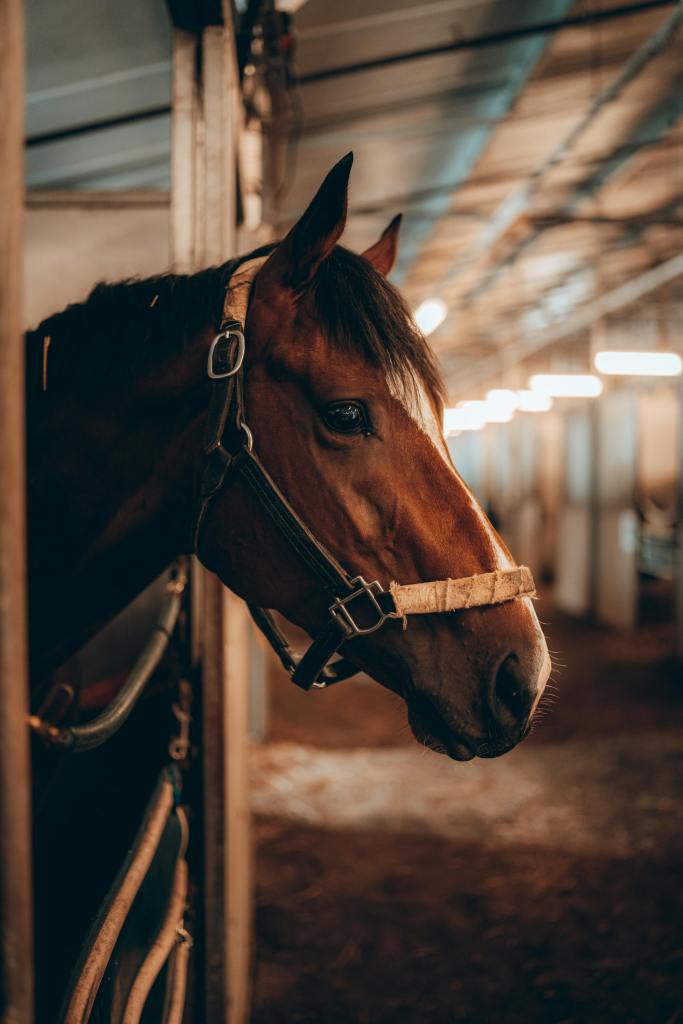
Photo by Alesia Kozik from Pexels.

Power Line Splice in Yellow Snow, From the Archives

D. E. Larsen, DVM

The winter of 1968 in West Germany was cold, with multiple ice storms and plenty of snow. I had just been promoted to NCO in charge of the maintenance shop of a remote Army Security Agency Site at Wobeck. 

Located in the middle of an ancient elm forest outside of the village of Schöningen. This site had been operational for ten to twelve years. It was responsible for the electronic intelligence of the Soviet and East German Armies across the border.

We had a small maintenance crew, and most of our work was done on the day shift. Eight-hour days were rare, and we often had one to two guys on night duty. This winter, Marsden was working at night. On this particular night, I had stayed to help with a problem on one of the main operations stations.

The site Operations were housed in a couple of old Quonset Huts. Stuffed with sophisticated equipment, these huts drew a lot of electricity.

Marsden and I were working on this station, and there was a sudden drop in power. Lights dimmed, some equipment clicked off, and there was an odd sound that we didn’t identify at the moment. This was a brief event, maybe a second or two at the most, and then everything was back to normal.

Marsden and I exchanged a puzzled glance. We waited a moment, but when everything returned to normal, we returned to work.

A few minutes later, it happened again. This time we could isolate the source of the sound. It came from where all the power input panels were located in the far corner of the operations bay. 

Marsden and I went over and opened the panel. Everything appeared normal. When it happened again, the sound was that of an electrical arcing. And it was right at our feet.

“That has to be in the power input cable,” Marsden said.

We stepped out the back door into the cold. There were about six inches of snow on the ground. We moved around the corner to where we were outside the wall holding the electrical panels.

We were struck with a strong, unpleasant odor.

“What is that odor?” Marsden asked.

I sniffed again, “Piss,” I said. “Burnt piss.”

The arc happened again as we were standing there. We could almost see the arc this time. It was just under the surface of the snow.

“It has to be the main power cable,” I said. “Let’s get a shovel and see what we can find. We have to fix it tonight, or it will start frying equipment.”

“What the heck is going on,” Marsden asked. He was speaking more to himself than to me.

“It looks like guys are stepping out the back door, and instead of taking a hike to the outhouse, thirty yards across the snow, they are just stepping around the corner and pissing here.” 

Once we found a shovel, we started to carefully dig into the problem.

“Keep your hands on the wooden handle,” I said. 

With some careful digging, we uncovered the large buried power cable coming into the building. And then we found the problem. There was a splice in the cable just as it entered the building.

“Why would they put a splice in that cable?” I asked.

“My guess is they had some German contractors doing the electrical work, and they couldn’t go inside. So they ran the cable to this point, and the Army guys spliced it to the cable on the inside,” Marsden said.

I wiggled the cable with the shovel, and we were showered with sparks as the lines arced between themselves. Looking close, we could see that the tape between the lines had broken down with the moisture of the snow and the piss. The lines started arcing. We would have to redo the splice tonight.

“These jokers have no idea how lucky they are to be alive,” Marsden said. “Can you imagine the jolt if a stream of urine was hit with one of those arcs?”

“We are going to have to shut the site down for a brief time,” I told the NCO in charge. “We are going to have to repair the main power cable coming into the building.”

“There is no other option?” Sargent Duke asked.

“We can’t do it without turning off the power out front at the generator shed.”

“Okay, give us a few minutes to wind things down and make sure the comm center is not in the middle of a transmission.”

“Do you think I should call Lieutenant Lee?” I asked.

“No, if it is only going to be a few minutes, there is no need.”

We turned the power off, and then, with the aid of a few flashlights, we were able to clean up the cable and wrap the individual wires with rubber tape. These wires were the size of my thumb. When we had the individual wires wrapped, we covered the entire splice with rubber tape and electrical tape.

Everything worked fine when we turned the power back on. The site was down for less than twenty minutes.

“Sargent Duke, we are up and running,” I said. “All you have to do is make sure everyone uses the outhouse instead of pissing around the corner of the hut. And make sure they know how lucky they are to be alive if they were the ones doing it.”

“Let’s leave this open so we can recheck it in the daylight,” I said to Marsden. “I would guess the powers that be will want to make any final decisions about what to do.”

“They can discuss it all they want,” Marsden said. But short of replacing the whole cable, there is not much else to be done.”

“Now, the only thing we have to worry about is finding enough water around here to wash up. I think I am going to enjoy the shower tonight.”