Pat’s Menagerie

D. E. Larsen, DVM

The mouth was wide open, and salvia dripped from the gleaming white teeth. The snarl could have come from a timber wolf. As I reached around to his rear end, the mouth snapped viciously at my arm. My arm would have been chewed to pieces if Joleen hadn’t had a death grip around Paco’s neck.

Once Joleen was able to get a grip on Paco, we were committed to complete the procedure. There would be fooling him a second time.

Paco was in for a much needed and overdue, neuter. He was one of our most unmanageable patients. His black color made with white teeth more obvious. Paco was a Chihuahua. Soaking wet, he maybe weighed four pounds. Joleen, who is no small girl, needs most of her strength to direct Paco’s slashing teeth away from my hands.

I applied a rubber band tourniquet to his forearm as Joleen continue to struggle, directing his bites away from me. I slipped a small needle into his cephalic vein, and the effects of a low dose of Pentathol was rapid. Joleen turned Paco to his side and relaxed her grip. I could feel myself relax as we inserted the endotracheal tube and moved Paco toward the surgery room.

With Paco clipped and prepped for surgery, I placed sterile towels around the surgery site and covered those with a sterile drape. I pushed one testicle forward out of the scrotum. Then because we didn’t want to have to see Paco back to remove sutures, I made a short midline incision over the testicle. I squeezed the testicle out of this small incision. The second testicle was externalized similarly.

I generally opened the tunic covering the testicles and ligated the vessels separately. With a small dog, like Paco, I placed a couple hemostats on the cord and ligated the cord without opening the tunic. Now with Paco’s jewels on the tray, I could rest assured that there were going to be no little Pacos running around to eat my fingers.

I closed the skin incision with a single mattress suture placed under the skin. I did not want to have to see Paco for suture removal.

Pat was happy to be able to pick up Paco that evening. Paco was wagging his tail rapidly when Pat opened the cage door. Paco jumped on her shoulder. It is hard to believe this was the same dog we had on the exam table this morning.

As I watched Pat and Paco walk out the door, I couldn’t help but remember one of my calls to Pat’s farm on the top of Scott Mountain Road. 

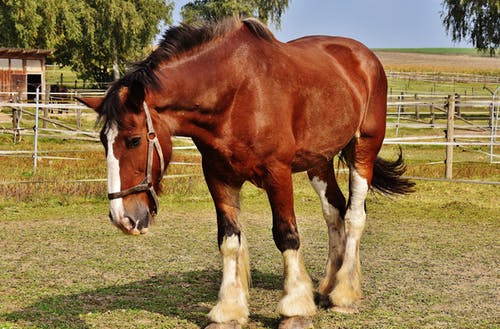
It was a warm afternoon in August when Pat had called about her old horse, Dan.

“Doctor, I am hoping you can get a look at Dan today,” Pat said into the phone. “He has not been his self for some time now, but today he is out in the pasture just wandering in circles. I am worried sick that there is something terribly wrong with him.”

“Pat, I can get up there in the early afternoon. That will give me time to get any lab samples ready for the courier this evening.”

Pat was waiting for me in the front yard. I could see her wringing her hands and wiping a tear from her cheek.

“I am so glad you could come this afternoon,” Pat said. 

“Your old horse is not doing well?” I said.

“Yes, it is Dan,” Pat said. “He is old, but there is something terribly wrong with him. Look at him.” Pat points to Dan, who is slowly walking in a wide circle in the middle of the pasture.

“Let’s go get a look at him,” I suggested.

We walked around the small shingled farmhouse to the gate into the pasture. As we walked out to Dan, I scanned the small farm. Pat had several horses, a small flock of about 40 sheep, a couple of pigs in a pen by the old barn with ducks and chickens scattered everywhere. The pasture was dotted with Tansy plants. Tansy is a poisonous weed that seemed to be everywhere in the 1970s. It was bitter tasting, and most grazing animals would not touch it. However, for some reason, an occasional horse would develop a liking for it and seek it out. It was toxic to the liver, and the toxicity was cumulative. A nibble here or there, over time, became a lethal dose.

When we got to Dan, Pat stepped in front of him. He stood there, pressing his head into her chest and grinding his teeth. As I worked through an exam, Dan did not move. His mucus membranes and the whites of his eyes were noticeably yellow. To me, the diagnosis was Tansy toxicity. Pat was going to need some time to come to grips with the finality of that diagnosis. I drew some blood to send to the lab.

“Pat, Dan is probably in liver failure,” I said. “You can see how yellow his membranes are by looking at the whites of his eyes.” I lifted Dan’s head to a level that Pat could see his eyes a little better.

“What does that mean for him?” Pat asked.

“It is seldom good,” I said. “I will send in this blood, and they can tell us how advanced things are. This is likely Tansy poisoning. If that is the case, Dan is going to die.”

“I was so afraid of that. I knew he was very sick. When will you hear on the blood results?”

“I will hear in the morning,” I said.

“Is he suffering?” Pat asked.

“If this is Tansy, there is nothing we can do for him,” I said. “It would be best to consider putting him to sleep. I will give him a couple of injections to make him more comfortable for tonight.”

I had no hope of helping Dan with any injection. I could just remember a couple of mentors admonishing me to always give an injection, even if it is sterile water. That way, if the patient dies, at least you tried in the eyes of the client. And then, if there is a miracle recovery, you get all the credit. And in school, they always said no patient should die without the benefit of a steroid.

“I will give you a call as soon as I get the results,” I told Pat as I was leaving.

There were no miracles, the blood showed Dan had advanced liver failure. His days were numbered. I took a deep breath and called Pat.

“Thank you for the call and for your efforts,” Pat said. “I need to spend some time with the old boy. We have been through a lot together over the years. I will call when I am ready.”

“That is fine, I know it is never easy,” I said. “If you wait too long, Dan is going to go down and have an awful death struggle.”

It was a few days later when Pat called. I again made the trip to the top of Scott Mountain and quietly put Dan to sleep while Pat waited in the house.

It would be another dozen years before the imported Cinnabar moth would give Western Oregon some relief from the losses associated with Tansy ragwort.

As I sat down to fill out Paco’s surgery record, I scanned through the old records. Dan’s file was still there. Pat had sent me a poem after that event. I looked for it, but it apparently did not survive the years. Probably not clinical enough, I guess.

Photo credit: https://www.pexels.com/@pixabay

Gus and Blackie

D. E. Larsen, DVM

We watched as Blackie hurried across Main Street, almost in the crosswalk and with no regard for the traffic light, his long leash trailing behind him. Blackie was a Dachshund cross, solid black in color, and the structure of a Dachshund. 

Blackie was always in the lead and always seemed to know where they were going. And not too far behind, came Gus. Gus, with his narrow brimmed hat, cocked to the side of his head and sporting a grouse feather stuck in its band. 

Gus was much slower afoot than Blackie and walked with a broom. He walked a little bent over, favoring his lower back. He always gave the appearance of someone who just got out of bed and dressed quickly. Never getting everything on just right. His shirt was half tucked in, and his greying hair was sticking out from under his hat in all directions.

Blackie was at the clinic door now, patiently waiting for Gus to arrive. The leash strung out on the sidewalk behind him. This leash was Gus’ way of complying with the city’s leash law. Gus was schizophrenic. Medication keeps him functional in the community, but if he is off medication, he has problems, and he is well known to the police.

Ruth opened the door for Blackie and waited a couple of minutes for Gus.

“What are you two up to today?” she asked.

“Blackie thinks he needs to see the Doc,” Gus replied, leaning on his elbows on the counter to catch his breath.

“Come on Blackie,” Ruth says, as she gathers up his leash. “Let’s go get your file.”

Gus always played the role of being a little dense or slow. But, the reality was he was as sharp as a tack. If you wanted to know what was going on in town, all you had to do was ask Gus. He knew everything about everyone and every business. He just had difficulty articulating the facts in a manner that anyone could understand.

Blackie was due for his annual exam, vaccinations and a heartworm test. We would have mailed a card tomorrow. That is how well Gus kept track of things.

Blackie was an excellent patient on the exam table as long as you talked with him and took things slow. If you tried to zip through the exam and stick him with a needle without adequate conversation, he would get a little snappy.

“Gus, I see that Blackie is doing well,” I said. 

“He does okay, you send the bill, gal over at the DQ has a problem,” Gus stammers.

I have found that Gus will carry on 2 or 3 conversations at the same time. Giving snippets of each sentence stitched together in a manner that is almost incomprehensible if you don’t listen very carefully.

“John takes care of it, I think her boyfriend left,” Gus continues. “I will get your sidewalk, maybe she is pregnant.’

Gus kept track of all the drama in town, I never knew how he came up with his information. I think maybe people didn’t pay attention to him, thinking he was never listening.

“I ran a guy off last night, John says Blackie owes some money,” Gus continued.

“Blackie’s bill is fine,” I said. “You don’t worry about Blackie. We will take care of him.”

“They didn’t like me in that jet,” Gus said. “That guy next door doesn’t like me; in Korea, they were mad. I only moved it a little.”

Gus must have been in the Air Force, he often spoke of being in a fighter jet and taxiing it a small distance. I would guess that probably ended his military career. And there were several folks in town which he had altercations with in the past.  Those seemed to stick in his mind and come out once in a while. 

Gus was not allowed in any of the bars in town because if he drank, especially if he forgot his medication, he would become violent and unmanageable. It was not unusual for Gus to require a few weeks in the state hospital in Salem to get straightened out.

John related one trip he made, taking Gus to the state hospital. John said that Gus babbled all the way to Salem and then was real quiet when they were waiting to see the doctor.  John said that they saw a new, young doctor that day. When the doctor was interviewing Gus, Gus was as normal as John had ever seen him. Just when the doctor was getting ready to send Gus back home, Gus snapped back into his incomprehensible babble. John said the doctor’s eyes just popped.

But, for all his problems, Gus did pretty well. His family had provided him a small house. Gus worked every day, sweeping and cleaning up small areas. He got funds, probably SSI, and maybe some state funds from time to time. He swept sidewalks in front of businesses and looked after small things out front, like bums hanging out. I took care of Blackie. The A&W fed him lunch and dinner at times, although he usually had to eat outside. Some of the women in town would clean his house on occasion.

If everyone on public assistance did a fraction of the work that Gus did, communities would be far better off. And that segment of the population would be looked upon with better favor.

Photo by Mel Elias on Unsplash

The Thomas Splint

D. E. Larsen, DVM

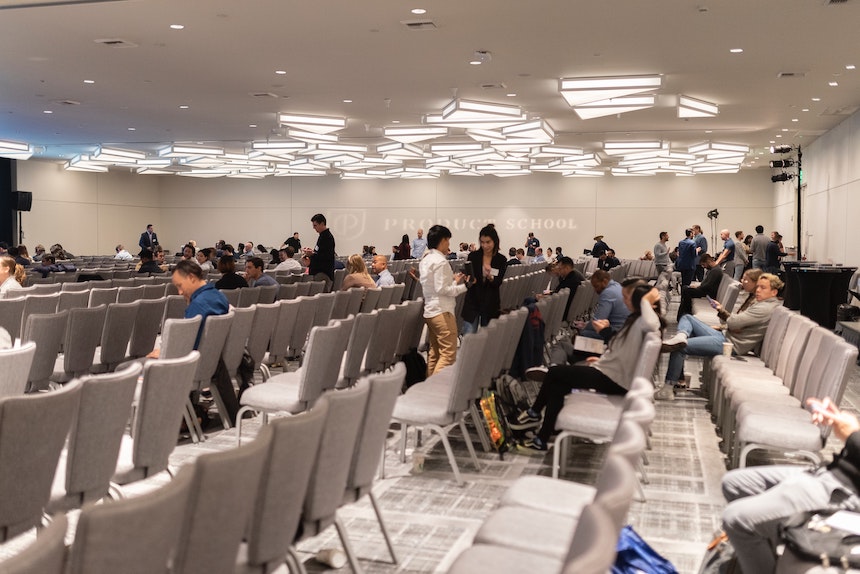
The heat was stifling, and the room was packed. The air conditioner just couldn’t keep pace.

“I hope he finishes this up a little early,” I say to the guy sitting next to me.

He loosens his tie. “Yes, we all need to get out into some fresh air.”

The speaker, a short, gray-haired orthopedic surgeon who teaches at Ohio State University Veterinary School, starts to field some questions from the audience. 

“If nobody asks anything, we are out of here,” I say to the guy next to me. He ignores the comment but unbuttons the top button on his shirt.

Then comes the first question, then another. “Didn’t these guys listen to the lecture,” I say, more to myself than to the guy next to me.

“They must be his residents, they can’t be wanting to stay in the sweatbox any longer,” says my new friend in the tie. 

Then comes another question, “What about using a Thomas Splint on lower leg fractures?” some guy in the front row asks.

“I went to school over twenty years, and I never sat in the front row one day of all that time,” I say.

The guy looks at me out of the corner of his eye but doesn’t say anything.

“I haven’t used a Thomas Splint in 25 years,” the Professor says. “If you are going to repair a fracture, you should repair it the right way.”

“He is a long way from the real world,” I say to this guy next to me.

“What do you mean by that comment,” the guy says, almost like I said something that upset him.

“I mean, he would starve to death in Sweet Home,” I said. “Everybody doesn’t have $3000 to go to a university for a fracture repair on their dog. What do you suppose happens to those dogs?”

“We can’t take care of the world,” this guy says, tightening his tie.

“We don’t take care of half the dogs in this country,” I said with a stern voice. “It is great to sit here and learn how to repair a fracture with equipment that only a fraction of the clinics in the state can afford. But when push comes to shove, you better be able to apply a Thomas Splint on the dog of the little girl who will heartbroken if her Dad puts her only friend in the world to sleep because he cannot afford a surgical repair.”

“And what do you do when the repair fails?” the guy says as he slips back into his sports coat.

“You can say at least we gave it a shot,” I said. “Then you better go back to school and learn how to do it correctly. I have used Thomas Splints on everything from a 6-week old kitten to a 700-pound cow. I haven’t had a failure. There have been a few legs that healed a little crooked, but functional.”

“Let’s slip out of here, and I’ll buy you a beer while you tell me a couple of cases,” my new friend says.

“Okay, but you have to agree to one thing first,” I said.

“And what do you want me to agree to?” he said.

“You have to take that damn tie off if you are going to buy me a beer,” I said. “We had to wear a tie every day in vet school, I haven’t worn one since. Probably won’t until my daughters get married.”

We were in the back of the room, so getting out the door without disrupting the class was easy. This guy takes his tie off as we head to a little bar in the hallway. 

“This feels better,” he says as we find a table.

I am not sure if he means having his tie off or if he is talking about the cool air in the bar. I finally notice his name tag. He is a speaker and a professor at the University of California at Davis Veterinary School.

“How long have you been at Davis?” I ask while we are waiting for a beer. “I knew a guy who did an internship there.” 

“I have only been there a few years,” he said. “What did your friend think of the internship.”

“He died,” I said.

“Oh, I’m sorry,” he said. “How did that happen?”

“He crashed a small private plane,” I said. “He would have been better off just going to work.”

“You have my interest in your comments on the Thomas Splint,” he said. “Convince me that you know what you are talking about.”

“I will compare two cases,” I said. “They were separated by a few years but are good illustrations. Both tibial fractures that involved about half the length of the bone, shattered in the middle half of the bone. One from a gunshot and the other, we did not know what happened.”

“Did you repair both with a Thomas Splint?” the Professor asked.

“The first case was a large Malamute who belonged to a nurse,” I said. “He was chasing the neighbor’s cows, and the neighbor shot him. Shattered the middle half of the tibia. When I first saw him, I stabilized the fracture site with a pressure wrap and a Thomas Splint.”

“That was probably better initial care than many dogs get in a small clinic,” the Professor said. “Then what happened.”

“The dog was brought in by a friend,” I said. “When the nurse finally got there, and we reviewed the films, she wanted a surgical repair. I said that this repair was way over my head. At that time in Oregon, we had limited options for a referral. There was a surgeon in Eugene, and we sent the case to him. This surgeon, who I knew, was amazed when this 140-pound dog with a shattered tibia walks into his clinic. He repairs it with a plate and bone grafts. They have all sorts of complications and followups, but the bone did finally heal. I don’t remember, maybe I never really knew how much the bill totaled. I think she paid something like $4000. This was in the 1970s, that was a whole lot of money.”

“I have seen similar repairs,” the Professor said. “I would guess your estimate was close. And the problems with getting one of those fractures to heal are many.”

“So, do you want to hear the other case?” I asked as I noticed that my beer was still mostly full.

“It must have been different,” the Professor said.

“The second case was a similar fracture in a Blue Heeler,” I said. “We didn’t know how the fracture occurred. The dog belonged to a girl who worked for me. This girl was a bright, good looking girl, who was in a poor marriage. She was in love with this dog, he was probably her closest friend in the world. She had no money. She cried when we looked at the x-rays. The x-rays were probably identical to the first case, but no bullet.”

“So you don’t have many options at this point,” the Professor said.

“Very much between a rock and a hard place,” I said. “I tell her, I cannot repair this surgically. She says there is no way she can pay for a referral; her husband would kill her, she says. I guess I believed that was probably more true that I wanted to know.”

“So you put this leg in a Thomas Splint,” the Professor said.

“We discussed options rationally,” I said. “She was done crying. I said the best option of sending her for surgery was not an option, so what else can we do. Number one, we can cut the leg off, she will do okay without the leg. This girl agreed, but wanted to hear the other options. Number two, we can put her to sleep. There were more tears now, she didn’t want to talk about doing that. Then number three, we can put the leg in a splint. She thought there is no way this fracture was going heal in a splint. I teach my help well. So I say that when a splint works, it works well. If it doesn’t work, which that is a possibility with a fracture like this, then we can fall back on the amputation.”

“So you put the leg in a Thomas Splint,” the Professor said again.

“Yes, I put the leg in a Thomas Splint,” I said. “I checked the leg weekly, only because she worked for me and it was easy to do. At 8 weeks, the leg was healed. I left it in the splint of another 2 weeks, just for insurance. The leg was straight and functional. The bone was thickened with a lot of callus formation. The girl was ecstatic. I think I charged her only for the expendables which came to far less than $100. The leg healed better that the leg on the Malamute and in much less time and with much less trouble.”

“So you think we should put all these orthopedic surgeons out of business,” the Professor.

“I never said that at all,” I said. “But I think for him to stand up there a say that he hasn’t used a Thomas Splint in 25 years is condescending. The Thomas splint has fixed more fractures in years past, than he ever will. And in veterinary medicine today, there is still a place for it.”

“You make a good point,” the Professor said. “When we came in here, I thought I was going have a lesson to teach you. I apologize, I think it was the other way around.”

Photo by Product on Unsplash.

Link to Thomas Splint: https://images.app.goo.gl/jVCjHjzwTCw9NZXU8