Harry’s Place

D. E. Larsen, DVM

“Hi Doc, I’m glad you could come this morning,” Harry said as he stepped out of the mobile home into the morning mist. “I have a couple of new calves with diarrhea. They are still up and around, but I don’t want to take a chance on losing them.”

A couple of young girls followed Harry out of the house as he motioned me toward a small shed down the trail. The morning mist was getting heavier, almost a light rain, and there was still some fog that hung over the river. 

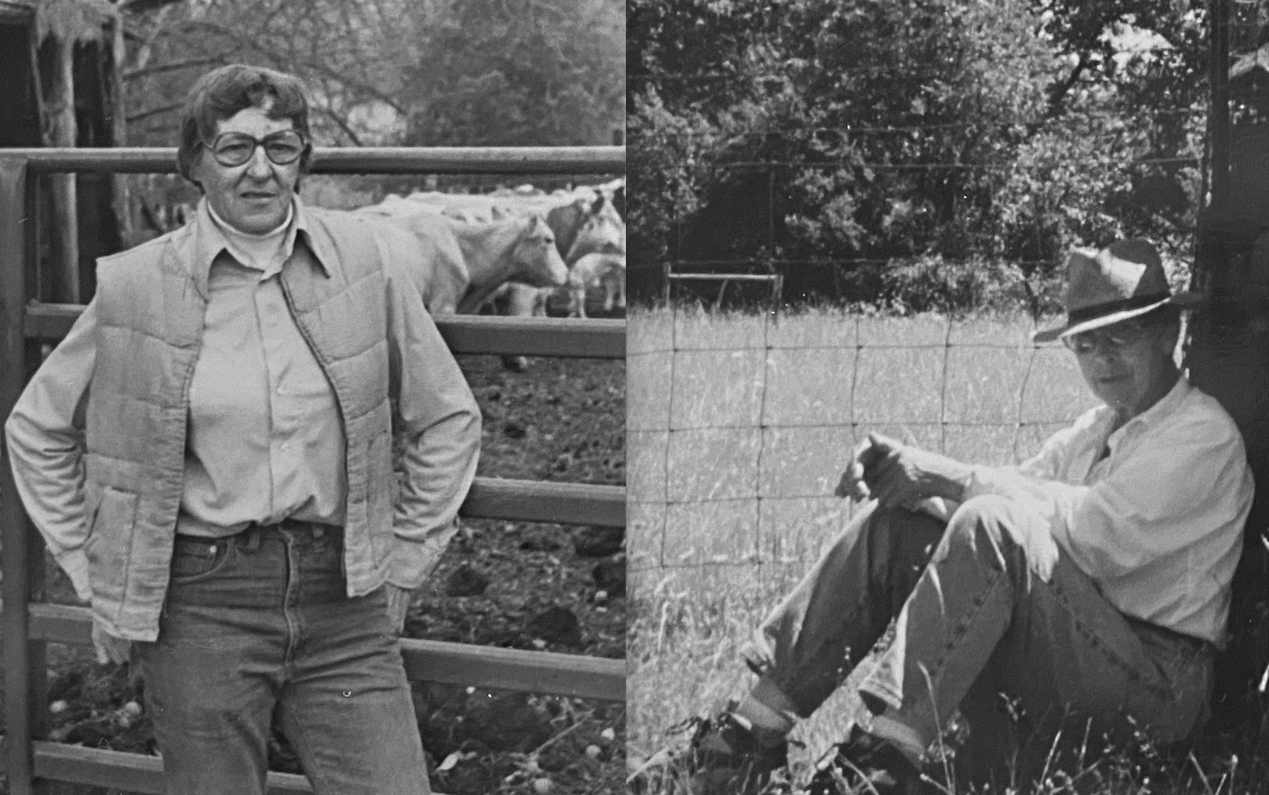
Harry was an older man than I, probably in his 50s. Tall with thick dark hair that had just a touch of gray. His features were rugged, telling of hard work in his life. His voice was different for Western Oregon, a strong Southern drawl was my first impression, but that didn’t really fit. Maybe from the Appalachian regions, I was guessing now.

“Did you get these calves from the sale?” I asked. 

“No, I know a guy who got them from a dairy, out in the valley,” Harry said. “I know better than to buy those poor baby calves at the sale barn. They get exposed to every bug in the county. Some of them don’t last a week.”

I started looking the calves over. They were bouncing around and sucking on my pants leg or anything else they could get their mouth around. Temperatures were normal, and their navels were okay and looked like they had been treated with iodine. The shed was not much, but it was watertight and windproof.

The girls were joined by a boy now. They were hanging on the fence rails of the calf pen as I was trying to crawl back out. I don’t think Harry had stopped talking the whole time I was looking at the calves. I admit that I am not always a good listener when I am working, but he was talking about raising calves in North Carolina, Tennessee, or someplace back there.

“Harry, I think these calves are going to be fine with a little medication,” I said. “They are probably just a little upset with the move and the change from milk to milk replacer. I am going to give them a dose of BoSe, which is a Selenium and Vitamin E supplement that calves need here, some antibiotic tablets, and a couple of doses of oral fluids to use this evening and in the morning instead of their milk replacer. That will give their gut a chance to rest a bit.”

After treating the calves and giving Harry the additional medication, we started walking back to the truck. Harry proved to be much more of a talker than I was. 

When we got to the truck, and I put things away, got out of my boots and coveralls, Harry was still standing there in the rain with no hat, talking away.

“We come here to take care of these kids,” Harry says. “Their father died last year, and then their mother, our daughter, was killed in a car accident this summer.”

I didn’t know what to say, I wished then that I had been listening to him a little better when he was talking earlier. What kind of a man, a couple, does it take to pull up roots to take care of their grandkids. And what an undertaking, to raise young kids at his age. 

Harry didn’t let my lack of response slow him much. He continued to talk. The rain was dripping off his eyebrows and his nose, he didn’t notice. We stood there in the rain, my schedule faded into the background, and Harry talked, I listened. My respect for the man grew by the minute, which probably came close to an hour.

Harry had a lot of knowledge of livestock, but it was from a background that was not familiar to me. Most of his understanding seemed close to correct, but just seemed based on a different set of standards than I was used to, sort of like something you would read in Fox Fire. 

The kids would come and go, mostly because they tired of standing in the rain. Harry would put a hand on their head or shoulders as they stood close, but it did not slow his conversation. We were both soaked when I finally got back into the truck.

I would see Harry from time to time, for little things mostly, but it was a couple of years before he called for some cow work. He had moved to a small farm on Hamilton Creek at the time. He had a heifer that needed to be dehorned.

Harry and his crew were racing to the barn as I came to the end of the long driveway. The kids were older now, and they were actually helping instead of just being in the way. I know how that made them feel because I was always at the barn from the time I was three. I always felt almost grown-up when I could actually do something helpful.

“I got this heifer for an excellent price,” Harry said. “She is pretty handy with those horns, though. I don’t know why people don’t get them off when they are babies? It is so much easier then.”

“This won’t be a problem for her,” I said. “We are early enough that flies won’t be a problem and late enough to be done with most of the rain.”

“The kids are worried that it is going to be painful,” Harry said.

“I will show them how to give an injection of Lidocaine,” I said. “We will numb these horns up, and she won’t feel a thing.”

Deshawnda and Nathan had the heifer in her stanchion and a rope halter on the heifer already. I think they didn’t want me to use my nose tongs. I pulled the head to the right and tied the lead rope to hold it there.

I drew up 10 ccs of Lidocaine in a syringe and pointed to the four points I was going to inject to completely deaden the horn. Actually, when I did a group of heifers, I would only block the main nerve at the base of the horn at the 6:00 o’clock position. The injections were completed effortlessly with the head well secured.

“This is going to smell a little bit, sort of like burnt bone,” I said as I place an OB wire saw around the base of the horn.

I leaned back, putting a lot of my weight on the wire. I wanted to go quick, but also I wanted the wire to get hot enough that there would be little or no blood. 

With a number of long strokes of the wire saw, the horn popped off. It was a clean-cut, and the vessels were sealed from the heat of the wire, and not a drop of blood for the audience. The frontal sinus was open, leaving a gaping hole, which was typical for this age of heifer.

Harry picked up the horn from the ground and glanced at it. His face fell as he dropped the horn back to the ground.

“Oh no,” Harry said as he turned and stepped into the barn.

I repeated the process on the other horn and pulled all the vessels so there would be no bleeding. I covered the openings to the frontal sinus with a patch of filter paper. It would only last a couple of days and probably served no real purpose, but I thought it might make Harry feel better.

I was just finishing up when Harry came back from the barn.

“How bad is it, Doc?” Harry asked. “She is such a nice heifer, it makes me sick.”

“How bad is what, Harry?” I asked.

“The Hollow Horn,” Harry said. “I saw the horn, how bad do you think it is going to be for her?”

“Harry, in a heifer of this age, a hollow horn is normal anatomy,” I said. “The frontal sinus extends out into the horn. The old disease called  Hollow Horn was one way of explaining what was wrong with a cow when they couldn’t know what was really wrong. Those names and disease explanations were used before we knew much about parasites, viruses, and bacterial diseases.”

“You think she is going to be okay?” Harry asked.

“She is going to be fine,” I said. “This dehorning is not going to slow her down one bit. Those holes into her frontal sinus will heal with no problem.”

“Okay, Doc, I trust you,” Harry said. “I have heard of Hollow Horn my entire life, but I had never seen it before.”

We turned the heifer out into the field, and she joined the others and started grazing as if nothing had ever happened.

Photo Credits: Dye family photos

Trip to Portland

D. E. Larsen, DVM

We made a trip to Portland a while back for my 4-year checkup from prostate cancer treatment. My Radiation Oncologist wants to see me next year, so it looks like they expect me to live that long, at least.

  Traveling to downtown Portland lets one realize how lucky we are to live in Sweet Home. Traffic was horrendous, both going and coming. We parked in a parking garage at Legacy Good Samaritan Hospital. We took a ticket from the machine when we entered the garage. 

  When we left the doctor’s office, the receptionist asks if I wanted a get out jail free card for the parking attendant. I almost declined it, but on Sandy’s urging, I took the small slip of paper with a scan code from his outstretched hand. 

  When we drove to the exit gate, the attendant was just going on a break. He was a short black man with a slight build. What hair remained on his head was white. I imagined that this was a significant supplemental income for his meager Social Security check.

  Following the instructions on the exit machine looked pretty easy. It reads; “Insert your ticket, when the fee is posted on the screen, you can do one of two options:”

 1) pay the fee, and the gate will open.

 2) scan your card from the doctor’s office, wait for the price to change to zero, and the gate will open.”

  By now, there are 3 cars behind me. I insert the ticket into the machine, we were parked for just over an hour. The fee is posted on the screen. It says $64.00.

  $64.00 for an hour of parking, it takes me a few minutes to recover from that shock. “Do you see that fee?” I say to Sandy. “Talk about highway robbery!”

  Now there are seven cars behind us. I place the card from the doctor’s office in the scanner. The limp paper is a bit crumpled from being in my shirt pocket. It does not scan! “How the hell are we suppose to get out of here now, I will be damn if I’m going to pay $64.00 an hour to park!” Sandy does not respond.

  I don’t know how many cars are behind us now. The end of the line is around the corner.

  I scan the card again, nothing. I turn it around and scan it again, still nothing. 

  There is a number to call for help, but inside the garage, there is no service on the cell phone. Such a big help that is. The guy behind us is getting impatient, he guns his engine a couple of times. I see the attendant come out the door back by the doctor’s offices. He looks alarmed and starts running toward us. I scan the card one more time.

  It works! The fee returns to zero, and the gate opens. We pull out of the garage just as the attendant reaches his station, somewhat out of breath.

  The phone still has no service, so the navigation is not working. Which way do we turn? The guy behind us is right on our tail now. Sandy says, “Turn right!”. I turn left. So starts the discussion until we finally get the navigation working and make it back to the freeway, but heading to Seattle.

  Next time we might drive to Wilsonville and call a cab.

Photo Credit: Photo by Levent Simsek from Pexels

Don’t Put Her in the Barn

D. E. Larsen, DVM

Looking around as I waited for George, it was apparent this is a well kept old ranch, probably by a perfectionist. There was nothing out of place. The barn was old, with a little bow in the roof’s ridgeline, but it had a fresh coat of bright red paint. The small white ranch house set in the middle of an immaculate yard, with a white picket fence and rose bushes galore.

The old cow in the corral looked like she had lived many years here also. She was a cow that I would have recommended culling from the herd years ago, had I been asked. Her udder anatomy had to have been an issue for many years. Her two hind teats were large and hung low, almost dragging the ground, making them almost impossible for a calf to nurse. By the time the calf nursed those teats,  the quarters would be devoid of milk. The incidence of mastitis in cows with this type of anatomy is high; virtually all of them will have problems if they live long enough. I would guess that is the problem I am going to look at today. Even though George just said a sick cow when he called.

I got out of the truck and walked over to the corral fence to look at the cow a little better. I could see George putting on his shoes on the porch of the ranch house. Here he came on a trot. 

“Hi, Doc, I’m sorry I made you wait,” George said as he extended his hand. “The Mrs. had me hanging pictures of the great-grandkids.”

“That is no problem, George,” I said as I shook his hand. “This is the end of the day, and I have plenty of time. I am betting that this is the sick cow. And I am betting that she has mastitis.”

“Your correct on both bets,” George said. “You can’t see from here, but she has a black teat on the back teat on the far side. And she is pretty sick; she stands there and doesn’t want to eat or drink. She hasn’t worried about her calf at all.”

“Did you just notice her today,” I asked. 

“She was fine yesterday,” George said. “But you know, she has been a thorn in my side every year for the last several years. I have a devil of a time getting her calf hooked up on those back teats. I know you are probably going to tell me I should have sent her down the road a long time ago. But you know, she always weans one of the best calves in the bunch. Some of these old girls earn their hole in the ground.”

“Now your right on both counts, George,” I said. “I would have told you to cull her years ago. And because she pays you for your extra efforts with a super calf every year, she probably does deserve her hole in the ground.”

“Do you think you can do anything for her?” George asked.

“Let me get a few things and get a look at her,” I said. “Do you think I need a rope?”

“She hasn’t moved a muscle in the last hour,” George said.

Her problem was easy to see when I walked around the cow. Her right hind teat was black and cold to the touch. The discoloration extended up the backside of the quarter. Here was a case of mastitis with a dead quarter. Probably an acute E. coli mastitis, the circulation is disrupted by the infection, and the tissue dies. The cow will die unless we can get the disease under control.

“I am going to have to cut this teat off, George,” I said. “And maybe open up this quarter more than just the teat.”

“Isn’t that going to bleed a lot?” George asked.

“No, this tissue is all dead,” I said. “The only chance we have of saving this cow is to get some drainage out of this quarter, put her on some antibiotics and hope for the best.”

I took a scalpel and cut the teat off. There was a lot of fluid that drained out of the quarter, and some tissue hung out of the hole. I gave a little tug to the yellowish chunk of tissue hanging out of the hole left by the missing teat. I large mass of dead mammary tissue plopped out of the hole. With my gloved finger, I was able to pull another two chunks of tissue out of the quarter. I flushed the quarter with Hydrogen Peroxide and followed with Betadine.

“I will give her some long-acting antibiotics so you won’t have to mess with her in the morning,” I said. 

After treating her, I was putting things away in the truck and explaining to George how the tissue it that quarter was dead and that more chunks would fall out of the large hole where I removed the teat.

“If you see stuff hanging out of that hole, you need to pull it on out of there,” I explained. “Otherwise, it will just block the hole, and we will lose the drainage.”

“Do you think she is going to be okay?” George asked.

“We are just going to have to see what morning gives us,” I said as I got into my truck to leave.

“Do you think I should put her in the barn tonight?” George asked.

I looked at the barn. The door on this side of the barn was open, and all I could see inside was a maze of small pens. It must have been an old sheep barn.

“If she dies, can you get her out of there easily?” I asked.

George looked at the barn and thought for a moment. “No, I don’t think I could get her out of there very easy at all,” he said.

“Don’t put her in the barn tonight,” I said as I pulled away.

The old cow did live through the night. The entire quarter fell off eventually, and it did heal up. It didn’t look good for a time. The old cow raised another calf the next year before finally finding that hole in the ground.

Photo Credit: https://www.pexels.com/@candine-dufant-2073653