The Turpentine Compress

D. E. Larsen, DVM

I carefully started removing the wrap on the hindfoot of Lady, a large Golden Retriever. This wrap was composed of a couple of rags and what looked like an old tee shirt. 

I recoiled from the odor.

“When did this happen,” I asked Ralph.

“She got ran over yesterday afternoon. The foot looked so bad, and she was licking it so much, so I put a turpentine compress on it last night.”

“Turpentine!” I said. “What made you think turpentine would be helpful.”

“My grandfather always used turpentine on a wound on his cattle,” Ralph said with no hesitation.

I pulled the final pieces of cloth off the wound. Lady just laid her head down on the table, obviously resigned to the misery she was suffering.

This wound was a total loss of the skin from the hock down to the footpads. The skin was totally gone. The bare tissue looked almost cooked from the turpentine. I can only imagine how that must have felt when it was applied.

“Your grandfather maybe used it on some minor abrasions of the skin. That was maybe done in those days. Using it on a wound like this was nothing less than torture for Lady.”

“Gee, I am sorry, Doc,” Ralph said. “I was just trying to do something helpful.”

“This wound was probably not repairable last night. It is definitely not repairable at this point. This leg is going to have to be amputated.”

“When are you going to be able to do that surgery?” Ralph asked.

“We have a busy schedule, but I can’t allow Lady to sit in a kennel and suffer waiting for surgery. We will move things around and get her into surgery right away.”

“I don’t know, Doc,” Ralph said. “I am not sure she will be able to get along with only 3 legs. Maybe we should just put her to sleep.”

“Dogs wake up in the morning and evaluate their situation. They just get up and go with what they have. They make do. People worry more about amputations than the dog. You will probably have to count legs to know that she only has 3 legs.”

“What do you think it is going to cost?” Ralph asked.

“After what you put this dog through for the last 12 hours, you owe her whatever it cost. You owe her another few years.”

“Doc, I was just asking to make sure I can pay the bill,” Ralph said. “But if I decide to put her to sleep, that is the way it will be.”

“Ralph, there is not a judge in the county who will not believe me if I say this is a case of animal abuse,” I said. “Now, I don’t believe in reporting any charges of abuse when it was done out of ignorance, and the person seeks care. That applies in this case. Especially since you are here this morning and not next week. But if you want to put her to sleep, my opinion might change.”

“I am just trying to see where I stand,” Ralph said. “You do the surgery. I will leave a deposit at the front desk. When do you think Lady will be able to go home?”

“Going home will depend on how well she is doing in the morning. If she is up and about, I will probably send her home. She will need a few pain pills, but she is probably going to feel so much better with this foot gone that she will be bouncing around.”

“Where do you take the leg off, Doc?” Ralph asked.

“We could save you a little money by just taking it off at the hock joint. But Lady will do a whole lot better if we take it off in the middle of her thigh.”

“Let’s do what is best for her,” Ralph said. “You have me feeling bad enough already.”

We hurried Lady to surgery. The stench of the turpentine was nearly overwhelming in the surgery room. The surgical prep on the leg did little to lessen the odor or fumes.

I did a standard mid femur amputation. This started with a bivalve incision through the skin to provide big enough flaps for closure over the stump. Extra skin can always be trimmed off the flaps as needed, but if the flaps were cut too short, it would be a significant problem to shorten the stump.

I isolated the major vessels first. Double ligating the femoral artery to reduce any significant blood loss as the surgery progressed. After the vessels were ligated and severed, I separated the muscles quickly. I wanted to get this leg off and out of the surgery room as soon as possible, so everyone could breathe again.

When I finally had dissected down to the femur, I severed it with a Gigli wire saw. Once free from the body, I handed the leg off to be removed from the room.

At this point, I could take a deep breath and start closing the muscles over the bone to provide a well-padded stump. Then the skin was trimmed and closed. I had been a little faster than usual because I wanted that stinky foot out of the surgery room. It was a pretty brief surgery, less than an hour.

Lady recovered with some pain medication aid, but she had to feel so much better with that foot being gone. She was up and around by the early afternoon. Being a little older, it took her a few tries before Lady could handle getting up and down with only one hind leg. After those first few tries, she was acting like she didn’t miss the leg much.

When I could feel confident that Lady would be ready to go home in the morning, I gave Ralph a call.

“Ralph, you can pick up Lady any time in the morning,” I said. “She is feeling much better and is getting around on the one leg just fine.”

“That sounds good, Doc,” Ralph said. “I will be there first thing in the morning.”

When morning came, Lady ate a good breakfast and walked on a leash well. 

Ralph took care of the account and lead Lady out to his pickup. He lowered the tailgate, and Lady started to jump into the back. She made a jump but did not have the strength in the one hind leg to make it up to the pickup bed. Ralph was quick to catch her before Lady fell. Then she jumped up with her front feet on the tailgate and looked to Ralph for a boost. One little boost from Ralph and Lady was in the bed.

“She will do just fine,” I said to Sandy as I watched from the office. “Just give her a couple of weeks.”

Lady continued to do well. As predicted, one had to count legs to make sure she only had three legs when she returned for suture removal a couple of weeks later.

After the sutures were removed, I never saw Lady or Ralph again. That was not a surprise. I had been stern with Ralph, and for him to find another clinic was almost expected. Perhaps it was from embarrassment for his actions, but more likely, it was from the veiled threat of reporting his abuse.

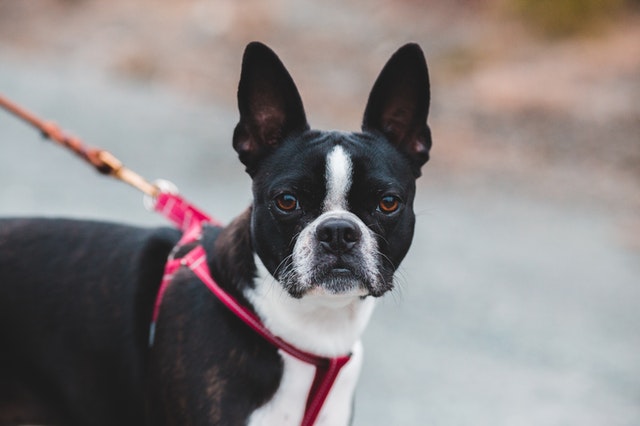
Photo by Hemant Gupta from Pexels

The Salamander’s Tale

D. E. Larsen, DVM

Jake lifted his young son out of the pickup and handed him off to Sue as he opened the tailgate and let Bruiser jump out of the pickup bed.

They could already feel the cooling breeze coming from the river and providing some welcome relief from the Mid Willamette Valley’s August heat. 

Bruiser was excited, he had been here before, and he strained against Jake’s hold on his collar while Jake struggled to attach a leash.

Sue was double-checking everything in her bag. She didn’t want to make a trip up the bank to the pickup for some forgotten item. Finally, she was ready.

“Ok, let’s get to the water,” Sue said as she jostled Benny on her hip.

Bruiser strained at the end of the leash, trying to reach the trail leading down to the river. Jake had to lean back against the pull to keep from being pulled off his feet.

“Why don’t you just let him go?” Sue asked.

“We don’t know who is down there. I don’t want to end the day with a dog fight.”

They threaded their way down the trail to the river from the highway. The far shoreline was filled with people, kids, and dogs. This side was a little more challenging to get up and down from the road, but it was much less crowded for that very reason.

“I wish that the Cascadia State Park side was not so crowded,” Sue said. “It is so much easier to get down to the river.”

“We will enjoy the day so much more on this side,” Jake said. “Bruiser can run off-leash, and we won’t have to worry about all the dogs on the far bank.”

There was a small beach with soft, warm sand on this side of the river. Everywhere else was just smooth bedrock that the river flowed over. Several large holes of deepwater offered prime swimming areas. They were connected with short rapids as the water cascaded over the shale.

The breeze coming up the river was most refreshing, and Sue spread the large beach towel out on the soft sand and sat down with Benny. The little beach was shaded by the large maple trees the lined the river, so she didn’t have to worry about smearing sunblock on Benny.

“This feels so nice here. I wished we lived closer, so it wasn’t such a chore to get here,” Sue said.

“It would be nice,” Jake said as he released Bruiser from the leash and started to wade into the water. “When I was young, and we lived Sweet Home, it was an easy trip. But from Albany, it just seems like it takes forever.”

Jake dove into the deep pool. He popped up and looked back at Sue and Benny on the little beach. The cold water was a refreshing contrast to the valley heat.

Sue tried to get Benny to look at his father, and Bruiser was standing in the river with the water touching his chest. Being a Pit Bull, he was not a good swimmer and did not like the deep water. 

Jake thought he would do a deep dive and then take Bruiser up the shallow water in the rapids above this hole. Jake dove to the bottom of the hole.

This was a hole carved into the smooth bedrock of the river. The hole’s bottom was littered with large river gravel—rocks worn smooth from being tumbled down the river during the rainy season. As Jake turned to head for the surface, he noticed several trout feeding in the area where the water spilled into the deep hole. They seemed oblivious to his presence.

Jake returned to the bleach and grabbed Benny from his toys on the beach towel. He tossed him a few inches in the air. Jake would have thrown him high, but Sue would not allow that. Then he took Benny to the water’s edge, put his feet in the water, and splashed some water on his bare belly. 

“Would you play with Benny in the water while I take Bruiser up to the shallow water?” Jake asked Sue.

Sue set her book down and jumped up to take Benny. Jake motioned to Bruiser and headed up the stream toward the shallow water.

Bruiser plowed into the shallow water above the rapids. He splashed and ran, piling up a wake in front of his broad chest. Jake watched him and smiled. He liked this place so much as it reminded him of his days as a child. Few people knew of the little sandy beach. It was always like their little private spot.

Jake stood and surveyed the scene in front of him. The cool breeze coming up the river was in his face. Sue and Benny were playing in the water at the beach and the mass of people frolicking on the rocks at the deep holes down the river by the park. It was just about a perfect day, an ideal place.

Jake turned around and looked at Bruiser. Bruiser was standing in a shallow pool and had a yellow-bellied newt hanging from his mouth by its tail.

“Put that thing down!” Jake yelled at Bruiser.

Bruiser looked at him, then slurped the salamander into his mouth, chomped a time or two, and swallowed it.

“I hope that tasted good, you dumb dog,” Jake said. “Come on, let’s go back to the beach.”

Jake turned and started back down the stream to where Sue had just started drying Benny off with a large beach towel.

He looked to make sure Bruiser was following. Bruiser was foaming at the mouth a little and shaking his head, scattering foam into the water on both sides of him.

“I told you to put that thing down, now look at you. Come on, let’s go get you cleaned up.”

Bruiser started to follow Jake down the stream, staggering a bit as he ran across the rocks.

“What in the world happened to Bruiser?” Sue asked as they approached the beach.

“He ate one of those salamanders that are all over here this time of the year. I think they call them newts.”

“I seem to think that they might be poisonous. Just look at Bruiser now. He can hardly walk.”

Jake turned to look at Bruiser. He was stumbling and staggering to keep up with him. His chest was covered with the thick white foam that he continued to shake out of his mouth.

“I will wash out his mouth. That should make it a little better.”

“I don’t think so. I think this is serious,” Sue said. “I think we should take him to the vet. There is probably one in Sweet Home.”

“Maybe you are right. Let’s load up and run down there and have him checked.”

Sue hastily packed her things into her bag and grabbed Benny, and started up the trail. Jake put the leash on Bruiser and gave it a tug. Bruiser did not respond.

Jake looked closely at Bruiser. Bruiser’s eyes seemed to not focus on anything. He pulled on the leash again. Bruiser tried to take a step but fell face-first into the sand. Jake was anxious now. 

He gathered Bruiser up in his arms and clambered up the trail to the pickup.

“He is getting worse by the minute,” Jake said to Sue as he lowered the tailgate and slid Bruiser into the bed of the pickup. Bruiser looked up but did not try to stand. The pupils of his eyes were widely dilated, and he seemed to look without focus.

“Let’s hurry. We can stop at the store and get directions and have them call for us,” Sue said.

They loaded everything into the cab and sped off down the road to the store.

Sue ran into the little store. Joyce was behind the counter.

“Our dog swallowed a salamander, and he was foaming at the mouth and staggering by the time he got out of the water. I don’t think he can stand now. Can you call the vet for us in Sweet Home and let them know that we are on our way.”

Joyce gave Sue directions to the clinic and said she would call. 

“You guys drive safe going down that road out there. The traffic is pretty heavy today.”

Sue looked at Bruiser as she walked around the pickup to get in on the passenger side.

“He looks worse by the minute,” Sue said. “She is going to call, so they will be waiting for us.”

Jake pulled out onto the highway and turned on his emergency flashers. Then he pushed the gas pedal to the floor. It was going to be a challenging 13 miles.

Sandy took the call from Joyce. 

“It must be bad,” Joyce said. “She was really frantic. They should be there shortly if they don’t crash on the way.”

Sandy relayed the information to Terri and me. 

“What do you for that?” Terri asked.

“Those newts are highly toxic. This is probably going to be a dead dog. There is nothing to be done. A young guy in Coos County swallowed one on a dare when they were partying on the river bank a few years ago. He died.”

“So, these folks are going expect us to do something.”

“Let’s set up the endoscope. Maybe we can retrieve the thing from his stomach and reduce the dose. It will look like we are trying, but it is going to end with a dead dog. 

When I was in school at Oregon State studying under Dr. Storm in the Zoology Department, he talked about one of his graduate students’ studies on these newts in Western Oregon. They are called the Rough-Skinned Newt. They are very toxic around here, less so in some areas. I didn’t know at the time, but the student was from Myrtle Point. Older than me by a few years, but he was in high school with my brother. We called him Butch. He is pretty much the expert on the newt.”

We were all set up for Jake and Sue’s arrival with Bruiser. They came through the door in a rush. Bruiser was limp in Jake’s arms, Sue was carrying Benny on her hip. We guided them to the treatment table, where Jake laid him out on the table.

“I think he is dead,” Jake said.

I checked, he was dead.

“We should have been faster,” Jake said.

“I am sorry, Jake. This is a hard way to lose a friend, but being faster would have made no difference. Bruiser signed his death certificate when he ate the salamander. There is nothing to be done to treat this toxicity.”

“Do we owe you anything?” Sue asked.

“No, not at this point. Do you want us to take care of him for you?” I asked.

Jake gathered Bruiser up in his arms, “No, we will take him home. We have a place to bury him.”

With that, they were gone, almost as fast as they came.

“That was sad,” Terri said.

“So many people have no idea those little things are so deadly. As a kid, we played with them all the time. I never heard of a problem with them until I was in school at Oregon State.”

Photo by Dyann McCollum

Information Link: 

https://en.wikipedia.org/wiki/Rough-skinned_newt?fbclid=IwAR0czquFGih0kn0vgTXLlog0mplGLaeReWU7Dh8Lsfnw5GiIUkV88NJDHhU

Yuri Andropov (you’re a drop-off), with Puppies on Board

D. E. Larsen, DVM 

“What do you think, Doc,” Bert asked. 

“They are just drop-offs,” Jan added. “We don’t want to spend a lot of money, but my gosh, we have to do something for the poor little things.”  

“How do you get so lucky to have two of them dropped off,” I said. “Even for dachshunds, they the pretty thin. I lifted the skin on the back of the smaller one’s neck. It held that position for several seconds before slowly returning to normal. 

“She is dehydrated, not breathing well, her abdomen feels empty, and she is skin and bones. I don’t know; she may have a diaphragmatic hernia. That would be my guess, but we will need to get an x-ray to confirm that suspicion,” I explained. 

“I don’t know,” Jan said, looking at Bert for a clue as to what he was thinking. “Can we do something simple, just to get some meat on their bones? There is really no need to take an x-ray because we aren’t going to fix anything on a stray dog.” 

“Okay, let us hang on to them for a couple of hours. We will check a fecal exam and do a good exam. It could be a little deworming medication, some good groceries, and some TLC help. If not, we can decide on another course of action in a couple of weeks. What do you call them, by the way, just for the record?” 

“I don’t know; we have only had them overnight,” Jan replied. “We will think about that over the next couple of hours.” 

The fecal exam showed a massive infection of both roundworms and hookworms. Roundworms were almost always present in young dogs around Sweet Home, but it was unusual to see hookworms.

“A good dewormer and some canned food might do these pups a world of good,” I said to Dixie. “Give them a couple of weeks, and they will look like new dogs.”

The larger of the two pups had a normal exam, plus a 30-day pregnancy. That will add to the stress of recovery.

Palpation of the abdomen of the smaller of the two revealed almost no content in the anterior abdomen, and the empty abdomen allowed for the easy detection of a similar 30-day pregnancy. My guess was she had a diaphragmatic hernia (the wall between her chest and abdomen was ruptured). Dogs can live with this injury for a time if they survive the initial insult. Sooner or later, it will require surgical repair if the patient is going to survive. This growing pregnancy was going to be a problem for her respiration.

Bert and Jan returned to retrieve the pups in the late afternoon. 

“We have decided on Anna and Maria for names,” Jan said.

“Any preference on which name goes with which pup?” I asked.

Jan looked at the two little dogs watching her closely from the kennel. 

“Let’s call the small one, Maria,” she said.

“Anna checks out pretty good. They both are skinny and have a heavy burden of intestinal worms. We gave them some medication for the worms, and some good groceries will help put some meat on their bones.”

“That’s good,” Jan said. “”We are just going to do the basics for them. As far as we know, they could be gone tomorrow.”

“But that is only the half of it,” I said. “They are also pregnant. You guys really hit the jackpot.”

“And how does Maria check out?” Bert asked.

“Her problem is she very likely has a large diaphragmatic hernia. My guess is her liver, stomach, and a lot of intestines are in her chest. Sooner or later, this will become life-threatening. And as this pregnancy gets closer to term, her respiration may become an issue.”

“Do you think she can survive the pregnancy?” Bert asked.

“I don’t know. I think the best recommendation would be to spay her and repair the diaphragmatic hernia now.”

“She is just going to have to make do,” Jan said, glancing at Bert with a bit of a frown. “We have decided that we are just going to do the basics for now.”

“I understand that completely and they are probably lucky they found your house,” I said. “Make her a bed so she can sleep with her head and chest elevated. That will help with her breathing.”

“That is just the way it is going have to be,” Jan said.

“I know, but these little dogs grow on you after a while. Your thinking might change in the future.” 

With that, the visit was over. Anna and Maria slipped into the recesses of my memory for the time being.

A full 6 months later, Jan had Maria on the exam table waiting for my evaluation. Maria was a completely different dog; no longer skin and bones, she almost looked like a typical Dachshund.

“You can’t imagine how many dogs we had running around with all those puppies,” Jan said. “But they are all adopted, and that was a chore in itself. Anna has even found a home. But Maria has her chest problem. She had to sleep in a box with her nose held in the air when she was pregnant. We have decided we need to repair her chest.”

“We know this hernia is at least 6 months duration, maybe longer,” I said. “Maria might have some permanent lung damage.”

“So, what are our options?” Jan asked. 

“Not many options,” I said. “Fix her or not is just about it. If we repair the diaphragm and get the lungs to expand, we are probably home free. I have to hedge a little because her lungs have been collapsed for a long time, and we may have difficulty expanding them. If everything goes well, we can spay her at the same time.”

I looked at Jan with a curious eye. She was really attached to Maria now. I remembered warning her that these little dogs would grow on her. 

“When do you want to do the surgery?” Jan asked. 

“I think my surgery schedule is petty open right now,” I said. “We can schedule her any morning at your convenience, but the sooner, the better. We can monitor her all day. She will need a chest tube after surgery, maybe for the afternoon, maybe for several days. I don’t like to send them home with a chest tube.” 

“Let us take her back and snap a couple of pictures of her chest,” I said as I handed her off to Dixie. “It will only take a minute, and we will have them for you to look at in the morning.” 

“You warned me that I would get attached to her. I didn’t really believe you at the time. But she is so sweet, I think she is part of our family now.” 

“No breakfast in the morning and have her here at 8:00.” 

With the x-rays taken, Jan took a deep breath and gathered Maria up in her arms. Kissing the top of her head. She looked at me with some concern on her face. “This is a serious surgery, isn’t it,” Jan said. 

“Yes, it is a serious surgery,” I replied. “It would have been more serious had we done it when Maria was first dropped off. Her condition at that time would have made it very risky. I can do this surgery, Jan. It is not something that I do every week, but I can do this. She is in good hands.” 

“Doctor Larsen, I am not questioning your skill. I just feel so guilty,” Jan said. 

“You should always question a surgeon’s skill, for your dogs and for yourself,” I said. “You have no guilt here. If there is any guilt, it is for the people who dumped her at your driveway.” 

The x-ray showed Maria’s chest’s left side was filled entirely with abdominal content, liver, stomach, spleen, and intestines. No wonder the abdomen was mostly empty on palpation. The chest’s right side was intact, but there was some compression from the left side content. This was going to be a challenging repair. 

Jan was prompt in the morning, coming through the door a few minutes before 8:00 AM. We were ready for her. I usually did not start surgery until 10:00 AM, leaving some time for early morning appointments and emergencies. But with this surgery, I wanted to get through it as quickly as possible so we would have the whole day to observe Maria’s recovery. 

We were brief at the check-in. I went over the x-rays with Jan. They were dramatic films, even for a novice. Then we had Jan sign a release for surgery and say her goodbyes. 

“If we get exceedingly lucky and can pull her chest tube this evening, I will probably send her home,” I said. “I wouldn’t plan on that, but it’s possible. You should check by in the late afternoon. I will give you a call when I am out of surgery to let you know how things are going. This is a major operation, and there is a possibility we could lose Maria. I would not expect that, but there are some pitfalls we have to get across.” 

“We know you will do your best. That is all we can ask for,” Jan said with tears welling up in her eyes. “I will see you late this afternoon.” 

We went right to the surgery with Maria. I placed an IV catheter in her right front leg and started IV fluids at a slow drip. It only took a couple of minutes to get her under anesthesia and on the gas machine. I double-checked the seal on the endotracheal tube. When we opened her abdomen, we would have her on positive pressure breathing. Due

to her small size, we had her on a non-rebreathing circuit. We would have to breathe for her using the bag in the circuit. 

When she was prepped and draped, I made a long incision on the ventral abdomen. I needed an incision that would allow me the repair the diaphragm in the anterior abdomen and one that would also allow for the removal of the uterus. 

I would repair the hernia first, and if all went well, we could do the spay. If there were problems, the spay could easily wait for another day.

Almost all the entire abdominal contents were in the chest, passing through a large rent in the diaphragm’s left side. Maria had most likely been hit by a car. At her small size, she was lucky to have survived the severe blow that would have been required to cause this size of a diaphragmatic hernia. 

I started carefully pulling the contents back into the abdomen. The intestines were easy. The spleen and stomach proved a little bit of a challenge. The liver took some careful manipulations to pull it out of the chest without injury. After all the content was back in the abdomen, I packed off the large rent in the diaphragm with some lap sponges. 

Now we needed a little luck to expand the left lung lobes that have been collapsed for over six months. Using the bag, we put slow, steady pressure in the circuit to expand the lungs. Much to my surprise, these lung lobes expanded quickly, turning from a dense reddish-brown color to a fluffy pink in no time at all. There were just a couple of small areas along the edges of the diaphragmatic lobes that failed to expand. My guess was they would return to normal after a few weeks of normal respiration. 

With the lungs expanded to fill the chest, my concerns about a chest tube being needed for several days were probably unfounded. I placed and chest tube and attached a Heimlich valve. 

That done, I just needed to close the tear in the diaphragm, evacuate the air from the chest to form a good vacuum, and we would be done with plenty of time to do the spay.

I routinely closed the abdomen. It was a long incision. I was reminded of Dr. Annes’ comment from school, “Incisions heal from side to side, not end to end. Always make your incision long enough to get the job done”. 

Maria recovered quickly. I think she felt so much better with a fully functional chest that there was little post-surgical pain to control. I called Jan with a report on a successful surgery, and the news was warmly received. 

By the middle of the afternoon, we were able to remove the chest tube. Maria was dancing a jig around Jan as they started out the door. One happy dog with a new lease on life and one happy client. 

“We thank you, Doctor Larsen, and now Maria will be well enough to be adopted. That will be hard, but I have a special young boy in mind who can use a pet.”

Photo by Dayvison de Oliveira Silva from Pexels