D. E. Larsen, DVM
I have spoke on this topic in the past. Probably many times, but without supporting my opinions with any tangible data. Maybe I can change that a bit.
There are many illustrations of communities where the morning school buses dropped pff busloads of kids from the surrounding farms at the city schools. They were called farm kids, and we called the other kids townies.
Those two groups almost lived in completely different worlds. We moved closer to town in my seventh grade year. When I stayed overnight with a classmate in town, I was amazed. He had his own room. It was his own private room that he could do things in. He had a desk, pictures and posters on the wall, and all sorts of personal things scattered about. I shared a bedroom with two brothers. That room was used for changing clothes and sleeping. My private space was an old cigar box in the upper drawer of our dresser. And I would guess that it was not terribly private.
Our work ethic was different. Townies maybe had chores, not real work, and they spent time with school work. I had to rush home and help with the milking and caring for all the other animals. I hurried to change clothes and get to the barn, hoping to get the work done with enough daylight left to allow me to go fishing or hunting. I never cracked a book or did school work.
The view of life, and death, was different for farm kids. Life, and birth, was an every day event for us. As was death. Calves that I had hand raised, grew old, and if they didn’t make the milking string, they would end up on the dinner table. Life was measured in quality, not quantity.
Because of those differences, farm kids tended to be a stabilizing influence in their peer groups. I believe the disappearance of the family farm, in the late 1960s and early 1970s, resulted in a corresponding disappearance of the farm kids. The buses no longer were stuffed with farm kids. At the same time, the drug culture started to raise its head. There were probably many factors for that, but the loss of that stabilizing influence in the peer groups was definitely one factor.
So, what happened to the family farm. Probably many things. I have always blamed the food industry and the medical profession. But the price of things probably had a lot to do with it.
In 1949 my folks bought a farm with an old house and an old barn on 160 acres. The barn is gone now but the house remains, and is still in use. They paid eight $8,000 for that farm. That is equivalent to just over $113,000 in 2026 dollars. Try buying 160 acres for $120,000 today.
So real estate value was one factor. My Dad worked and Mom and the kids milked the cows. The cows pretty much paid for the place. We didn’t have any extra money. By some standards, we were probably considered poor. But we didn’t know it. Life was good in my view.
When I finished school and joined a dairy practice in Enumclaw, Washington, we took care of about 10,000 dairy cows. The farmers got about six dollars per hundred weight for their milk. I was always told that the delivery driver got more for the gallon of milk he delivered to the grocery store than the farmer. I have no idea if that was factual.
Six dollars in 1975 translate to $37.58 in 2026 dollars. The spot price for milk today is $17.65 per hundred weight. So you cut the price of milk in half and increase the price of a working farm to the lowest estimate of $800,000, and you drive trough Enumclaw today and you find a few hundred dairy cows. And only a handful of farm kids in s high school of high school of 1400 kids.
There appears to be many factors involved in the loss of the family farm. But the price of things like milk and price of land play a big role. Norway pays the farmer about $32.00 per hundred weight, close to the money dairy farmers got in this country in the early 1970s.
Maybe I have been too hard on the medical profession in blaming them for their part in the demise. But I am certain that the loss of the farm kids had a significant impact on the drug culture. I was probably somewhat of wild kid for a few years. My philosophy was to work hard and to play hard. But there was no drug use in any of my peer groups.
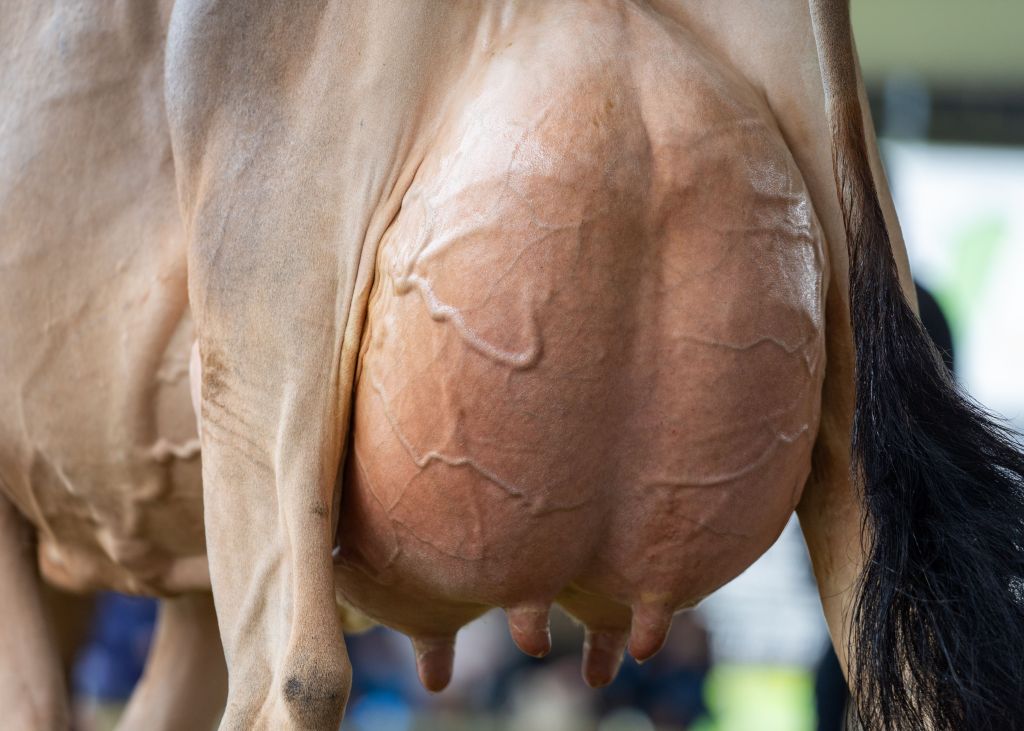
The photo is of a near perfect cow’s udder. The source of life saving bone density in many of us. I have milked hundreds of cows in my younger years, maybe over a thousand. I worked at the Colorado State University dairy my fist spring and summer of Veterinary school. I found that I could name every cow by her udder. As years went by, I found that held true for virtually all species.
Photo Credit: Giulia Botan on Pexels

