D. E. Larsen, DVM
Chico had been one of my first small animal patients when I arrived in Enumclaw to start working.
The practice was primarily a dairy practice, and I was a cow doctor at heart. The dogs and cats were almost a sideline for us. And Chico was about as far removed from a cow as you could get.
Chico was a frequent visitor to the clinic. I think his master used his visits as a social outing. And as I would often observe over the years, these little ankle biters held a special attraction to older large men. George fit that description to a tee.
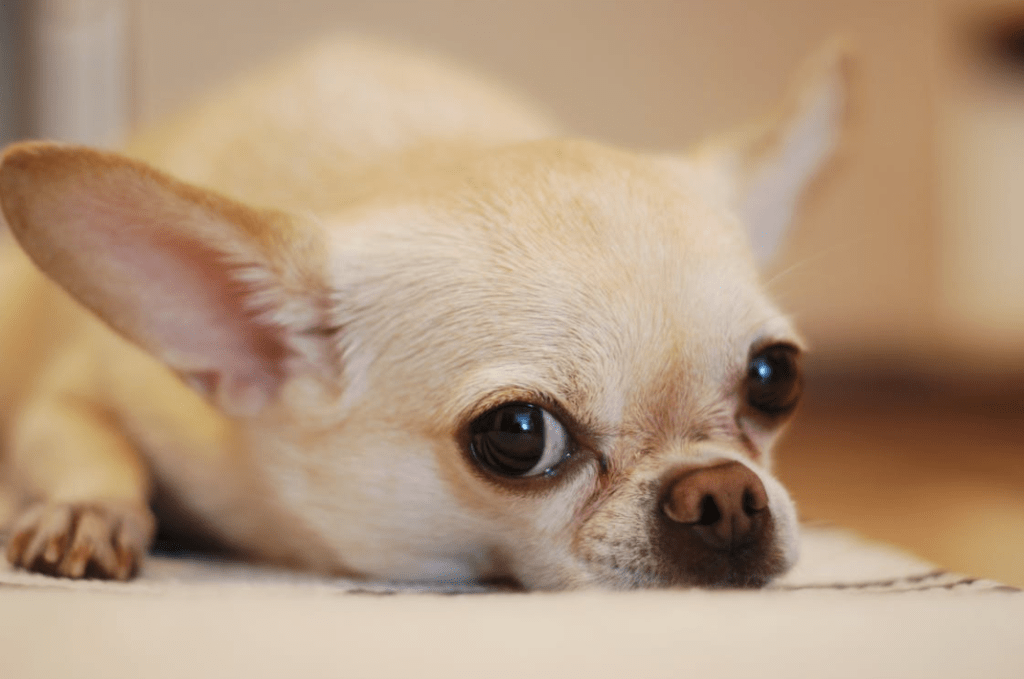
George was all of six and a half feet and carried a little extra weight that was most obvious in his belly. Chico would arrive at the clinic nestled in the crook of George’s arm and somewhat resting on the top of that belly. Perched there, ready to attack anyone or anything he perceived to be a threat.
On Chico’s first visit, George had stood at the exam table, and after an introduction and some small talk, I reached over to take Chico from his perch. I was lucky George had good reflexes and was able to turn Chico away before I lost a finger or two.
“He will be okay, Doc,” George said. But I have to give him to you. He is pretty protective of my space.”
George placed Chico on the table and pushed him in my direction.
“He’s okay,” George said to Chico.
I wasn’t so sure, and Chico kept a close eye on me and my fingers. I reached out and stroked his head.
After that encounter, everything was fine between Chico and me. As long as I didn’t try to take him from George’s arm.
This afternoon, George came into the clinic just as I was returning from my morning farm calls. Over the last year, he had learned my schedule pretty well, but I thought he must have been watching for me. Unlike most of his visits, there was concern on his face and in his voice.
George had walked to the back of the clinic, where I was washing up.
“Doc, I’m sorry I don’t have an appointment, but I noticed a growth on Chico this morning, and I was hoping you could just get a quick look at it for me,” George said.
There goes my lunch hour, I thought.
“Sure, George,” I replied. “Just give me a few minutes to clean up. I don’t have any appointments until later this afternoon.”
George and Chico were waiting for me in the exam room. George pushed Chico over onto his left side and spun him around to show me a small raised tumor on the right side of his chest.
“I swear, Doc, this thing wasn’t there yesterday,” George said. “There is no way I would not have seen it.”
This was a small tumor, less than half a centimeter across, round, and raised several millimeters. The surface was intact and deep red in color.
“I think I better stick in needle in this and see if I can tell you what it is,” I said.
“What do you think, Doc?” George asked as he picked Chico up and returned him to his perch.
“Let me get a couple of slides, and I will get a look at things under the microscope,” I said. “Then we can get an idea if this is a tumor or maybe an oddball infection or something. It will only take a few minutes.”
“You’re not going to just run up a big bill on me, Doc?” George asked.
“This isn’t going to be much,” I said. “I’m just going to look at it here. I’m no pathologist. So, if we have to send it to the lab, it might cost a little. But we can talk about that if need be.”
Doing a fine needle aspirate on a skin tumor was a pretty simple procedure. You just needed to slide the needle into the lesion, move it around a bit, and withdraw. There was no need for any aspiration, you are just trying to collect a small sample of cells in the needle that you can transfer to a slide and make a smear.
Big dogs seldom flinched during the process. That usually wasn’t the case with small dogs. But Chico was not an ordinary small dog. He was confident that he was in control of his environment, and as long as George was there, I think I could do almost anything to him.
After collecting the aspirate, I squeezed it onto a microscope slide and made a thin smear. After a quick stain, I put it on the microscope stage and focused on the cells.
The slide was covered by a sheet of plump, round cells filled with deep purple granules. Under my breath, I said, ” Mast cells.”
“George, this is a mast cell tumor,” I said.
“So, what does that mean for Chico?” George asked as he rubbed Chico on the head.
“Most mast cell tumors this size are not a major problem,” I said. “We remove them, usually put the dog on some Prednisone for a short time, and that’s the end of it. Rarely, and I have never seen one, they can be a very aggressive tumor. And that means with some chemotherapy and radiation, the patient is not going to make it very long.”
“What do we need to do now?” George asked.
“The first step is to get the thing off of Chico,” I said.
“When can you do that, Doc?” George asked.
“Yesterday would be time,” I said with a smile.
George didn’t smile. “What do you mean, Doc?”
“This is a veterinary clinic, George. You don’t have to wait 6 weeks for an important surgery,” I said. “If you can leave Chico, I can do the surgery tonight or tomorrow morning.”
“I can’t leave Chico, Doc,” George said. “What else can you do?”
I should have known that George wouldn’t leave Chico. That was probably a good thing. I’m not sure we would be able to get him out of the kennel without a major battle. I stepped out and glanced at the afternoon schedule.
“George, if you can wait a bit, when Don gets back to the clinic from his farm calls, he can handle the appointments, and I can get Chico under anesthesia,” I said. “That way we can get him awake and ready to go home by this evening.”
“I would think you could take that little thing off with a local,” George said.
I had to think about that a bit. With a large dog, that would have been an option. But most of the time, it was almost impossible on a small dog. But Chico was different. We might be able to get away with a local.
“I hadn’t thought about that,” I said. “But we might be able to do that with Chico. The problem is that this is a small tumor, but we have to make a wide cut around it. In veterinary medicine, surgery is often our only option, so the old saying goes, cut early, cut wide, and cut deep. That ends up meaning this is a little tumor, but it will be a big incision.”
“If I’m here, I think you could cut his leg off, and he wouldn’t say a word,” George said.
“You’re probably right, George,” I said. “Chico is sort of a special case.”
George and Chico had to wait out front for only a short time. Don arrived from his farm calls and helped me set up for surgery before appointments started.
George brought Chico into the surgery room where we clipped his chest and did an initial scrub.
“This stuff stings a little at first,” I cautioned George as I approached with a syringe of Lidocaine. Chico never budged as I blocked a wide area around the tumor.
The surgery was anticlimactic. I removed the tumor with a wide elliptical incision that extended deep to the fascia of the Latissimus Dorsi muscle.
After removing the block of tissue, I placed it in a jar of formalin so we could send it to the lab. I turned around and took a deep breath. There was a big hole to close on this little dog.
Chico followed my every move with his eye, but George’s hand on his head kept him quiet.
“How are you holding up, George?” I asked as I started closing the deep tissues.
“I’m doing fine,” George said. “But I’m glad you told me you were going to take a big chunk out this little guy, Otherwise, I would be worried.”
“Chico has a lot of loose skin on his chest,” I said. “You are going to be amazed at how well this wound closes up. And we are going to be done in just a few minutes.”
I closed the deep tissues with a continuous suture of Dexon. This brought the skin edges together nicely, and allowed me to close the skin with individual nylon sutures with no tension on the wound. The closure looked perfect, if I say so myself.
“I am amazed, Doc,” George said. “I never thought it would be almost new.”
I removed the small drape, and Mary cleaned the wound and motioned to George that he could pick up Chico.
“I’m not going to hurt him, am I?” George asked.
“That wound will be numb for a couple of hours,” I said. “I will send you home with some Prednisone tablets that he will need to take for a few weeks. And a few pain pills, just in case he needs them for a day or two. As far as the wound goes, just keep it clean and dry and let me look at it if you notice discharge, swelling, or discoloration. Otherwise, let me see Chico in three weeks. I go a little longer for the sutures with him being on Prednisone.”
“I noticed that you saved that tumor,” George said. “What do you plan to do with it?”
“I’ll send it to the lab,” I said. “They will look at it under a microscope and let me know if it is a bad tumor or not.”
“Doc, if it is a bad tumor, I am not going to be able to do any more than we have already done,” George said. “It is sort of a sad fact of life for Chico. So, I think we would just rather not know. I will spend that money on some steaks, and Chico and I will live high on the hog for a while. We probably should be doing that anyway.”
“George, I’m okay with that. In reality, if this is a bad tumor, Chico probably doesn’t have much of a chance, even if he had a full wallet,” I said. “Time will tell the same thing as the lab.”
As George was leaving with Chico in his spot in the crook of his arm, he stopped at the door and turned around.
“Thanks, Doc,” He said. “I think we are going to visit my sister down in Oregon. We’ll be back in time to get these sutures out. See you then.”
Chico healed well, and when his course of Prednisone was done, I deemed him cancer-free. Probably a little early for that, but George had come to grips with his mortality and that of Chico’s.
“We eat steak more often than we used to!” George said as he headed out the door after we considered Chico cancer-free. “Thanks for everything, Doc.”
Photo Credit to Nishizuka on Pexels.
 Memoirs of a Country Vet
Thank you so much, Dr. Larsen, for the beautiful story with a happy ending! I wish there were more people like you as the world would be a better place!
Joanna
LikeLiked by 1 person
Another well written, entertaining and educational story, Doc. I still think your stories should be required reading for veterinary students.
LikeLiked by 1 person
Happy Friday. I had to chuckle at your description of small dog owners, It is accurate! Good story!
LikeLiked by 1 person