
D. E. Larsen, DVM
A warning: This post is inspired by a bit of politics. Something I seldom address, but I have a few points to help people understand some of the difficulties “experts” have in making vaccine decisions.
1) The Polio vaccine
I was going on a long trip with my grandparents in the summer of 1956. Polio was a major infectious disease at that time. The polio vaccine had been released in 1955, and they insisted on my vaccination. In 1913, they had lost a nephew to polio. He died twenty-four hours after diagnosis. I don’t know, but I suspect that my grandparents paid for the vaccines.
I was lucky that the trip had not been in 1995. That year, Cutter Laboratories released a batch of vaccine that had been produced with a manufacturing defect and contained live poliovirus. This caused 40,000 cases of polio, with some 400 children paralyzed and ten deaths. The link below allows you to read the full account. I encourage you to read it.
The polio vaccine was reworked, and controls and testing were instituted. The vaccine was needed, but it needed to be safe.
2) The veterinary Pasteurella vaccine.
The Pasteurella vaccine, a killed bacterin, was first introduced for cattle in 1949 – 1950. Pasteurellosis was a leading cause of death in pneumonias and played a significant role in shipping fever.
This vaccine was the most used vaccine in cattle for the next thirty-some years. In veterinary school at Colorado State, I was told by Dr. Pearson to never use this vaccine. Dr. Pearson was highly respected and a master cow doctor.
“This is a terrible vaccine,” Dr. Pearson said. “You should never use it. In fact, I would suggest that you decline service to any herds that are using this vaccine.”
I followed Dr. Pearson’s recommendation to the letter, turning down at least one herd when the owner would not discontinue the vaccine.
Sure enough, in the early 1980’s, research told the world the the vaccine did more harm than good.
Shipping fever was so severe because the immune system of the cow would send many white blood cells into the lungs to fight the infection. The white blood cells would engulf the bacteria, which would then kill the white blood cells. The accumulation of dead cells in the airways worsened the pneumonia.
The vaccine made it easier for the white blood cells to engulf the bacteria. This actually led to making the pneumonia much worse.
I was at a state veterinary meeting in the early 1980s, seated at a table with a group of young veterinarians. One of the new doctors from the new veterinary school at Oregon State University stopped by to speak with us.
He wanted our opinion on the new research and on our use of the vaccine. I was the only one at the table who did not use the vaccine.
With thirty years on the market, it was apparent that the veterinarians and experts could not recognize the problem with the vaccine.
The vaccine was withdrawn, and over the following two years, it was reworked and reintroduced. I never did use the vaccine, even in its new and improved version.
3) Feline Leukemia vaccine.
The feline leukemia vaccine was released in 1984. Before the use of the vaccine, I would see cats come to the clinic and die every week. Sometimes daily.
One week that stands out in my memory, I saw three eighteen-month-old cats come to the clinic and die on the exam table from the stress of the trip in their weakened state. They were all young male cats of the same color. When the third one came to the clinic, I finally questioned the owner. Those three cats were all from the same litter.
That was a common event in those days. In my first years of practice, confirming a diagnosis was difficult, and treatment options did not exist. Today, diagnosis is easy, but treatment options are few.
Before 1984, the average age of cats was seven years. I never saw a male cat over fifteen, and females over sixteen were rare. Now that average age is around fifteen, and cats in their twenties are common.
When most of my patients were vaccinated, I rarely would see a case of feline leukemia. Cases went from one to three a week to two or three a year. Problem solved, right?
After a couple of years of use, there were reports of fibrosarcoma tumors at the injection site of the vaccine. These were reported to be occurring in about one in 20,000 vaccinations.
It would take me a long time to do 20,000 vaccinations in Sweet Home. But we made the recommended adjustments in giving the vaccine. It was in the early 1990s before we saw our first tumor. As reported, it was difficult to manage.
We removed the tumor twice, but each time it came back, it was more aggressive than before. The owner elected euthanasia.
One cat lost from the vaccine over six or seven years, compared to a hundred cats lost to the disease every year, seemed like a good trade to me.
The location where the vaccine was administered was changed. Changing it to the left hind leg, low on the leg. I mentioned the tumor, but still strongly recommended the vaccine.
Over the following years, we would see a tumor every two or three years. To me, this meant the incidence was much more frequent than one in 20,000. But the results were still better than looking at a dead cat every week.
The vaccine manufacturers started covering the treatment cost for the tumors that did occur. Initially, if the tumor was large, an amputation was recommended. That would be life-saving in most cases. Later, I would see good success in removing the tumor if I got to see it soon enough.
Now there are few veterinarians who were in practice prior to 1984. The incidence of feline leukemia is very low. Cats are often kept indoors only, or at least mostly. Vaccine recommendations place the feline leukemia vaccine low on the list, and probably rightfully so.
My concern is that the virus is still around, especially in feral cat populations. If I were still in practice, I would give the client the information and allow them to make the decision. If it were my cat, I would vaccinate it, unless it were kept indoors only.
The vaccine is still on the market. The benefits outweigh the risks.
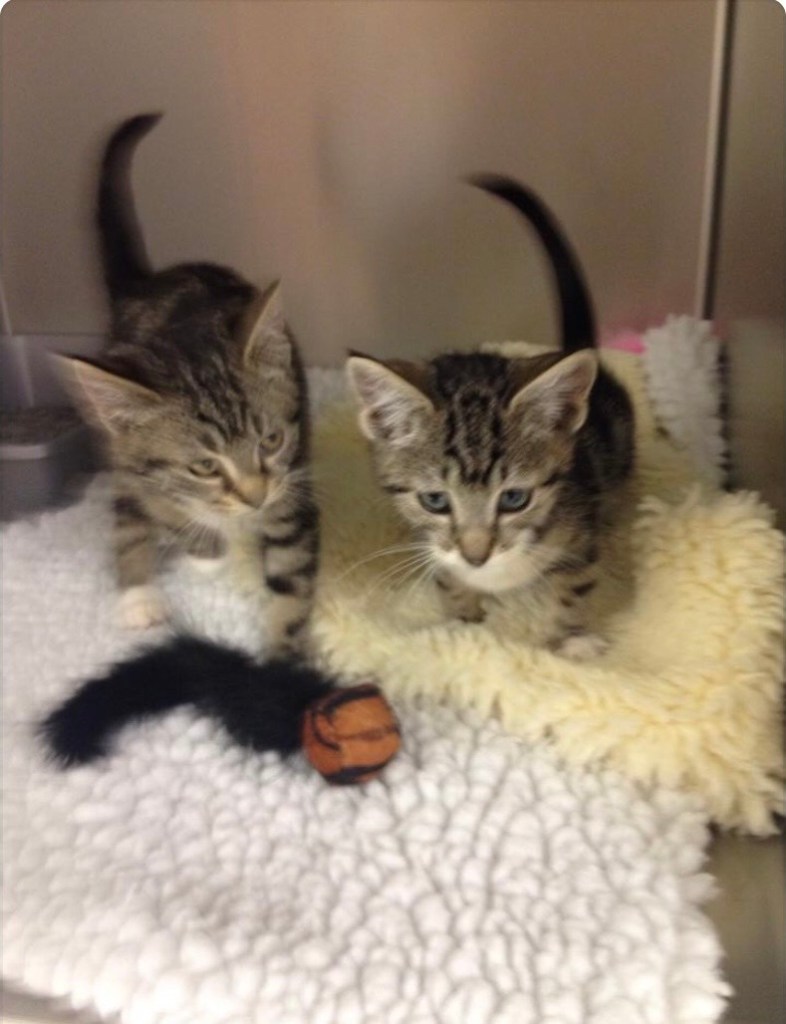
Photo Credit: My daughter, DeLaine Larsen. Cats are Wishbone and Crystal. They are KATA Alumni. KATA was a kitty rescue group in Sweet Home. Wishbone and Crystal live in San Francisco. We delivered them 12 years ago. When we picked them out, we entered an old chicken coup holding twenty or thirty kittens. These two climbed up my pants leg, so they got selected. I am certain they are littermates, but who knows for sure.
The Cutter Incident: How America’s First Polio Vaccine Led to the Growing Vaccine Crisis
 Memoirs of a Country Vet
As usual, A great read. I think that when we were in high-schoolm we received bith Salk and Sabin polio vaccine! One was administered in a sugar cube and other by needle!
LikeLike
Thoughtful, well balanced discussion. I’m old enough to have been at risk for polio. I went to school with kids who’d had it and were in leg braces. They were lucky. My dad was a scientist who worked daily with probability theorem, and his view was that reducing the odds had value of its own. I got both polio vaccines when I was in elementary school. There are places out here in CO where wild foxes are dying from canine distemper apparently spread by unvaccinated dogs. I dunno…
LikeLiked by 1 person
That was an interesting article, Doc, and your post was a good discussion from the veterinary side of it. I remember getting the polio vaccine among others, as a child and never had any issues with them.
Complicating the thorny issue of vaccines are the various adjuvants given along with the antigen used to stimulate immunity. Here is one link to the MDS veterinary manual, the professional page that gives a short but good overall discussion. Much more can be found in the scientific literature on the human side.
https://www.msdvetmanual.com/pharmacology/vaccines-and-immunotherapy/immunologic-adjuvants-in-animals
LikeLike
I am a bit younger than you, Doc, when I got vaccinated against Polio it was long time more or less obligatory. Seeing the old photos of kids WITH Polio and knowing that it meant death in many cases, I am glad we did not have much of a choice.
LikeLike