D. E. Larsen, DVM
When I came back inside after checking on the medications I had in the car. Sandy was still on the phone. I was hoping it wasn’t the same call.
“This is Carol,” Sandy said. “She has been talking with Stan over at the feed store. She would like you to look at her steer. I have been trying to explain that you don’t have all your supplies yet and that you don’t really want to be taking calls at this time. Can you talk with her?”
I took the phone from Sandy and sat down at our kitchen table with a notepad. We moved to town a few weeks ago and have been house hunting. We were still cramped in this small apartment with four kids and boxes stacked everywhere.
“Hello, Carol, this is Dr. Larsen,” I said into the phone.
“Dr. Larsen, I have a very sick steer,” Carol said. “I was in the feed store talking with Stan and he suggested I give you a call. I understand from your wife that you are quite ready to be looking at animals, but if you can’t look at him, it will take days for me to get someone out of Lebanon or Albany.”
“If you understand that my inventory is not complete, I will come out and look at your steer,” I said. “What is going on with him?”
“He has a terrible diarrhea,” Carol said. “It has been going on for a couple of weeks now. We have tried everything that Stan has recommended, and it just keeps getting worse.”
Sandy handed me her notes, which included Carol’s address and directions to her place, located out on the highway toward Holley.
“It will take me a little time to straighten up the car, but I will be out there in an hour or so,” I said.
“Thank you, Doctor,” Carol said. “I will be waiting for you out at the barn with the steer. You will see me when you turn into the driveway.”
I hung up the phone and looked at Sandy.
“It sounds like I will have a lot of education to do here,” I said. “People are the same everywhere. The steer has been sick for weeks, but when it looks like he might die, it becomes an emergency.”
True to her word, I could see Carol standing out by the barn when I pulled into the driveway. The only problem was in her definition of a barn. I would call this building a shed. And that is a stretch.
I stepped out of the car and introduced myself.
“I have the steer tied in the barn,” Carol said. “I thought he was going to die when I looked at him this morning, but he looks better this afternoon.”
“I will look him over and then we can talk about what we need to do for diagnosis and treatment,” I said. “Can you tell me what you have treated him with from the feed store?”
“We gave him a worm pill,” Carol said. “That didn’t seem to do much.”
“Do you know what it was called?” I asked.
“No, I don’t think we knew,” Carol said.
“Was it yellow or white?” I asked.
“It was white,” Carol said. “Then, when that didn’t help, we gave him some scour pills. They were yellow. Terra something, I think. We gave him two of those twice a day for five days. That didn’t help either. Then, this weekend, he wasn’t eating well, and my father-in-law looked at him and gave him an oily rag to give him his cud back.”
I looked at Carol and stifled a laugh. I couldn’t believe her last comment.
“Doctor Larsen, don’t laugh at me, I am doing the best I can,” Carol said.
“I’m sorry, Carol,” I said. “It’s just your last comment. I have a book of livestock diseases that belonged to my great-grandfather. It was published in the 1870s, and it states that the practice of giving an oily rag to give a cow her cud back is probably an old wives’ tale, and the practice should be discontinued. I am just amused that it is still being done.”
“Well, my husband’s father is a very opinionated old man,” Carol said. “It doesn’t surprise me that he is living back in the 1870s.”
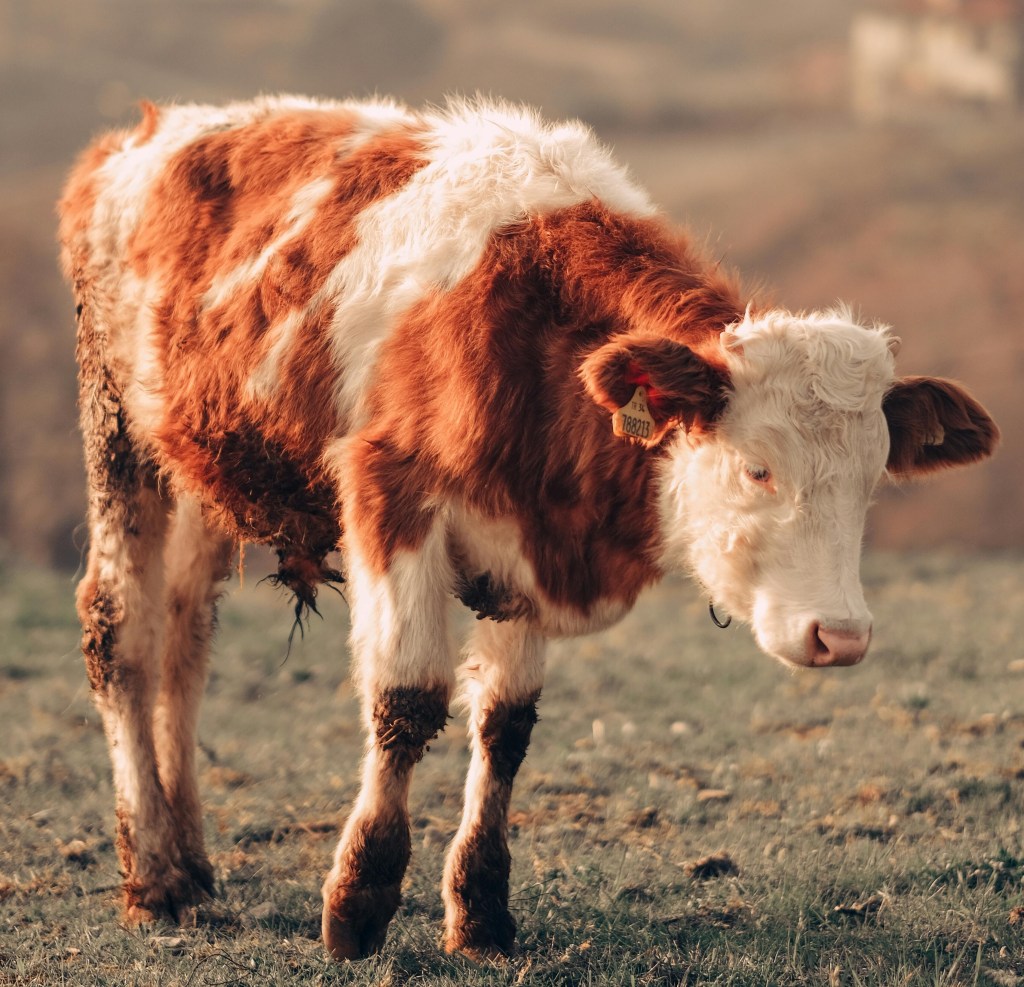
“Looking at this steer, his tail is soaked with manure, so he has had some watery diarrhea. The stool in his colon has some form to it, so maybe he is on the mend,” I said. “I will draw a blood sample and submit it to the lab, along with a stool sample. Since those results will take a few days, I will go ahead and treat him today.”
“What do you think he has, Doctor?” Carol asked.
“I think he probably has BVD,” I said. “That is bovine viral diarrhea. It could be something else, which is why we need to do the lab work. If this is BVD, he will probably get well or not, regardless of what I do for him. If this is an acute infection, it typically resolves within two to three weeks. We are almost at that time now. So, if I give him a shot today, and he is well in a couple of days, it doesn’t have anything to do with the shot.”
“What if he doesn’t get better?” Carol asked.
“If this is BVD, there are several things that can happen,” I said. “He can recover in two or three weeks, he can die almost at any time along the way, or, maybe worse of all, he can become persistently infected. Those animals that are persistently infected serve as a source of infection for the rest of the herd and other animals.”
“Well, at this time, there are no other animals,” Carol said.
“Just remember this guy,” I said. “Before you bring other cattle onto this place, just make sure they are vaccinated. If you are interested, I can send you a copy of my recommendations for routine herd vaccinations and preventative treatments.”
“Yes, that would be nice,” Carol said.
I treated the steer with antibiotics, which probably did little good, sent in samples to the lab, and left electrolytes for his water.
The lab samples came back positive for BVD.
Luckily, the steer steadily improved and was back to normal the following week. Carol became a good client and a huge supporter, despite my laugh. I am not sure she ever believed that it wasn’t me who saved her steer.
Photo Credit: Tahir Osman on Pexels.


Thank you, Dr. Larsen, for the amusing story with the happy ending for a cow!
I hope that all the animals you have treated appreciated your perfect bedside manner!
Joanna
LikeLike
I needed a happy cow story. Thank you.
LikeLiked by 1 person
Good story!
LikeLike
Home remedies always “seem” to work! 😆😆
LikeLike
I can almost smell it!
LikeLike