Several Days in February, From the Archives

D. E. Larsen, DVM

I looked for a spot in the trunk for my bag. There were six of us stuffed into the sedan for our trip to Nebraska. My bet was, I was the only one who had been in the military. You didn’t need to bring your entire wardrobe for a one week trip. 

We were going out to spend a week helping a progeny test herd of 600 heifers during the calving season. The herd belonged to Diamond Labs. They were collecting ease of calving data on their bulls to be used for their semen marketing. Six of us would drive out on this Sunday morning, and the 6 guys out there would take the car and drive home. Diamond Labs had a house on the place for us, and we took meals in a restaurant/bar in the small village near the ranch.

The drive out of Fort Collins was away from the mountains and out across the prairie. It was a four-hour drive across some for the flattest land in this country. I settled into a corner of the back seat and tried to catch a couple of hours of sleep.

“Larsen, how can you sleep when we are driving through some scenic country?” Mike said.

“One thing you learn in the Army is to sleep anywhere,” I said. “You go up on the mountains out of Fort Collins, Mike, and you can watch the riverboats on the Mississippi River.”

“That can’t be right,” Mike said. “That can’t be right, can it, Jim?”

“He is toying with you, Mike,” Jim said. “He doesn’t have much to say about this flat country.”

It was going to be a cold week. Daily high temperatures were 20 below zero. Overnight lows were pushing 40 below. This will be a great learning experience, but we will pay for it by enduring some harsh temperatures.

The group that was going home was glad to see us pull up to the little house. The housekeeper was just finishing up getting the place ready for the new crew. We discussed instructions as briefly as possible, and they were off. The ranch foreman came over to make sure we were settled into the house.

“Here are the directions to the restaurant where you take your meals,” the Foreman said. “It is time for you all to go get lunch. You can take the old crew cab pickup. When you get back, you need to decide on your groups of two. The herd needs to be checked every 2 hours. You pull any heifer who was in labor on your last drive trough. Bring them into the barn, diagnose the problem, and take care of it. That means you pull the calf, do a C-Section, or do a fetotomy, Whatever is indicated.” I will be around in the morning. You go for breakfast at 7:00, Shift change is at 8:00 AM, 4:00 PM, and Midnight.”

Using my military experience again, my first priority was picking out my bunk. When the others realized what I was doing, there was a mad rush to stake their claims.

The restaurant was in what one would have to stretch to call it a town. It was more like a congested area with maybe a dozen buildings. But the food was good, and they appreciated the business that the ranch was giving them.

“Look at that picture on the wall,” I said to Jim as we were setting down. It was a poster of W. C. Fields with one of his quotes.

“During one of my treks through Afghanistan, we lost our corkscrew. We were compelled to live on food and water for several days,” W. C. Fields.

“Bob and I are going to take the first shift,” Mike said. That will mean we will have a short shift today.”

“A short shift today, but also a short shift next Sunday before we leave,” I said. “It all catches up with you sooner or later.”

“Dave and I will take the midnight shift,” Jim said. “That will be the coldest, but also probably the quietest.”

“I guess that leaves the 4:00 to midnight shift to Bill and me,” John said as we finished lunch. “I guess we better get back so Mike can go to work.”

Midnight came sooner than I thought. John was up waking us up about 11:30.

“You guys get dressed, and we will have time to go over our notes,” John said. “Make sure you put on your long johns, it is just damn cold out there tonight, and that little heater in the pasture truck doesn’t keep up.”

“Make sure you check the corners of the pastures,” John said. “There is a heifer in labor in the corner by the creek. If she doesn’t have a calf, you should bring her in for help. We didn’t have any deliveries to help. Maybe you will get lucky.”

The pasture truck we had to check the herd with was an old Army ¾ ton. It had a canvas top and probably no insulation anywhere. With a light wind blowing, the 30 below temperature was brutal. The heater in the truck seemed to take forever to warm up and then blowing full blast, it failed to keep the ice from forming on the inside of the canvas top.

“There is the heifer John was talking about,” Jim said as he turned the truck so the headlights would fall on her. “We get lucky on this trip. She already has a calf.”

“How do these calves survive in these temperatures?” I asked, thinking that Jim would have some experience with this cold since he was from Wyoming.

“Some don’t, and a lot of them lose the tips of their ears,” Jim said. “I guess it takes a good momma cow to get them dried off and up nursing.”

Most of the herd was in a hollow in the middle of this ten-acre pasture. Grouping up kept everyone a little warmer, and the hollow provided some protection from the wind.

“Looks like we get to drink some coffee,” I said. “Not seeing any heifer in labor on this trip means we don’t have any work to do on the next trip.”

“I think you spoke too soon,” Jim said as the headlights caught the eyes of a heifer in the far corner of the pasture. He pulled the truck closer.

“It looks like we should watch her a few minutes,” I said.

The heifer was straining hard, and just the tips of the toes were visible at her vulva. Her straining did not let up as we watched, and there was no progress in the fetus’s position.

“What do you think?” I said. “I don’t think we want to leave her for another two hours with that straining.”

“I agree,” said Jim. “She would have to be in the farthest corner from the barn.”

We both got out and got her on her feet and headed for the barn. She seemed to know that it would be warmer there.

“You keep her going,” Jim said. “I will go and make sure we are set up in the barn, then I will come back and follow you with some lights.”

It was a long slow walk to the barn, and while I was expecting some warmth when we got there, I was disappointed.

“Why do suppose people would settle in this part of the country?” I asked Jim. 

“This is great cattle country,” Jim said.

“My bet is, they had a broken wheel on their wagon and couldn’ go any further,” I said.

We got the heifer in the chute and started the propane heater. The heater was going full blast, and you could hardly feel it.

I tied the tail out of the way, and Jim washed her up and did a vaginal exam.

“I think we can pull this one with no problem,” Jim said. “It might be a tight fit, but I think it will come. You might want to check her.”

I washed up, the water was warm, but my wet hands and arm were instantly freezing. The only warmth was inside the heifer. 

We hooked up the calf puller and haltered the heifer so we could release her head from the chute in case she went down during the delivery. It was a hard pull, but the calf was fine when it hit the ground. We move them into a holding pen for the night.

“This guy is a lucky one,” I said. “He gets to spend the night in a warm barn.”

We set up the chute so it would be ready for the next cow. I noticed the water on the ground from where we worked on the heifer was frozen solid.

The thermometer continued to dive as the night grew long. On our third trip through the herd, it was 40 below. One quit trying to stay warm, you just tried to keep from getting frostbite.

Jim noticed the heifer in the corner by the creek.

“We better check that one,” Jim said.

Blowing in my hands and reflecting my breath onto my face, trying to keep some feeling in my cheeks, I looked up and noticed this was the heifer that had calved earlier.

“No, she has been there for several days,” I said.

“Several days!” Jim remarked. “This is our first night.”

This is going to be a long week.

Photo by Chris F from Pexels

George

 D. E. Larsen, DVM 

Jim waited patiently in the reception area with George lying at his feet. He tried to busy himself, looking at his hand, then out the window. I hurried to the next exam room so we could work George into the busy schedule.

“Dixie, get Jim into the surgery room, and I will look at George as soon as I am done here,” I said to Dixie as we passed each other between the exam rooms.

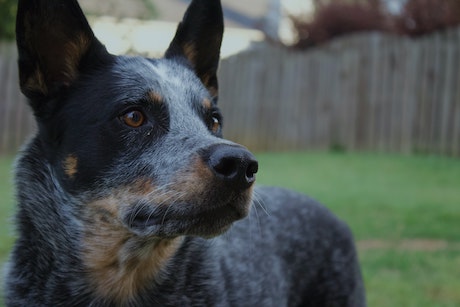
George was a farm dog, and he sure wasn’t much to look at, but he was a constant companion for Jim.

Jim and Joyce had a small farm out on the Calapooia River. They had a few cows, a few sheep, a lot of cats, and George.

Dixie had George up on the surgery table when I stepped into the room. George was lying with his head stretched out on the table.

“I’m sorry to be such a bother,” Jim said. “I guess I never realized how sick George was. He hasn’t eaten for several days, and I noticed he vomited some water in the yard this morning. Then this afternoon, I saw him take a crap, and it was like brown water.”

I ran my hands over George. I could feel his ribs with no fat covering them, and I noticed a few swollen lymph nodes.

“Don’t worry about the bother, Jim,” I said. “We are happy to work you in when it is something that needs attention. It feels like George has lost some weight.”

“Yes, I noticed that when I picked him up to put him in the pickup this afternoon,” Jim said. “You can’t see that looking at him with all that hair.”

I lifted a pinch of skin up on the back of George’s neck, and it was slow to return to normal when I released it. Opening his mouth, his tongue was shrunken and wrinkled, and his tonsils were swollen and red.

“What do suppose is wrong with him, Doc?” Jim asked.

“George is vomiting and has diarrhea, his lymph nodes and tonsils are swollen, and he is dehydrated and losing weight,” I said. “In my mind, George has salmon disease until I prove otherwise. We can confirm that when we have time to do some lab work.”

“Doc, I think a lot of George, but the facts are we have limited funds to spend on him,” Jim said. “I don’t know how he could have salmon disease, but I don’t think that sounds good.”

“Jim, you live on the river,” I said. “There would be ample opportunity for George to get a bite of dead fish or fish guts, and I would be making the same statement if you lived in the middle of Portland.”

“So, what do we need to be doing for him?” Jim asked. 

“We need to keep him for a few days and treat him with IV fluids and antibiotics,” I said. “He is in the advanced stages of this disease. Over ninety percent of dogs with salmon disease die within ten days of becoming ill if they are not treated. Hopefully, we can turn things around for George.”

“I trust your diagnosis,” Jim said. “Let’s put our money into treatment rather than a lot of lab work.”

“Okay, I will be able to confirm the diagnosis with just a fecal smear at this stage of the game,” I said. “George will need a lot of fluids if he is going to survive.”

“I need you to keep a running tab for us,” Jim said. “I would guess that we will reach a point where we will have to draw a line.”

“If you have a few minutes, I can give you a pretty accurate figure for the first two days,” I said. “But the problem, Jim, is George will not be well in two days.”

Jim looked at the estimate I handed him and shook his head.

“Doc, we will give him two days, but there will be nothing beyond this estimate,” Jim said. “Do your best, but if he is going to die, I will take him home to die, where he will know his surroundings.”

We hospitalized George and placed him on IV fluids and doxycycline. His fecal smear showed large numbers of fluke eggs, confirming the diagnosis. 

***

George somewhat stabilized with treatment, but when Jim came to check on him, he was still quite ill.

“The thing I don’t understand, Doc, is how come they can feed salmon to dogs in Alaska with no problem, but it kills dogs here?” Jim asked.

“It is a complex life cycle, Jim,” I said. “The distribution of the disease extends from northern California to the Puget Sound. Maybe a little further on both ends; I don’t have the latitudes on the top of my head. It also occurs on a similar range of latitudes on the east coast of Siberia. That range is controlled by the presence of a snail involved in the life cycle.”

Jim gathered George up in his arms to carry him out of the clinic. George’s eyes were bloodshot and had mucus in their corners. I doubt if he weighed thirty pounds. 

I patted George on the head as I handed Jim a bottle of antibiotics and wished him luck. I was sure it was the last time I was going to see George.

***

It was probably two months later when Jim called for me to come by and pregnancy check their little blind heifer.

I pulled into the driveway and stopped at the house before going to the barn. To my complete surprise, George came bounding off the porch to greet me. He was back to his old self. Joyce stepped out of the house.

“Jim will be out in a moment,” Joyce said. “We have the heifer in the barn.”

“George was a complete surprise to me,” I said. “I figured he had zero chance to survive.”

“It looked that way for several days,” Joyce said. “After Jim brought him home, he laid around here looking like death warmed over. One evening Jim was telling me that he would take George out behind the barn in the morning and shoot him. I don’t know if George heard his comments or not, but that next morning George was at the front door, wagging his tail and looking for food. It was just like that, and he was instantly well.”

George followed Jim and me to the barn, and I checked the heifer. She was two months pregnant.

This heifer had been born with tiny eyeballs in her eye sockets. Microphthalmia was a rare condition and could have been genetic.

“It will be interesting to see she has a calf with normal vision,” I said.

“Yes, it will be interesting,” Jim said. “But it doesn’t matter. We will keep it either way. Beth here gets along fine in her pastures.”

George escorted me to the truck, and I patted his head before I left.

Photo by Bojan Popovic on Pexels.

Charlie (a rewrite)

David E. Larsen, DVM

It was a bright sunny afternoon in early June when I pulled up to the gate of the McCubbins’ farm. Frank had a llama with a vaginal prolapse and was close to her delivery date. When I got out to open the gate, I noticed a feral momma cat with a litter of 4 kittens. The kittens looked to be about five to six weeks old. The remarkable thing about the litter was one Siamese cross kitten with long hair. My kids would love that kitten, but the whole group scattered when I tried to approach them.


I continued on to the barn after closing the gate. Frank and his ten-year-old grandson were waiting for me at the barn.


“I tried to catch a wild siamese kitten down at your gate,” I said. “There was a mamma cat with a litter of five kittens, but they were pretty wild.”


“Well, that’s too bad,” Frank said. “We have too many cats around this place as it is.”
Frank’s grandson disappeared without a word.


“The girls tell me you have a llama with a vaginal prolapse,” I said. “That is pretty unusual. I have seen a few of them after delivery, but I haven’t seen one in a pregnant llama. When they occur in sheep before delivery, it is usually due to triplets, where there just isn’t enough room in the belly. Vaginal prolapses are always difficult to manage before delivery.”


“Why is that?” Frank asked. “I would think it would be pretty much the same.”


“Yes, it is pretty much the same, except after delivery, you can just sew things up for a few days,” I said. “Before delivery, if you do that, there is a chance of losing the baby. Most people can’t watch these mammas around the clock.”


“So, how do we solve that problem?” Frank asked. “This isn’t a four hundred dollar calf.”


“Today, I will try a trick not taught in school. It was relayed to me over dinner at a local veterinary association meeting by an old veterinarian over twice my age,” I said. “I was fresh out of school, and he latched onto me when I came through the door. I think he was seventy-two and mostly retired, but he bent my ear all night.”


“I’m not sure I like the word, try,” Frank said.


“That’s why they call this veterinary business a practice,” I said. “Most of what I know and do, comes from trusted practitioners, either in school or practice. We end up standing on the shoulders of many people who have come before us. You just have to trust someone who has spent his life doing the same thing you are doing. I have every confidence that this procedure will work. I probably used the wrong word when I said trick.”


“Okay, I trust your judgment,” Frank said. “And I’m not interested in sleeping in the barn for the next week.”


After carefully washing the prolapsed tissue, I lubricated the mass and carefully pushed it back in place. She did some straining, and it was evident that she would push things out again.


Now for the trick, I washed a wine bottle one last time, rinsed it with Betadine, and lubricated it with KY jelly. I carefully inserted the bottle into the vagina, blunt end first. It would serve as a pessary, preventing the vagina from prolapsing again. When the cervix dilated and the baby entered the birth canal, the bottle would be easily pushed out and followed by the baby. This trick was from the 1930s, but the results were expected to be far better than any modern method.


Once I had the bottle in position, the llama relaxed, and she quit straining.


“What do I have to do with her now? “Frank asked.


“I think you can expect her to birth in the next few days,” I said. “So, you want to keep a close eye on her. There is always a possibility of a uterine prolapse after delivery. In the llama, that doesn’t happen often, and I don’t know if having a vaginal prolapse before delivery increases the chances of a prolapse following delivery or not.”


“I think I hear you saying that if it happens after delivery, it is easier to handle,” Frank said.


“Yes, if you find it right away,” I said. “But it also can affect her future fertility.”


“I am intrigued about how different generations of veterinarians share information,” Frank said as I cleaned things up and started putting my equipment back in the truck. “How often does that happen?”


“Frank, it is the backbone of the profession,” I said. “Young veterinarians come out of school with the basics but need some direction in applying them. They usually go to work for older veterinarians. Those employers and older colleagues hand down information and skills that never make it to the textbooks.”


“I sort of find that interesting,” Frank said. “I thought it was all book learning from school.”


“The veterinary profession, maybe more than other professions, has a generation gap that is hard to bridge,” I said. “Over the last hundred and some years, the profession has had multiple upheavals. Before the Model T put the automobile in the hands of the working man, veterinarians were horse doctors. There was a horse in every household. Those guys went the way of the bicycle repairmen almost overnight. So the profession became a profession of cow doctors. Horses, dogs, and cats were just sidelines. Then in the 1960s, pets started becoming more of a thing, and horses, dogs, cats, and pocket pets soon became the mainstay of the profession.”


Frank and I were still talking when Frank’s grandson returned carrying the Siamese cross kitten in his hands.


“I went down to the gate, and they were still there,” the grandson said. “The mamma cat was wild, but the kittens hung around. I just called this one, and he waited around long enough that I could catch him.”


“Let me look at him,” I said as I took the kitten from the grandson’s hands. It didn’t take much looking to realize that he was covered with ringworm.


“What are you going to do with him?” I asked.
“I’m going to keep him.” the boy replied.


“That will be fine,” I said. “He will grow up to be a good cat for you. Especially since he was raised by a feral momma cat. She was out there teaching them how to hunt. But, just as a warning, this kitten is covered with ringworm. You want to get that cleared up before you handle him much.”


“What should we do for treatment?” Frank asked.


“If you stop by the clinic, I can give you some shampoo and a couple of pills that you can chop up and give him a piece every day for a few weeks. And if you change your mind about the kitten, I will take him off your hands.”

***

It was probably 2 weeks later when Frank called the office.


“Are you still interested in taking that kitten?” he asked. “I have a grandson who is covered with ringworm. And, by the way, that llama gave birth a couple of days after you worked on her. When I came out to the barn early in the morning, the baby was up and around, and the wine bottle was lying in the middle of the pen. Pretty good trick, I would say.”


Frank was happy to deliver the kitten to the clinic. We named him Charlie, and he was an irresistible kitten.


We started with an anti-fungal bath and topical treatment of Charlie’s ringworm. Even with careful treatment and stern warnings, our kids developed a few ringworm lesions before Charlie’s skin was clear.


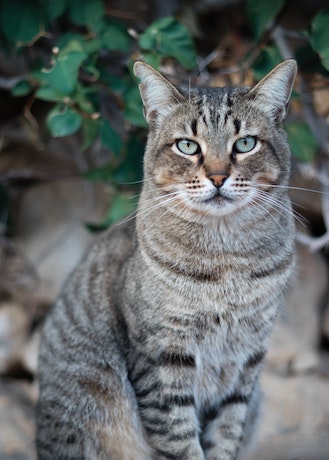
Charlie proved to be a super cat. He grew large, measuring nearly 3 feet from the tip of his nose to the tip of his tail. He was a ferocious hunter. There was nothing safe in the back of our property.


We had many molehills when Charlie arrived. Before the beginning of his second summer, he had eliminated the entire mole population.


Charlie was very much my cat. I would leave the bedroom window open and unscreened during the night, and Charlie came and went as desired.


It was common for him to bring his trophies and leave them at the foot of our bed. Mice and bats were standard. One night I heard him come through the window, and he jumped up on the bed. This was something that he seldom did. The next thing I knew, he dropped a mouse on my neck. Thankfully it was dead.


During Charlie’s fifth year, he went hunting one evening and never returned. We could only guess at his demise, but it was likely by a wily coyote or a much bigger cat than he, both of which were common on our hill. Charlie’s loss was sad for the whole family, but maybe the most painful thing was watching the return of the molehills the following spring.


I have always held out for the chance that Charlie had found his old hunting grounds on Frank’s side of the hill. Maybe he preferred hunting with his mother.

Photo by Brett Jordan on Unsplash.