D. E. Larsen, DVM
Cascadia is a small community located up the river from Sweet Home. It is currently little more than a wide spot in the road; however, there is a state park and a small church there. And there is a small collection of houses and small farms scattered across the open spots in the forest. In our early years, when there was still a lot of logging activity in the National Forest, Cascadia was a thriving little community with an elementary school, a store, a church, a post office, and the state park.
Cascadia was also a center for the illegal marijuana trade in the area and probably the state. The County Sheriff Deputies were reluctant to leave the main roads. Except for Mountain House, there was nothing much except mountains and timber east of Cascadia until you came to Sisters, some 70 miles over the Cascade Mountains.
I had several clients from Cascadia who habitually carried overdue accounts for most of the year. They would come in, usually in October, with a large roll of $100.00 bills, peel off the required amount and thank us for being understanding for their late payment. Occasionally, especially when they had a big harvest, they would pay an extra couple of hundred dollars toward the coming dry period.
That was the background when Doug came in with a sick puppy. This was during the early days of the Parvo Virus epidemic that was sweeping the state and the country. Parvo is a devastating disease for young puppies, and this was at a time before we had a vaccine for the disease. Mortality rates were high, and treatments were not yet standardized, and they were expensive for the standards of the day.
Doug was a middle-aged guy with rugged features. Short in stature and he walked a little bent over. He had worked in the woods in his early years, but back injuries had put him on disability. His hair on top was thinning, but his handshake remained firm. I am sure he had some other income because he was one of the annual accounts.
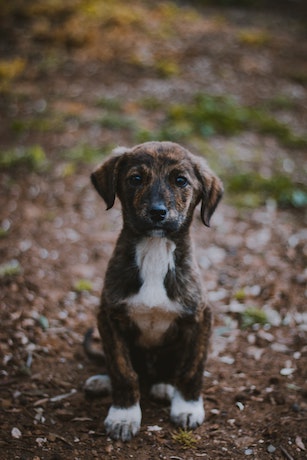
This scrawny pup was approaching twenty pounds, had short grey hair, and he was sick enough that he wanted to lay down during the exam. Joey was in the clinic record as a mixed breed. He probably had some pit bull in him, but that was just a guess.
“He has been vomiting for a couple of days, and this morning we noticed some bloody diarrhea,” Doug said as I was starting to examine the pup.
I lifted the skin on the back of his neck, probably over 10% dehydrated, pale membranes and quite depressed. The rectal temperature was depressed, 99.0°, and there was blood dripping off the thermometer. I had not seen too many cases of Parvo Virus in Sweet Home, but this was the likely diagnosis. We had no rapid means of making that diagnosis at the time.
“Doug, this pup has Parvo. Parvovirus is a new disease going around, and it kills a lot of pups. Very contagious, we will need to keep this guy in isolation. Treatment can be expensive, and I can’t carry that kind of an expense on your account until next fall.”
“Doc I never heard of Parvo. Are you sure?”
“We can get a diagnosis by sending some samples to the diagnostic lab, but this pup is going to be cured or dead by the time we get results. If we do some blood work, we can almost confirm the diagnosis, and if the white blood cell numbers are too low, that will tell us that his chances of recovery are not good. Right now, we see as many as 90% of dogs die. I think my rates of recovery are higher than that, but the numbers that I have seen are few.”
“My problem is bigger than just this pup,” Doug confessed, hanging his head a little to avoid eye contact. “I have 13 pups at home, and this morning, about half of them are vomiting. I was hoping you could give me something for all of them.”
“Thirteen pups, are they all from the same litter?”
“No, they are from a couple of litters. But they are all about the same age and size. These are valuable pups, Doc. I know they don’t look like much.”
I looked at the pup, valuable indeed, I thought. I was going to have trouble getting paid for this pup, let alone for 13 puppies. Doug’s wife and daughter could maybe give injections and subcutaneous fluids, with a little luck that might be all they would need. If we saved half of them, we would be doing good.
“So Doc, do you think you could bring a bunch of medicine up to the house and show me what to do. Then I could treat them at home. That would save me a bunch of money, and we might get lucky. I can’t afford to pay a big fee right now, but I could afford a house call and the medicine.”
“You have to understand, you could lose the whole bunch with that plan,” I explained. “I can bring some fluids and some injectable antibiotics up to your place and show you how to use it. But if we save half these pups, we are going to be doing good.
“Yes, I understand the risk, but that is just the way it is going to have to be right now. When I sell a couple of these, I will have plenty of money to pay for the medication and the visit.”
There was the key, “When I sell a couple,” this was going to be a credit, and he is planning to sell a couple of $50.00 pups to pay the bill.
“Doug, we could also lose the whole bunch. I am going to have to have some money to cover the drug cost, at least.”
“I have $100.00 tucked away still from the fall harvest I could give you. Would that help?”
“Okay, I will do a quick blood count and a fecal exam. We want to make sure this isn’t a bad case of Salmon Poisoning. You could have had someone throw a fish into your yard if they were tired of listening to the pups. You go ahead and take this pup home, and I will be up there right after lunch. You might refresh directions with Sandy on your way out the door.”
The fecal exam was negative for Salmon Disease, only a few roundworms. Doug probably wormed these pups with chewing tobacco, a common remedy around here. The white blood count was 2400, a low number but pretty good for a pup with Parvo Virus. We might have a chance with this plan.
After a quick hamburger ordered from the Dairy Queen, I loaded the truck with 3 cases of fluids, Ringers Lactate, three dozen IV administration sets, half a box of 16 gauge, 11⁄2 inch needles and a box of 3cc, 22 gauge syringes. I mixed a 100 ml bottle of Polyflex (injectable ampicillin) and grabbed a bottle of gentamicin.
The drive up the river will be a pleasant one. There is seldom much traffic other than a couple of logging trucks, and the river should be running clear and full for early June. It is only 19 miles to Doug’s place, but it will take well over a half an hour.
The bushy regrowth on a couple of maple stumps mostly obscured the turnoff to Doug’s house. Several houses shared the long gravel driveway. These houses were all the same. Small, unkept yards and untrimmed hedges made finding numbers difficult. Numerous Marijuana plants were evident in the ditch along the driveway. Unattended but they grew well in our moist climate. It reminded me of the “plant a pot seed” drive conducted by the hippie crowd when I was in vet school in Colorado. They had pot plants growing all over town, drove the sheriff and police nuts.
Doug’s was a small house, probably built in the 1930s and added onto several times. The yard was overgrown, and a large clump of marijuana plants grew in the corner of the yard. Pups were everywhere in the yard. This yard was going to be the local infection source for Parvo Virus for the next couple of years.
Doug and his daughter, Debbie, were at the gate to greet me. Debbie was older than I had expected. She looked in her early thirties, dishwater blond, slender, with an attractive figure. We unloaded everything, and we grabbed a pup to demonstrate how I wanted them to treat them.
“How do we know which ones to treat?” Doug asked.
“I think it would be a good idea to treat them all. I will do a quick exam on each pup. But any pup not sick today, will be sick tomorrow.”
I showed Doug’s daughter how to give the injections and how to administer the fluids.
“Give each pup about 500 cc fluids under their skin on their back, between the shoulder blades is easiest. It will make a big lump, but that will go down quickly as the fluid is absorbed. You may notice some swelling around their elbows but don’t worry about that.”
She took the instruction in stride and already and chart to keep track of what she would give each pup.
“You give me a call every morning at about 10:00. I should be done with surgeries by then and will time to talk with you. We could lose some of these guys. We are going to need to get lucky,” I said as was getting ready to leave.
Doug came out and handed me $100.00. “This is all I have right now, but all I need to do is sell a couple of these pups, and I can make things right with you, Doc.”
You might need to sell more than a couple of $50.00 pups, I thought to myself. “Give me a call in the morning so we can keep track of how we are doing. And Doug, hold your mouth just right when you sleep, we are going to need all the luck we can muster.”
The first morning the call came right at 10:00. The pups were still alive, but all of them were vomiting. Debbie had treated them all with no problems. The next morning everything was going fine, and Debbie thought most of the pups were feeling better. By the third day, it was looking like we were out of the woods with only one pup still not feeling well. It looked like we were going to get through this smelling like roses. This could be something other than Parvo.
Now all I needed was for Doug to pay the bill.
It was a month later when Doug came into the clinic. He had a broad smile on his face as he pulled a roll of bills from his pocket. “You did great Doc. Those pups all came through that Parvo without a problem. I have already sold five of them.”
“That’s good, we got lucky. We have a new vaccine coming out, you just have to remember to vaccinate your dogs and all the pups next time. That virus stays in the ground for over a year.”
“I have enough to pay the bill, and I can pick vaccine for all the dogs. It has been a while since I wormed them, except for a tobacco chew, so I better pick up some worm pills also.”
“Are you sure you have enough for the bill and all of the other stuff. You only sold five pups.”
“These are valuable pups, Doc. I sell them as hunting dogs.”
“Hunting dogs! What do mean by that, Doug?”
“I train them up in the mountains, and I sell them all over the country. I don’t have any problems selling them. If I do, I just lower the price to $500.00, and they are gone almost overnight.”
$500.00 was unheard of for dogs at the time, even the best purebred dog in Sweet Home would not sell for $500.00.
“Doug, that is unreal, what is your initial asking price?”
“I sell most of them for $750.00, plus whatever I need to add on to cover the shipping cost. I sell these pups all over the country. I just run a couple of little magazine ads.”
“What kind of training do you give them? I mean, what can they hunt that makes them that valuable? Guys that run purebred hounds don’t get that kind of money for their pups.”
“We train them up in the mountains. There is a lot of stuff that goes on in those woods that people never see unless they spend a lot of time out there.”
“What are you talking about?” I ask, somewhat afraid of the answer.
“Doc, where else can you buy a hunting dog that has actually been trained to track Sasquatch?”
Photo by furkanvari from Pexels.
 Memoirs of a Country Vet