Our Move to Sweet Home
D. E. Larsen, DVM
I graduated from Colorado State University College of Veterinary Medicine three months ahead of most of the class in March of 1975. After school was finished, we moved to Enumclaw, Washington, where I took a job in a mixed practice for a thousand dollars a month.
We had little money when we finished school, and the expense of the move just about took anything that was left. I mainly worked on dairy cows, but we did all other animals also.
When the first month’s paycheck was handed out, it was like a lifeline for our young family. As I was getting ready to go home that evening, the owner came over and handed me a wad of bills.
“This is your bonus for the month,” Jack said as he handed me the cash.
I counted the money before going into the house when I got home. Four hundred dollars, a pretty good bonus, I thought. When I went through the door and was greeted by all the girls, I handed Sandy the wad of bills.
“What is this?” she asked.
“That is my bonus for the month,” I said with a big smile. “That is four hundred dollars.”
Sandy had assumed all of our financial chores when I was in school. She had a background in bookkeeping and seemed to enjoy keeping track of where all the money went. But, unfortunately, she didn’t do so well at planning where it should go.
“We can’t use this,” Sandy said. “We need money that is on paper.”
“We can use it for cash purchases,” I said. “Groceries and the like, it will make life easier.”
“It will drive me crazy,” Sandy said. “What if we get audited. They will spot our spending habits right away.”
“I am not going to give it back. You are just going to have to deal with it,” I said.
The monthly bonus was a standard event for the year and a half I was in Enumclaw. Jack skimmed as much cash out of the practice as he could. I bothered Sandy, and when we had our own practice, all funds were documented.
We moved to Sweet Home on June 13, 1976. I had visited Sweet Home in March and rented a house through a real estate office. Unfortunately, the week before we moved, the house rental deal fell through. The owner claimed the realtor had no authority to rent the house. I tried to convince him to rent it to us, but he would not budge.
We came into town with a UHaul truck stacked full and four kids. The youngest one was one month old. We had no place to go.
In those days, Sweet Home was booming. We managed to find the last two-bedroom apartment in town. We were thankful.
We settled in, but it would be a few weeks before we had a routine. I still had some work obligations in Enumclaw, so I would come and go for a few weeks, mostly on weekends. Sandy spent her spare time house hunting. She had a lot of extra time. After all, she took care of three little girls and a baby boy, almost as a single mother.
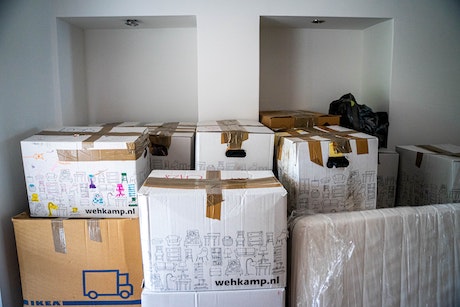
Our clinic was scheduled to be completed in August. That was about the time that they started construction. I had ordered all the equipment and supplies and thought I had set an August shipment date. We started getting daily visits from the UPS truck. It didn’t take long, and we had boxes stacked to the ceiling in our tiny apartment.
I finished in Enumclaw in the middle of July, and we had put earnest money down on a house on Ames Creek. Sandy and I were sitting at the little table eating breakfast. I look up and see a freight truck backing up to the apartment.
“This can’t be good,” I said. “We have no room for another box, let alone what might be in that freight truck.”
Sure enough, the truck backed up to our apartment, and the driver got out and started opening the door. I rushed outside to talk with him before he unloads anything into the parking lot.
“Hi, what do you have?” I asked.
“Are you Dr. Larsen?” the driver asked.
“Yes, and I am hoping you have something small for me,” I said.
“No such luck, I have a bunch of kennels,” the driver said.
“I don’t have any place to put them,” I said.
“You can refuse delivery,” the driver explained. “But that will end up costing you a small bundle.”
“Do you have time for me to make a phone call?” I asked. “I can maybe find a garage to store them.”
“That would be okay if it is not too far,” the driver said.
I ran in and called the owner of the house we had just put earnest money on. He was very gracious. I think he really wanted to sell the house. However, he did have a second garage that was empty and said it would be okay to use it as long as the sale was progressing.
I hurried back to the freight truck.
“Follow me,” I said. “It is only a little over a mile.”
It worked out well, and it was easy unloading the kennels into the garage. I signed the receipt for the driver, and he departed.
We completed the house purchase, and I had to fix up the garage to accommodate clients who continued to find us. We finally moved into the clinic on December 7, 1976.
Photo by Michal Balog on Unsplash
A Stroke of Disaster
D. E. Larsen, DVM
Preface: This is an important story for people to read before this weekend of high temperatures in most of Oregon. I am publishing it early in the hope of reaching as many readers as possible.
Sometimes many people suffer from the poor decision of one individual. When the final plans were being made for the initial clinic construction, there were some necessary financial constraints. Namely, we didn’t have any money.
“What about heating and air conditioning?” I asked the contractor.
“The cheapest heating for you is baseboards, and in this area, you only really need air conditioning a few days out of the year. You can save a substantial amount of money by skipping it.”
So we had baseboard heaters and no air conditioning in a concrete building with no insulation. That proved to be an error. The heating was okay, not the best, but okay. The need for air conditioning proved to be far more than a few days of the year.
We learned to cope with the situation. We ran a sprinkler on the roof on the warm days. The water that ran off the roof was as hot as the water out of the hot water tap. With the sprinkler on the roof and the garage door in the back open, the clinic was livable on all be the hottest days. We simply sent all the animals home on those few hundred-degree days and closed at one or two in the afternoon.
It was on just one of those days in July of 1977 when Judy came back from the bank, red-faced and sweating.
“The bank thermometer says one hundred and four degrees already,” Judy said. “It’s like an oven out there.”
“That’s good enough for me,” I said. “The clinic is empty, we just have one appointment to reschedule, and I can feel the cool water of the Calapooia already.”
It seemed that once those words were said, I was standing in the middle of an empty room.
“Give us a call when you and Sandy are ready to run up the river, and we’ll go with you,” Judy said as she headed out the door. “Maybe we should plan to take some hot dogs or something and eat on the riverbank.
I had just hung up the phone talking with Sandy about getting the kids ready to go swimming and calling Judy to make dinner plans, and the phone rang.
“Doc, this is Al. I know you are probably closing early in this heat, but I just got home, and Turbo is flat out in his kennel. I can’t get any response out of him at all.”
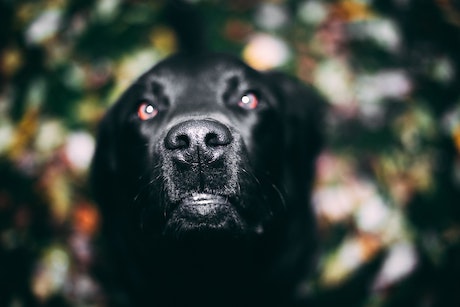
Turbo was a large, overweight, black lab. He and Al were regular visitors to the clinic. Al had lost his wife a few years ago, and Turbo was probably his only friend in the world.
“Is his kennel in the sun, Al?” I asked.
“Yes, dammit, it is shaded in the afternoon. That is when he usually needs the shade. I wasn’t planning on this much heat this morning. I had to run to Lebanon for a procedure at the hospital. So he has been in the sun since about seven this morning.”
“Al, if you have a hose handy, wet him down before you bring him to the clinic. If that is a problem, just get him down here as soon as you can.”
“I am going to have to get the neighbor to help me load him. I will probably just throw him in the back of the pickup and run down there. I should be there in less than five minutes.”
I got lucky. Dixie forgot some stuff she had in the refrigerator. She came through the door just after I spoke with Al.
“I hope you’re not in a big hurry,” I said. “Al is on his way to the clinic with Turbo.”
“I assume it is an emergency,” Dixie said.
“Yes, Turbo has been in his kennel, in the sun since early morning,” I said. “He’s unresponsive, and I would guess this is going to be one of those last rites types of emergency.”
When Al came through the door with Turbo on a blanket stretched between Al and his neighbor.
“Where do you want him, Doc?” Al said, almost entirely out of breath.
“Let’s take him back to the tub,” I said.
We got Turbo into the tub, and Dixie plugged a thermometer into him as I started the hose and soaked him with cold water.
Dixie handed me the thermometer. It had spiked to the end in less than a minute. This thermometer only went to one hundred and six degrees.
“Go grab a large thermometer from the lab drawer,” I said to Dixie. “It goes above boiling.”
I grabbed a couple of bags of ice from the freezer and placed one on Turbo’s belly and one on his back.
“This is probably a losing battle,” I say to Al, who has been watching without saying a word.
Dixie took Turbo’s temperature with the lab thermometer. His temperature was just over one hundred and ten degrees. I looked at Al, wondering how to start the conversation. He had tears in his eyes.
“Al, we might be able to cool Turbo down if his heart keeps beating,” I said. “But with a temperature of a hundred and ten, his brain is likely fried.”
“There is probably nothing you do about that at this point,” Al said.
“I haven’t been in this business too long, but I have never seen one of these dogs saved when the temperature was over a hundred and seven. I have had a couple who had temperatures of a hundred and six. One we cooled down, and he recovered. The other one, we got cooled down. It took him a couple of days to die. He was brain dead all that time. He never responded to anything.”
“What happened, Doc?” Al asked. “Was it just the heat.”
“Turbo had the cards stacked against him. He’s black and overweight. Those make this kind of stuff a lot easier, but being unable to get out of the sun. I am sure he probably exhausted his water. His body temperature just got to the point where he couldn’t regulate it any longer. I’m not sure just what it would be called in the book, heatstroke, heat exhaustion, or malignant hyperthermia. It is sort of academic at this point.”
“What should we do?” Al asked.
“I can do whatever you want, Al. I guess I think the best thing is to put Turbo to sleep at this point. I looked at a sick pig yesterday, out by the dam. It had a temperature of one hundred and six when I first looked at him in the morning. I treated him with antibiotics, but by early afternoon he was dead, and his temperature was one hundred and seven. He was sick. That is what started his problem, he was outside, and he was fat. When we opened him up to look, he had erysipelas, but this heat killed him. His internal organs, his liver, his kidneys, and heart were literally cooked. And the brain goes before those other organs.”
“I guess it is pretty obvious that you’re correct,” Al said. “Let’s go ahead and put him to sleep. But I need to know how to prevent this with my next dog.”
“I’m glad that you’re talking about your next dog,” I said. “In this kind of heat, you have to have shade for your dog. And you have to have unlimited water. Some people use one of those kiddy pools so the dog can get right into the pool to cool off. But at the very least, unlimited drinking water. Keeping your dog trim is good. Fat dogs and black or dark-colored dogs are most at risk.”
“Okay, let’s get the job done,” Al said. “I will take him home and bury him outback. I think I can get my other neighbor to dig the hole with his little backhoe. He likes to have an excuse to use it. Then I will think about another dog.”
***
The upper Calapooia River provided us with some gentle breeze and cool water. We had the little kids sitting in the shallow water, and Ken and I would dive into the deep pool while Sandy and Judy watched the kids and got everything ready to cook the hot dogs.
We would stay until after dark. By then, the house should be cool enough to allow us to get some sleep.
Photo by Matthis Volquardsen from Pexels
 Memoirs of a Country Vet